



Written and medically reviewed by Joshua A. Stramiello, MD — board-certified otolaryngologist (ear, nose, and throat physician).
Published May 18, 2026 · Last medically reviewed August 6, 2026 · Sources
Quick answer: The best oils for dry, itchy ears are mineral oil (light and neutral), fractionated coconut oil (smooth and lightweight), and olive oil (a traditional wax softener). Purpose-made drops like Auil offer these in simple, ear-safe formulas that support the canal’s moisture barrier.
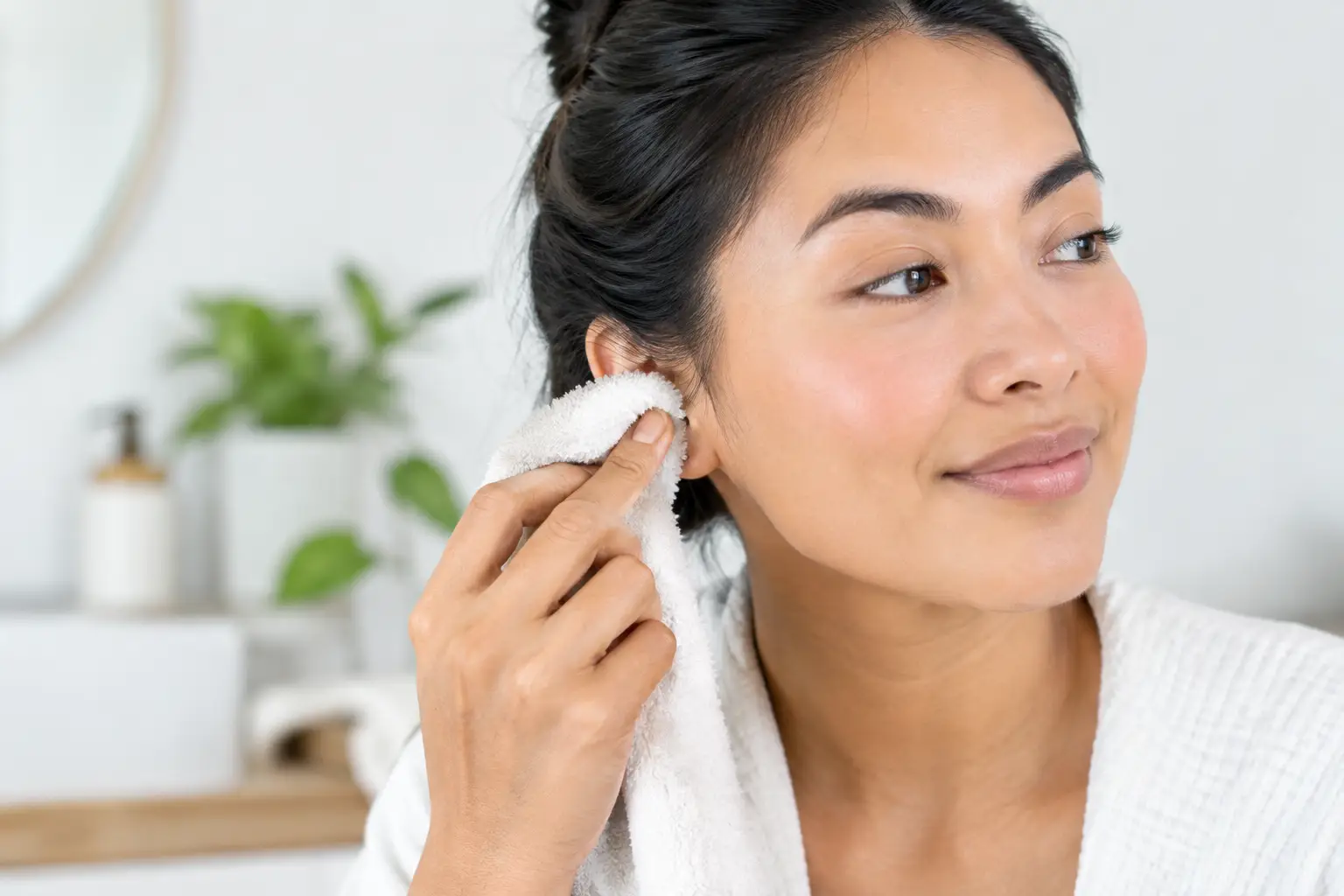
Dry, itchy ears are a surprisingly common problem. Many people experience irritation from earbuds, hearing aids, over-cleaning, swimming, sweat, dry weather, or simply sensitive skin inside the ear canal.
The skin of the ear canal is extremely delicate. Unlike other parts of the body, the ear canal contains very thin skin with limited natural moisture. When that protective barrier becomes irritated or overly dry, symptoms such as itching, flaking, tightness, or mild discomfort can occur.
One of the most common causes of chronic ear dryness is over-cleaning with cotton swabs. Q-tips may temporarily remove wax, but they often strip away the natural oils that help protect the ear canal.2 Repeated use can worsen dryness and irritation over time.
Why Earwax Is Actually Important
Many people think earwax is simply “dirty,” but healthy earwax serves an important purpose.1 Earwax helps:
- Protect the skin of the ear canal
- Trap dust and debris
- Maintain moisture
- Reduce irritation from water exposure
When ears become excessively dry, the natural skin barrier can become more sensitive to friction, moisture changes, and environmental irritation.
Can Oils Help Dry Ears?
In some cases, gentle oils may help moisturize the ear canal and soften dry debris or hardened wax. Oil-based ear preparations have long been used as cerumenolytics (wax-softening agents), and multiple studies have examined their use for earwax management and ear canal comfort.3
A systematic review published in the British Journal of General Practice reviewed the effectiveness of topical earwax preparations across 18 randomised trials and found that oil-based preparations, such as olive oil, and water-based preparations were equally effective at clearing earwax, with no preparation clearly superior.5
Additional reviews discussing earwax treatment note that oil-based compounds, including olive oil and almond oil, are commonly used to soften and loosen wax within the ear canal.
You can read one of the review studies here:
British Journal of General Practice earwax treatment review
Mineral Oil and Dry Ear Comfort
For individuals with dry, itchy ears, highly purified mineral oil is often one of the gentlest and most neutral options available. Mineral oil is widely used in skincare because it helps reduce moisture loss and acts as a protective barrier over dry skin.
Why Auil Mineral Oil Ear Drops May Be Ideal for Dry Ears
Auil Ear Drops are formulated with mineral oil and designed for gentle everyday ear comfort. Because mineral oil is lightweight, stable, and minimally reactive, it may be especially useful for individuals experiencing:
- Dry ear canals
- Mild irritation from over-cleaning
- Earbud-related dryness
- Environmental dryness
- Occasional flaking or tightness
Unlike heavily medicated products, simple oil-based ear care focuses on supporting the natural moisture barrier of the ear canal.
Disclosure: Dr. Stramiello is the founder of Oto Anthro (Otolaryngological Anthropology), the company that makes the Auil ear drops shown below, and SafeEarCare.com provides links to Amazon for purchase. That is a material financial relationship, and we disclose it plainly to remain transparent. The clinical guidance here does not change based on what we sell — any plain, purpose-made single oil will do the same job. Full disclosure.

Coconut Auil and Olive Auil
Different oils may feel more comfortable for different people depending on their environment and skin sensitivity.
Coconut Auil
Coconut Auil contains fractionated coconut oil, which many users prefer because of its lightweight feel and smooth application. Coconut oil is commonly used in skincare and may feel especially comfortable for:
- Frequent earbud users
- Gym users
- Warm climates
- Sweating or moisture exposure
Some educational medical resources also discuss coconut oil and olive oil as moisturizing options for dry, flaky ear canals.

Olive Auil
Olive Auil uses olive oil, which has traditionally been used as a wax-softening oil and moisturizing agent. Olive oil has been discussed in medical literature for cerumen softening and ear canal lubrication.
For softening wax before it is removed, olive oil holds up well: in a systematic review of 18 randomised trials, oil-based and water-based preparations were equally effective at clearing earwax, with no preparation clearly superior — so the choice between them comes down to comfort and what you have on hand rather than potency.5 That evidence is about clearing wax that is already there, though, and the picture for routine long-term use is less straightforward. The section below covers what is and is not known.

Olive oil: long tradition, mixed evidence
Olive oil has been used to soften and clear earwax for generations, and it still appears in NICE’s guidance for the NHS as a recognised wax-softening agent.6 For many families it is not really a clinical decision at all — it is something passed down, the thing a parent or grandparent reached for, and it carries genuine cultural weight. What is striking is how little medical literature exists to support any specific regimen. There is no established consensus on how many drops, how often, for how long, or at what point regular use stops helping. The tradition is considerably older and more detailed than the evidence behind it.
That matters, because the evidence that does exist raises a caution. An experimental study in Practice Nursing examined whether regular olive oil drops prevent wax build-up and found the opposite pattern — measured wax accumulation increased in the treated ears over months of use.7 A more recent preprint reported the same direction of effect across repeated examinations out to 24 weeks.8 Neither is a large or definitive trial, and the preprint has not been peer reviewed, so this is a signal rather than a settled finding. But it is the reverse of what most people assume they are getting from a nightly drop of olive oil.
The practical read: olive oil is a reasonable choice for occasional softening before wax is removed, which is the use clinical guidance actually describes.1 It is less clearly suited to indefinite daily use as a preventive routine. This is one reason mineral oil is frequently recommended for wax management instead — it is chemically stable, does not oxidise or turn rancid the way a food oil can, and is not the oil implicated in these accumulation studies. If you have used olive oil for years without trouble, there is no cause for alarm. If you are using it daily and your wax seems to be getting worse rather than better, the drops themselves are worth suspecting.
Important Safety Notes
You should avoid placing oils or ear drops into the ear if you have:
- Ear pain
- Drainage
- Bleeding
- A known eardrum perforation
- Recent ear surgery
- Sudden hearing loss
- Severe dizziness
If symptoms persist, worsen, or are associated with hearing changes, evaluation by a healthcare professional is important.
Final Thoughts
Dry, itchy ears are often related to disruption of the ear canal’s natural protective barrier. Gentle oil-based care may help support moisture and comfort when used appropriately.
For individuals looking for a neutral, minimalist option, mineral oil-based products such as Auil may be particularly helpful for everyday dry ear comfort. Coconut Auil and Olive Auil may also provide useful alternatives depending on personal preference, environment, and skin sensitivity.
The most important ear care habit, however, may simply be this:
Avoid Q-tips at all costs!
Sources
- Schwartz SR, Magit AE, Rosenfeld RM, et al. Clinical Practice Guideline (Update): Earwax (Cerumen Impaction). Otolaryngology–Head and Neck Surgery. 2017;156(1_suppl):S1–S29. American Academy of Otolaryngology–Head and Neck Surgery Foundation.
- National Institute on Deafness and Other Communication Disorders (NIDCD). Why You Shouldn’t Use Cotton Swabs to Clean Your Ears. National Institutes of Health.
- American Academy of Otolaryngology–Head and Neck Surgery. Earwax (Cerumen Impaction). ENThealth.org.
- American Academy of Otolaryngology–Head and Neck Surgery Foundation. Dos and Don’ts of Earwax (patient handout).
- Hand C, Harvey I. The effectiveness of topical preparations for the treatment of earwax: a systematic review. British Journal of General Practice. 2004;54(508):862–867.
- National Institute for Health and Care Excellence. Management of earwax. Evidence review for Hearing loss in adults: assessment and management (NICE guideline NG98). 2018.
- Does olive oil prevent earwax build-up? An experimental study. Practice Nursing. 2013;24(4):191.
- Levy M. Olive Oil Drops and Their Effect on Earwax Accumulation. ScienceOpen, 2023. Preprint — not peer reviewed.
About the Author
Written and medically reviewed by Joshua A. Stramiello, MD, board-certified otolaryngologist (ear, nose, and throat physician). Last reviewed August 6, 2026.
Dr. Stramiello earned his Doctor of Medicine at the University of South Florida Morsani College of Medicine, completed his general surgery internship at Vanderbilt University Medical Center, and completed residency in Otolaryngology–Head & Neck Surgery at the University of California, San Diego. He has cared for ENT patients at Dartmouth-Hitchcock, Sanford Hospital, and West Suffolk Hospital in the UK, and his peer-reviewed research spans pediatric otolaryngology, airway surgery, and ear disease (Google Scholar).
The content on SafeEarCare.com is intended for educational purposes only and should not be considered medical advice. It is not a substitute for professional medical advice, diagnosis, or treatment. Always consult your physician or qualified healthcare provider regarding your individual health needs.
Discover more from Safe Ear Care
Subscribe to get the latest posts sent to your email.


Permalink
Permalink
Permalink
Permalink
Permalink
Permalink
Permalink
Permalink
Permalink
Permalink
Permalink
Permalink
Permalink
Permalink
Permalink
Permalink
Permalink
Permalink
Permalink
Permalink
Permalink
Permalink