


Written and medically reviewed by Joshua A. Stramiello, MD — board-certified otolaryngologist (ear, nose, and throat physician).
Published June 12, 2026 · Last medically reviewed August 6, 2026 · Sources
Quick answer: To get water out of your ears safely, tilt your head toward the affected side, gently pull the earlobe in different directions, and lie on that side to let gravity work. Dry only the outer ear; never insert swabs or tissue, and see a clinician if fullness lingers or hurts.
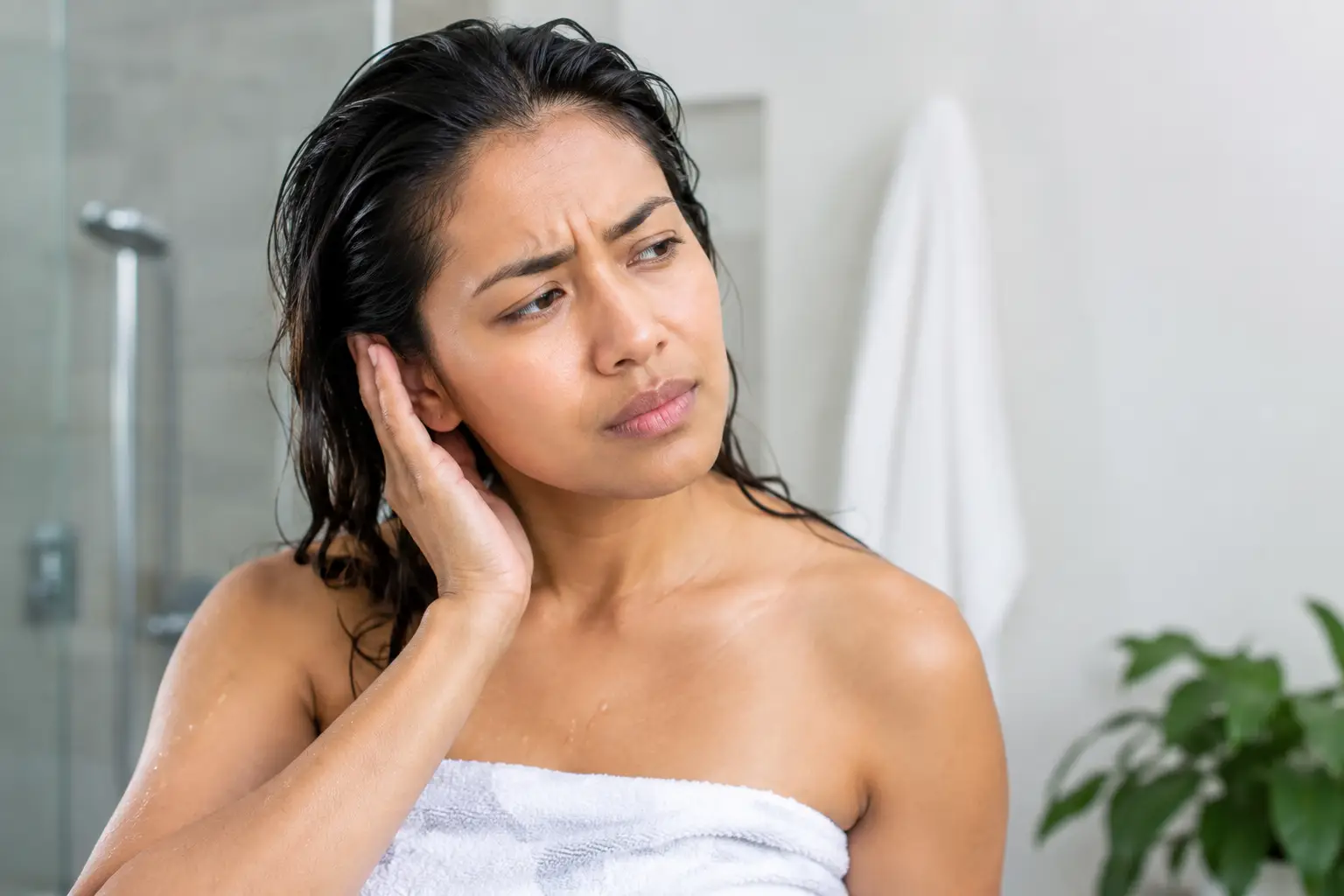
You usually notice it the second you stand up from the pool, shower, or lake – that plugged, sloshy feeling in one ear that makes your own voice sound strange. If you are wondering how to get water out of ears without making things worse, the safest approach is usually simple: use gravity, give it a little time, and avoid putting anything into the ear canal.
Most trapped water clears on its own. The problem starts when people get impatient and reach for cotton swabs, bobby pins, fingertips, or homemade drying tricks that can irritate the ear canal. A safety-first approach matters because the skin inside the ear is delicate, and a minor attempt to help can sometimes turn a temporary nuisance into lingering discomfort.
How to get water out of ears without irritating the canal
Start with the gentlest option. Tilt your head to the side of the affected ear and hold that position for 30 to 60 seconds. Sometimes lightly pulling the outer ear backward and upward helps open the canal enough for the water to drain.2 If that does not work right away, lie down on your side with the affected ear facing downward for a few minutes. Gravity often does more than any gadget or trick.
You can also try creating a little movement around the ear without inserting anything inside. Some people find that opening and closing the jaw, yawning, or chewing helps shift the sensation. This can be especially useful after swimming because the ear canal may just need a slight change in angle for the water to escape.
A warm compress may help if the trapped feeling is coming from moisture near the outer ear canal or if your ear feels tense after water exposure. Hold a warm, not hot, washcloth against the outside of the ear for several minutes, then tilt your head again. The goal is comfort and gentle drainage, not aggressive drying.
If the water entered during swimming or showering and your ears tend to feel dry, itchy, or sensitive afterward, keeping the canal comfortable matters too. In some cases, a small amount of a gentle ear oil made with mineral oil, coconut oil, or olive oil may support ear comfort for people who deal with dryness related to water exposure or sweat. Safe Ear Care generally favors these simple oils over harsher ingredients because they are more aligned with protecting the skin barrier of the ear canal.
What not to do when your ear feels clogged with water
The biggest mistake is inserting something into the ear canal. Cotton swabs do not absorb much trapped water, and they often push earwax deeper, which can make the clogged sensation worse.4 The same goes for hairpins, tissue corners, pen caps, and any other object people improvise with in the bathroom.
It is also wise to skip harsh ear-drop ingredients. Products made with hydrogen peroxide, carbamide peroxide, or isopropyl alcohol are commonly discussed for ear issues, but they can be irritating, especially if your ear canal already feels dry, itchy, or sensitive from frequent swimming, earbud use, hearing aids, or sweat. For this reason, a gentler ear-care approach is often the better fit for people who want comfort without overdoing it.
Blasting a hair dryer directly into the ear is another habit worth avoiding. Even on a low setting, heat and forced air can dry and irritate the canal, and a setting that feels mild on your hand can still be too much for the thin skin inside the ear.
Why water gets trapped in the first place
Some ears drain easily and some do not. The shape of your ear canal, the presence of earwax, and how often your ears are exposed to water all play a role. Earwax is not the enemy here – a normal amount helps protect the ear canal.3 But if wax has built up in a way that narrows the canal, water may get stuck behind it more easily and stay there longer.
That is one reason two people can leave the same pool and have completely different experiences. One person dries off and forgets about it. The other feels muffled for hours. If trapped water happens often, there may be an earwax or canal-shape factor making you more prone to it.
People who wear earbuds or hearing aids may also notice more sensitivity after water exposure. When the ear canal is already warm, occluded, or mildly irritated from daily wear, that added moisture can feel more noticeable. In those cases, gentleness matters even more.
When the problem may not be water alone
Sometimes what feels like trapped water is really a mix of moisture and earwax. The ear can feel full, hearing may seem dull, and sounds may echo. If that sensation keeps happening, especially after showers, swimming, or sweating, water may be collecting around wax rather than simply sitting in an open canal.
This is where people often overcorrect by trying to flush, dig, or dissolve the issue on their own. A safer mindset is to treat repeat clogging as a sign that your ears may need a more thoughtful care routine, not a more forceful fix. Gentle ear oils are often preferred by people managing dry wax or mild wax buildup because they soften and support comfort without relying on stronger ingredients.
If that is relevant for you, simple oil-based ear drops made with mineral oil, coconut oil, or olive oil are the options this brand generally views as safest for everyday ear comfort. Examples include Auil Mineral Oil Ear Drops, Auil Coconut Oil Ear Drops, and Auil Olive Oil Ear Drops, all made by Oto Anthro. The key is keeping ear care calm and uncomplicated rather than turning to harsh formulas.
How to get water out of ears after swimming
After swimming, your first step is patience. Dry the outside of the ear with a towel, tilt your head, and give gravity time to work. If you swim regularly, it helps to pay attention to patterns. Does it happen in one ear more than the other? Only after deep swimming? Only when you already feel waxy or itchy? Those details can help you understand whether the issue is occasional moisture or part of a bigger ear-comfort pattern.
For swimmers and frequent showerers, prevention often matters more than rescue. A well-fitting swim cap or ear protection may help in some cases, but it depends on the person. Some people do better minimizing water entry, while others mainly need to avoid over-cleaning afterward. If your ears are prone to dryness, the wrong post-swim routine can create more irritation than the water itself.
Signs it is time to stop trying at home
A temporary blocked sensation for a short time after water exposure is common. But if your ear still feels clogged after a day or two, if your hearing remains muffled, or if the ear feels increasingly uncomfortable, it is reasonable to pause the home experiments.1 The same goes if this happens over and over again.
That does not automatically mean something serious is going on. It simply means the problem may not be simple trapped water anymore. Earwax buildup, skin irritation, or another non-obvious cause may be involved, and repeated poking around usually does not improve any of those.
This article is not a diagnosis, and it does not replace medical care. It is general ear-health education built around safer habits and common causes of discomfort.
A safer everyday approach to ear moisture
Be proactive! Try applying mineral oil ear drops before water exposure. While mineral oil is considered an emollient, it really works by creating a barrier between your skin and the outside world. This helps to trap moisture and avoid dry ear, but it also helps to stop waterlogging or clogged ears. In other words, mineral oil can make it too slippery for water to get trapped in your ear canal.
If you want fewer episodes of that waterlogged feeling, focus less on quick hacks and more on keeping the ear canal calm. Avoid inserting objects, avoid harsh drying ingredients, and be careful not to strip the ear canal when it already feels dry or itchy. That balance matters because ears do best when their natural protective barrier is left mostly alone.
For many people, the safest answer to how to get water out of ears is also the least dramatic one: tilt, wait, rest, and resist the urge to dig. A little patience protects your ears far better than most shortcuts, and that is usually the habit worth keeping.
Trusted Products
Always be sure to choose trustworthy sources for ear drops. This includes identification of the content of the oil and its origin, as well as a full list of ingredients (generally with names you can pronounce!). Here at SafeEarCare.com we recommend Auil ear drops. They are a small business brand developed by an ENT surgeon with over a decade of experience treating common ear canal symptoms. You can read more at OtoAnthro.com or look for their products on Amazon.
Disclosure: Dr. Stramiello is the founder of Oto Anthro (Otolaryngological Anthropology), the company that makes the Auil ear drops shown below, and SafeEarCare.com provides links to Amazon for purchase. That is a material financial relationship, and we disclose it plainly to remain transparent. The clinical guidance here does not change based on what we sell — any plain, purpose-made single oil will do the same job. Full disclosure.


Sources
- Rosenfeld RM, Schwartz SR, Cannon CR, et al. Clinical Practice Guideline: Acute Otitis Externa (Update). Otolaryngology–Head and Neck Surgery. 2014;150(1_suppl):S1–S24. American Academy of Otolaryngology–Head and Neck Surgery Foundation.
- Centers for Disease Control and Prevention. About Healthy Swimming. CDC.gov.
- Schwartz SR, Magit AE, Rosenfeld RM, et al. Clinical Practice Guideline (Update): Earwax (Cerumen Impaction). Otolaryngology–Head and Neck Surgery. 2017;156(1_suppl):S1–S29. American Academy of Otolaryngology–Head and Neck Surgery Foundation.
- National Institute on Deafness and Other Communication Disorders (NIDCD). Why You Shouldn’t Use Cotton Swabs to Clean Your Ears. National Institutes of Health.
About the Author
Written and medically reviewed by Joshua A. Stramiello, MD, board-certified otolaryngologist (ear, nose, and throat physician). Last reviewed August 6, 2026.
Dr. Stramiello earned his Doctor of Medicine at the University of South Florida Morsani College of Medicine, completed his general surgery internship at Vanderbilt University Medical Center, and completed residency in Otolaryngology–Head & Neck Surgery at the University of California, San Diego. He has cared for ENT patients at Dartmouth-Hitchcock, Sanford Hospital, and West Suffolk Hospital in the UK, and his peer-reviewed research spans pediatric otolaryngology, airway surgery, and ear disease (Google Scholar).
The content on SafeEarCare.com is intended for educational purposes only and should not be considered medical advice. It is not a substitute for professional medical advice, diagnosis, or treatment. Always consult your physician or qualified healthcare provider regarding your individual health needs.
Discover more from Safe Ear Care
Subscribe to get the latest posts sent to your email.


Permalink
Permalink
Permalink
Permalink
Permalink
Permalink
Permalink
Permalink
Permalink
Permalink
Permalink