
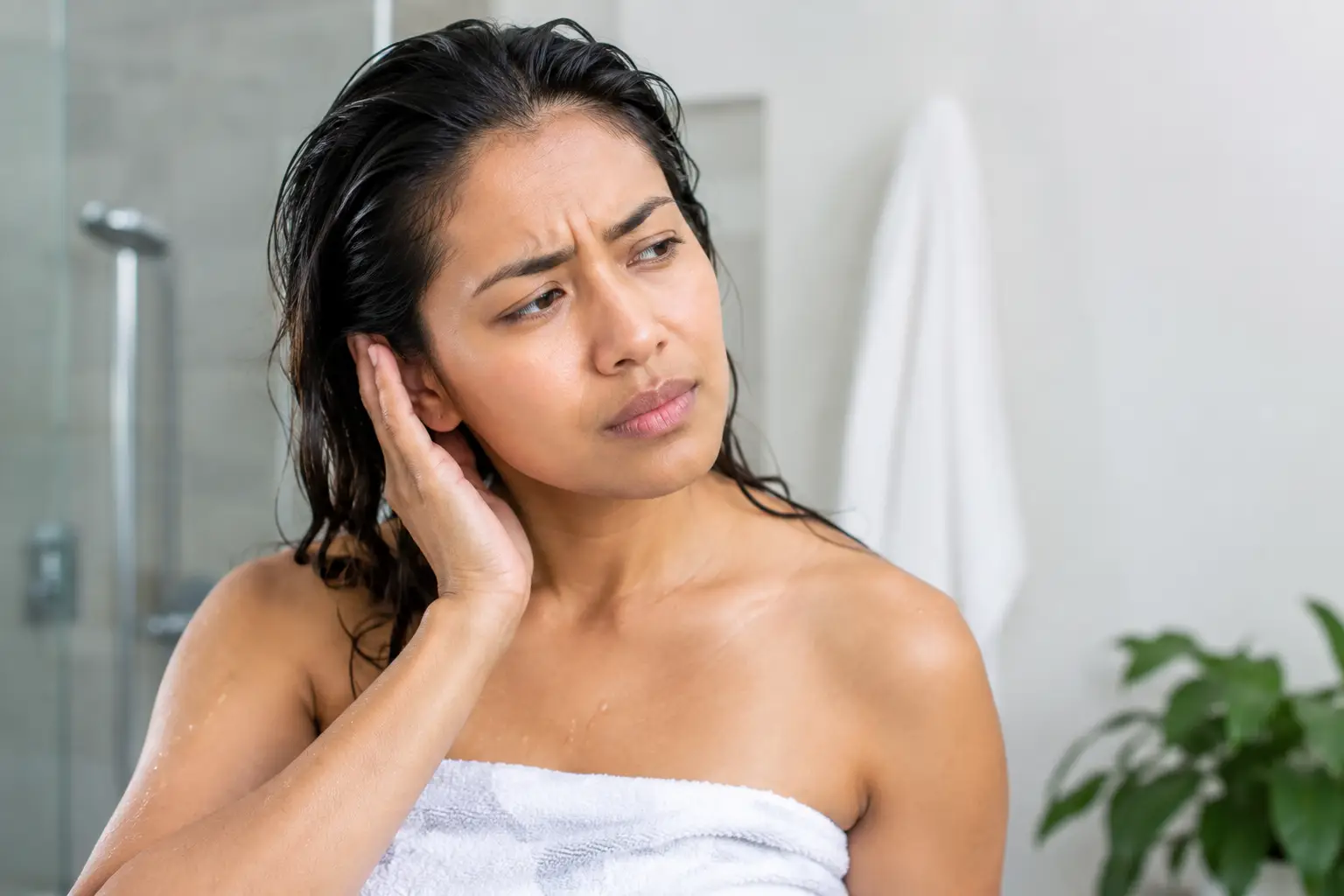

That muffled, underwater feeling can turn a relaxing shower into an annoying distraction. If you have wondered, “why do ears feel blocked after shower,” the usual answer is simple: water has settled in the ear canal, changed how sound travels, or interacted with earwax already there.
Most post-shower ear fullness is temporary. Still, the way you respond matters. Many common attempts to clear the feeling – cotton swabs, forceful digging, or unproven drops – can push wax deeper or irritate the delicate skin of the ear canal. A gentler approach is usually the safer one.
Why Do Ears Feel Blocked After a Shower?
The outer ear canal is a narrow, curved passage. When shower water enters it, a small amount can cling to the canal wall or sit behind a bit of earwax. That water creates a temporary barrier between sound and the eardrum, which can make voices sound distant and your own voice sound unusually loud.
Warm water can also soften earwax. Earwax is not dirt, and healthy ears generally move it outward naturally. But when wax is already built up or dry, shower water may cause it to swell or shift. The result can be a more noticeable feeling of pressure, fullness, or reduced hearing on one side.
For some people, the sensation is not caused by trapped water at all. Steam, temperature changes, and nasal congestion can affect pressure around the middle ear, creating a blocked sensation even when the ear canal is dry. That is one reason the feeling can vary from shower to shower.
Water trapped in the outer ear canal
A few drops of water can be enough to change hearing temporarily. This is especially common after washing your hair, standing directly under a strong shower stream, or rinsing near the ears. People with narrower ear canals, more earwax, earbuds, or hearing aids may notice it more often.
The good news is that water usually works its way out with time, gravity, and normal jaw movement. The goal is to encourage that process without putting anything into the ear canal.
Earwax that swells or shifts
Earwax can be soft and sticky, dry and flaky, or somewhere in between. When water reaches wax that is already near the center of the canal, it may make the wax expand. The ear can then feel blocked after a shower even though very little water remains.
This is why people sometimes experience repeated fullness after bathing or swimming. The shower may not be creating the underlying issue. It may simply be making existing wax more noticeable.
Pressure changes and congestion
A shower’s steam can temporarily alter how the ears feel, particularly if you are dealing with seasonal allergies or congestion. The ears, nose, and throat are connected, so pressure changes around the middle ear can create popping, fullness, or a need to swallow.
If you can hear normally and the sensation fades soon afterward, this may be the explanation. If it persists, recurs frequently, or comes with pain or a meaningful hearing change, it is worth having a qualified clinician assess what is going on.
Safe Ways to Help Water Leave the Ear
Start with patience. Keep the affected ear facing downward and gently tug the outer ear backward and downward to straighten the canal. You can tilt your head from side to side and gently move your jaw as if chewing. Often, that is all it takes.
Dry the outside of the ear with a clean towel. If water seems to be lingering, lie on your side with the blocked ear facing down for a few minutes. Avoid forceful shaking, which can be uncomfortable and is rarely necessary.
A hair dryer can be used cautiously on a cool or low-warm setting, held well away from the ear. Keep it moving rather than aiming it directly into the canal. The purpose is mild airflow near the ear, not heat. Stop if it feels hot, uncomfortable, or makes the sensation worse.
Do not insert cotton swabs, tissues, bobby pins, fingers, or ear-cleaning tools into the canal. These methods may seem logical, but they often push wax and water farther inward. They can also scratch the canal skin, which is especially vulnerable after repeated water exposure.
When Earwax May Be Part of the Problem
If the blocked feeling happens after nearly every shower, or if it lasts long after the ear should have dried, earwax may be contributing. A pattern of gradual muffled hearing, a sense of fullness, or needing to turn up the TV can also point to wax buildup.
The safest next step depends on your ear history. People who have had ear surgery, ear tubes, a known eardrum opening, drainage, or ongoing ear concerns should ask a hearing or medical professional before using any ear drops. The same caution applies when there is pain or sudden hearing change.
For people who have been told that ear-softening drops are appropriate for them, simple oil-based options such as mineral oil, coconut oil, or olive oil are commonly used to support dry wax. They should not be used as a quick fix for every blocked-ear sensation, especially when the cause may be trapped water or pressure rather than wax.
Avoid treating the ear canal like a drain that needs strong chemicals. Hydrogen peroxide, carbamide peroxide, isopropyl alcohol, and similar ingredients can be drying or irritating for some people, particularly when the canal skin is already dry, itchy, or sensitive from frequent showers, swimming, earbuds, or hearing aids.
Habits That Can Prevent Post-Shower Fullness
A few small adjustments can make showers more comfortable for people who deal with this often. When rinsing shampoo or conditioner, angle your head so the shower stream is not directed into the ear canal. Afterward, dry the outer ear gently rather than trying to dry deep inside.
If you wear hearing aids or earbuds, make sure the outer ear is fully dry before putting them back in. Moisture trapped beneath a hearing aid dome or earbud can add to discomfort and may make the ear feel stuffy. Give your ears some open-air time when possible.
People who swim regularly may benefit from discussing preventive ear-care routines with an ear professional, particularly if water exposure repeatedly causes discomfort. Custom strategies depend on the person’s ear canal shape, wax pattern, and hearing-device use.
When to Seek Professional Care
A blocked feeling that clears within a short time after showering is usually not an emergency. However, do not keep trying increasingly aggressive home methods if it does not improve. Persistent fullness can have several causes, and an exam can distinguish trapped water from wax buildup, irritation, pressure-related concerns, or another issue.
Arrange professional evaluation promptly if you notice significant or sudden hearing loss, severe pain, dizziness, ringing that is new or intense, bleeding, fluid coming from the ear, swelling around the ear, or symptoms that continue beyond a day or two. Parents and caregivers should also seek guidance when a child cannot describe what they are feeling but seems to have reduced hearing, persistent discomfort, or repeated ear pulling after water exposure.
Your ears do not need to feel perfectly dry inside after every shower. They are designed to manage small amounts of moisture and wax on their own. A little patience, gentle drying, and a hands-off approach often give them the best chance to return to normal comfort.
Discover more from Safe Ear Care
Subscribe to get the latest posts sent to your email.