


Written and medically reviewed by Joshua A. Stramiello, MD — board-certified otolaryngologist (ear, nose, and throat physician).
Published May 18, 2026 · Last medically reviewed August 6, 2026 · Sources
Quick answer: Please stop using Q-tips in your ear canals: they compact wax, scratch skin, and risk serious injury while removing the protective wax your ears need. Ears are self-cleaning — a washcloth for the outer ear and patience do the job better.
Why ENT Doctors Don’t Recommend Q-Tips for Ear Cleaning
Many people use cotton swabs, commonly called Q-tips, to clean their ears every day. While this may feel satisfying, most ENT physicians do not recommend placing Q-tips inside the ear canal.
The reason is simple: Q-tips often push earwax deeper into the ear instead of removing it.2 Over time, this can lead to impacted wax, muffled hearing, discomfort, ringing, dizziness, or even infection. In some cases, aggressive cleaning can scratch the delicate skin of the ear canal or injure the eardrum.
Earwax itself is not dirty. In fact, it serves an important purpose. Earwax helps protect the ear canal by trapping dust and debris while also helping moisturize the skin inside the ear.1 For most people, the ear naturally cleans itself through normal jaw movement such as talking and chewing.3
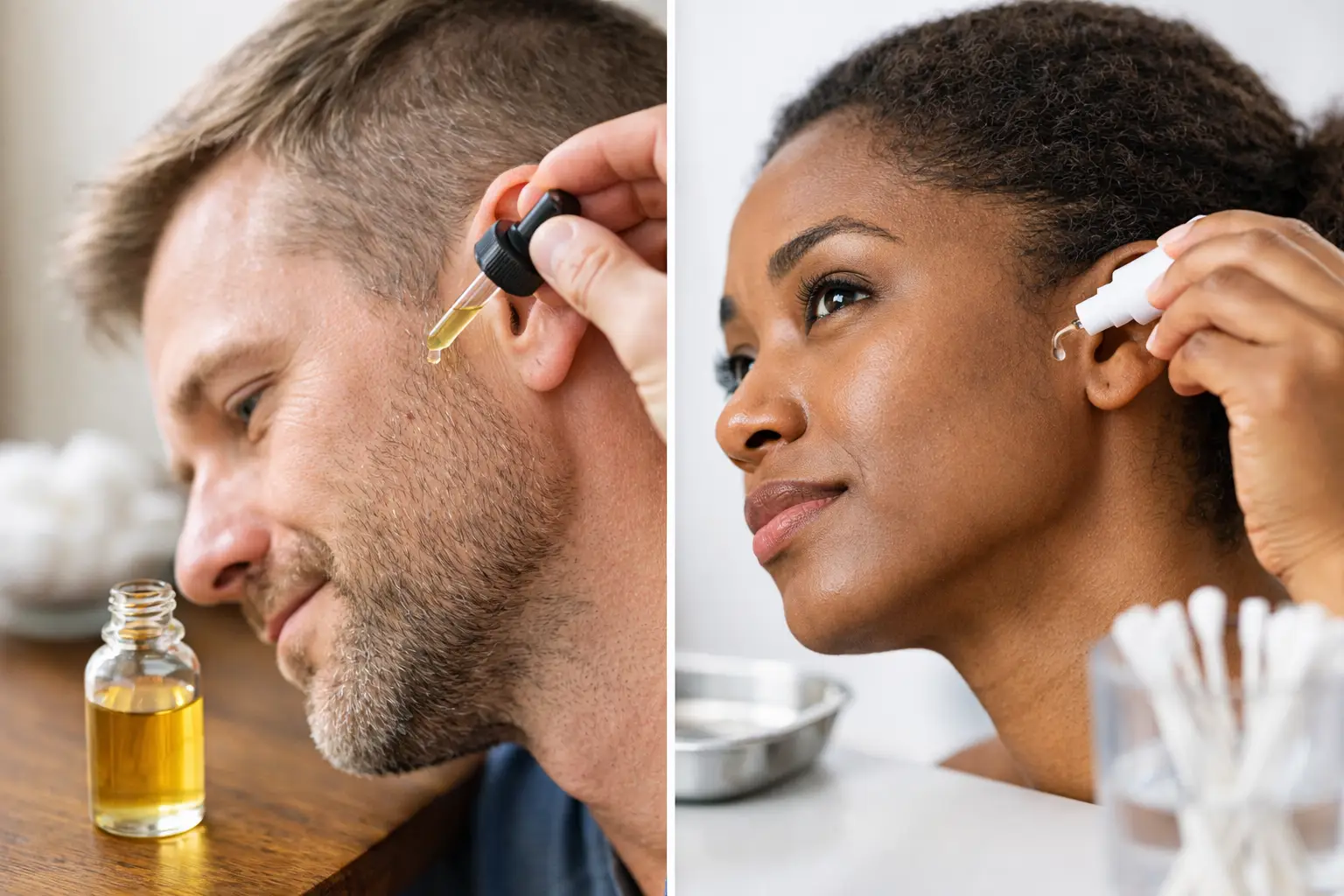
If your ears feel itchy, dry, or blocked, gentler options are usually preferred. Many ENT specialists recommend avoiding insertion of objects into the ear canal and instead using safer approaches such as physician-approved ear drops or professional cleaning when necessary.
Safe Ear Care favors simple, purpose-made oil drops such as Auil Mineral Oil Ear Drops, Coconut Auil Coconut Oil Ear Drops, and Olive Auil Olive Oil Ear Drops by Oto Anthro for this kind of gentle, moisture-first routine.
Disclosure: Dr. Stramiello is the founder of Oto Anthro (Otolaryngological Anthropology), the company that makes the Auil ear drops shown below, and SafeEarCare.com provides links to Amazon for purchase. That is a material financial relationship, and we disclose it plainly to remain transparent. The clinical guidance here does not change based on what we sell — any plain, purpose-made single oil will do the same job. Full disclosure.


A simple rule I give my patients is:
“Never clean your ears with anything smaller or harder than a large cotton ball.”
Protecting the delicate skin and natural function of the ear canal can help maintain long-term ear comfort and hearing health.
Joshua Stramiello, MD – board certified ENT and President/CEO of Otolaryngological Anthropology
Sources
- Schwartz SR, Magit AE, Rosenfeld RM, et al. Clinical Practice Guideline (Update): Earwax (Cerumen Impaction). Otolaryngology–Head and Neck Surgery. 2017;156(1_suppl):S1–S29. American Academy of Otolaryngology–Head and Neck Surgery Foundation.
- National Institute on Deafness and Other Communication Disorders (NIDCD). Why You Shouldn’t Use Cotton Swabs to Clean Your Ears. National Institutes of Health.
- American Academy of Otolaryngology–Head and Neck Surgery. Earwax (Cerumen Impaction). ENThealth.org.
- American Academy of Otolaryngology–Head and Neck Surgery Foundation. Dos and Don’ts of Earwax (patient handout).
About the Author
Written and medically reviewed by Joshua A. Stramiello, MD, board-certified otolaryngologist (ear, nose, and throat physician). Last reviewed August 6, 2026.
Dr. Stramiello earned his Doctor of Medicine at the University of South Florida Morsani College of Medicine, completed his general surgery internship at Vanderbilt University Medical Center, and completed residency in Otolaryngology–Head & Neck Surgery at the University of California, San Diego. He has cared for ENT patients at Dartmouth-Hitchcock, Sanford Hospital, and West Suffolk Hospital in the UK, and his peer-reviewed research spans pediatric otolaryngology, airway surgery, and ear disease (Google Scholar).
The content on SafeEarCare.com is intended for educational purposes only and should not be considered medical advice. It is not a substitute for professional medical advice, diagnosis, or treatment. Always consult your physician or qualified healthcare provider regarding your individual health needs.
Discover more from Safe Ear Care
Subscribe to get the latest posts sent to your email.
Permalink
Permalink
Permalink
Permalink
Permalink
Permalink
Permalink
Permalink
Permalink
Permalink
Permalink
Permalink