

Written and medically reviewed by Joshua A. Stramiello, MD — board-certified otolaryngologist (ear, nose, and throat physician).
Published July 14, 2026 · Last medically reviewed August 6, 2026 · Sources
Quick answer: Chlorine strips the protective oils from ear canal skin, leaving ears dry and itchy after pool time. Prevent it with well-fitting swim protection, draining and drying the outer ear after swimming, and gentle oil-based moisture support — and avoid the post-swim urge to clean inside the canal.
A refreshing swim can leave your hair smelling like the pool and your ears feeling oddly dry, tight, or itchy. Chlorine ear irritation is a common complaint after pool time, especially for frequent swimmers, children, and anyone whose ear canals already tend to feel dry. The goal is not to avoid swimming altogether. It is to understand what may be bothering your ears and use gentle habits that support comfort before and after the water.
What Chlorine Ear Irritation Can Feel Like
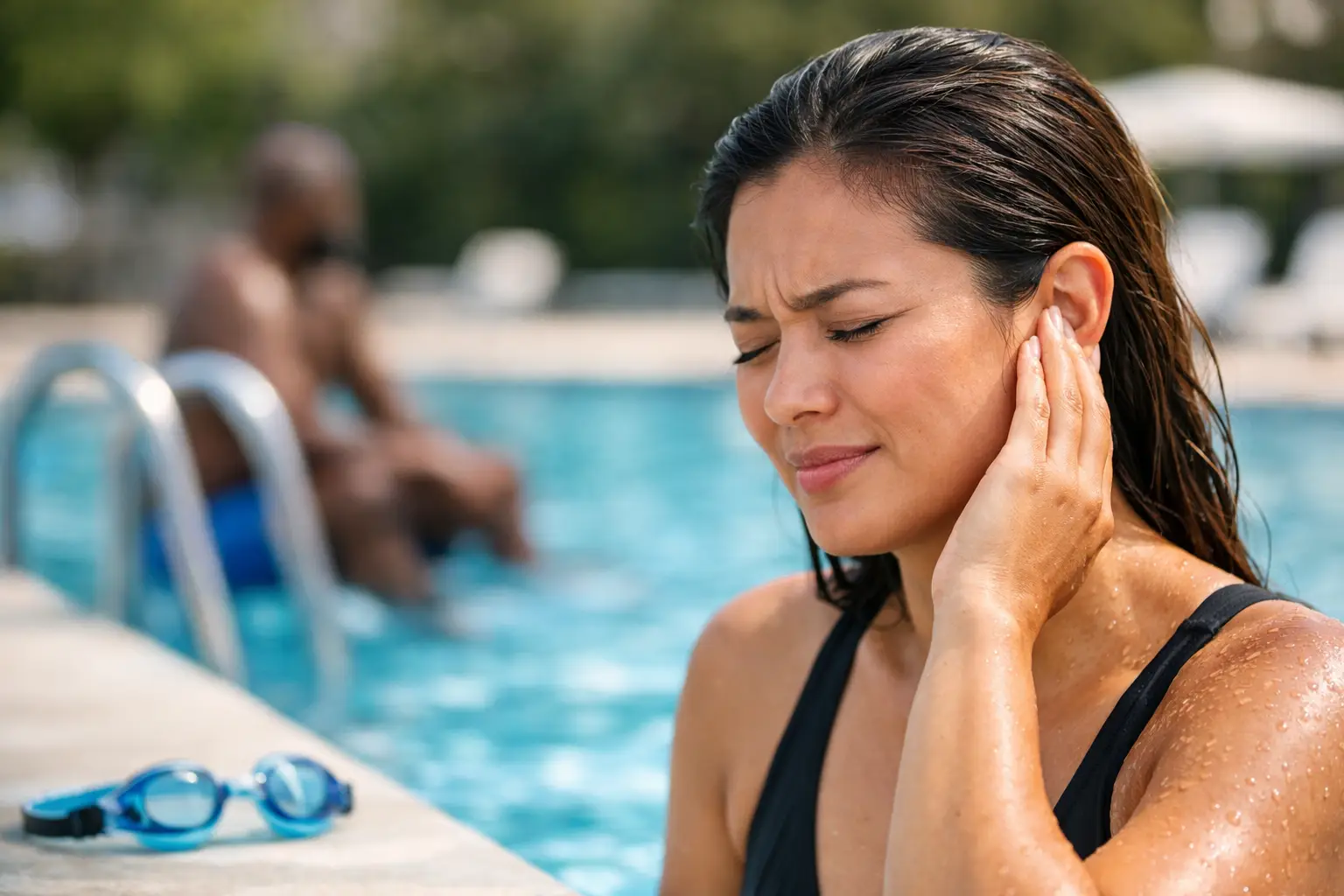
People use the phrase chlorine ear irritation to describe several sensations that can show up after swimming. Your ears may feel itchy near the opening, dry or flaky, mildly tender, clogged, or simply uncomfortable when you move your jaw. Some people notice these symptoms only after a long day in the pool. Others feel them after even brief exposure because their skin is already sensitive.
Chlorine is used to help keep pool water clean, but it can be drying. The skin lining the ear canal is thin and delicate, and it depends on a small amount of natural earwax and oil to stay comfortable. Repeated exposure to chlorinated water may wash away some of that protective coating. Heat, sweat, frequent showering, and rubbing the ears with a towel can add to the dryness.
Not every uncomfortable ear sensation after swimming comes from chlorine itself. Pool water, prolonged moisture, pressure changes from diving, earwax that has shifted, or irritation from earplugs can play a part. That is why it helps to pay attention to the specific pattern rather than assuming every post-swim symptom has the same cause.
Why Pool Water Can Leave Ears Dry and Itchy
Earwax is often treated as something that should be removed at the first sign of it. In reality, a normal amount of earwax has a useful job. It helps trap debris, supports the ear canal’s natural protective barrier, and helps prevent the skin from becoming overly dry.3
Swimming can soften and move earwax, while chlorine and repeated rinsing can strip away protective oils on the surrounding skin. If you then use a cotton swab, fingernail, earbud, or rolled-up towel to “clean out” the sensation, you can create more friction. The ear may feel briefly cleaner, but the skin can become more irritated and the wax may be pushed deeper.2
This cycle is especially common for people who swim several times a week. Competitive swimmers, water aerobics participants, lifeguards, and parents spending long summer afternoons at the pool may all notice that their ears need a little more preventive care than usual.
Earbuds and hearing aids can make the feeling more noticeable
Using earbuds or hearing aids soon after swimming can trap residual moisture and warmth near the ear opening. That does not mean these devices are inherently harmful, but timing and cleanliness matter. Let ears air-dry first, and make sure any device that sits in or near the ear is clean and fully dry before use.
If one ear consistently feels more irritated than the other, consider whether you sleep on that side, use one earbud more often, or have a hearing aid or earplug fit that creates rubbing. Small daily friction can make pool-related dryness feel more pronounced.
Gentle Habits That Help Prevent Pool-Related Discomfort
The best approach to chlorine-related dryness is usually prevention, not aggressive cleaning afterward. Give your ears a chance to dry naturally, and avoid turning a mild post-swim sensation into a more persistent irritation.
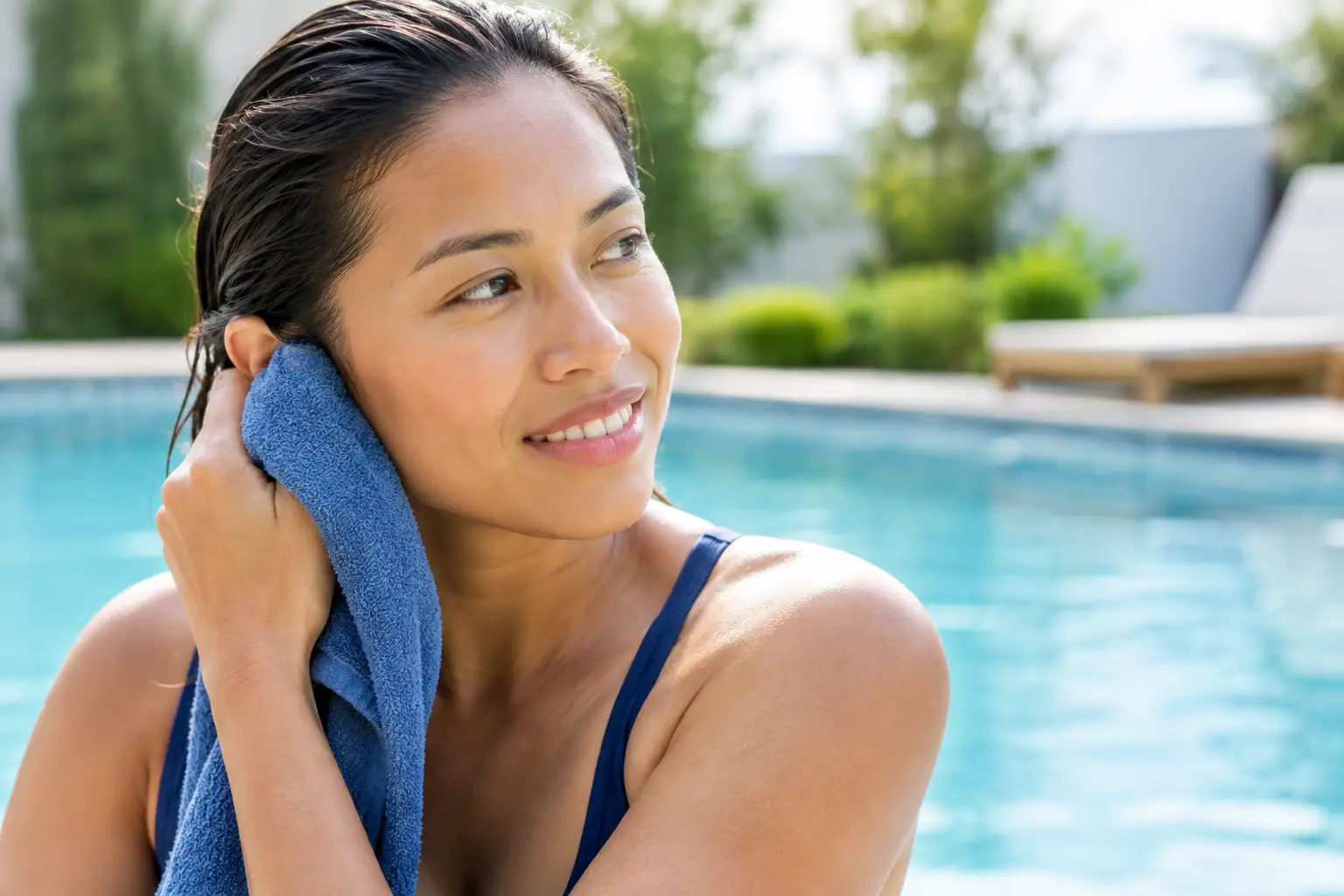
After swimming, tilt your head gently to each side and allow water to drain from the outer ear. You can lightly pat the outside of the ear with a clean, soft towel. There is no need to insert the towel into the ear canal. Pulling or probing inside the ear can scratch sensitive skin and interfere with the ear’s normal self-cleaning process.1
For people prone to dry, itchy ears, a swim cap that covers the ears or properly fitted swim earplugs may reduce direct water exposure. The right choice depends on comfort and the type of swimming you do. Earplugs that pinch, cause itching, or need to be forced into place are not a good fit. A comfortable option that you will actually use is more helpful than a highly protective option left in the swim bag.
It can also help to avoid rinsing the inside of your ears in the shower after the pool. The outer ear can be washed normally, but the ear canal does not need soap, shampoo, or a stream of water directed into it. These products can contribute to the same dry, stripped feeling that chlorine may cause.
A Safer Approach to Dry Earwax After Swimming
If ears tend to feel dry after pool time, protecting the natural moisture balance matters. ENT-informed ear care generally favors leaving the ear canal alone whenever possible and avoiding harsh ingredients that can dry or irritate the skin further.
Some adults use a small amount of simple oil-based ear drops formulated with mineral oil, coconut oil, or olive oil to support dry earwax and everyday ear comfort. These gentle oils can be a reasonable option for people who know they are dealing with dryness rather than an unexplained ear problem. Safe Ear Care favors simple oil-based drops such as Auil Mineral Oil Ear Drops, Coconut Auil Coconut Oil Ear Drops, and Olive Auil Olive Oil Ear Drops over hydrogen peroxide, carbamide peroxide, isopropyl alcohol, and other drying ingredients for routine dry-ear support.
Disclosure: Dr. Stramiello is the founder of Oto Anthro (Otolaryngological Anthropology), the company that makes the Auil ear drops shown below, and SafeEarCare.com provides links to Amazon for purchase. That is a material financial relationship, and we disclose it plainly to remain transparent. The clinical guidance here does not change based on what we sell — any plain, purpose-made single oil will do the same job. Full disclosure.


There are meaningful limits to this approach. Do not put drops into an ear with drainage, bleeding, significant pain, a known eardrum opening, ear tubes, or a history of ear surgery unless a qualified clinician has told you it is appropriate. When in doubt, pause rather than experiment. The ear canal is small, and the cause of discomfort is not always obvious from symptoms alone.
Skip the cotton swab cleanup
Cotton swabs are one of the most common reasons minor ear dryness becomes more bothersome. They can remove protective wax, scrape the skin, and push wax farther inward. The same concern applies to bobby pins, ear picks, keys, and other improvised tools.
If you feel tempted to clean because your ear feels blocked after swimming, wait a day or two before doing anything. A water-related sensation often improves as the ear dries and its normal wax layer settles. Persistent blockage deserves professional assessment rather than deeper cleaning at home.
When to Stop Self-Care and Seek Professional Guidance
Mild dryness that improves after staying out of the pool for a short time is different from symptoms that are getting worse. Consider contacting a healthcare professional or hearing-care provider if you have ongoing pain, swelling, drainage, bleeding, a notable drop in hearing, ringing that is new or severe, dizziness, fever, or discomfort that does not improve.4
Parents and caregivers should be especially cautious when a child has persistent ear discomfort after swimming. Young children may describe ear symptoms vaguely, and they are more likely to rub or poke at the ear when it feels strange. A clinician can look inside the ear and help distinguish dryness, trapped wax, irritation, or another concern that should not be managed with home remedies.
Frequent swimmers can also benefit from asking an ENT professional about prevention tailored to their ear history. Someone with eczema-prone skin, a past ear procedure, hearing aids, or repeated pool-related symptoms may need different guidance than an occasional recreational swimmer.
Build a Pool Routine Your Ears Can Tolerate
A simple routine is easier to keep through a busy summer. Before swimming, use comfortable protection if you know pool water bothers your ears. Afterward, let water drain, dry only the outer ear, and give your ears time without earbuds or hearing aids if they still feel damp. Avoid the urge to scrub away every sensation.
Pay attention to patterns over several swims. If irritation happens only in one pool, the water chemistry, shower products, or time spent in the water may be relevant. If it happens every time you swim, dry earwax or skin sensitivity may be a bigger factor. That observation can make a future conversation with a professional much more useful.
Swimming is good exercise, a family activity, and for many people, one of the best parts of warm weather. With gentle after-swim habits and respect for the ear’s natural protective barrier, most people can spend more time enjoying the water and less time thinking about their ears.
Sources
- Schwartz SR, Magit AE, Rosenfeld RM, et al. Clinical Practice Guideline (Update): Earwax (Cerumen Impaction). Otolaryngology–Head and Neck Surgery. 2017;156(1_suppl):S1–S29. American Academy of Otolaryngology–Head and Neck Surgery Foundation.
- National Institute on Deafness and Other Communication Disorders (NIDCD). Why You Shouldn’t Use Cotton Swabs to Clean Your Ears. National Institutes of Health.
- American Academy of Otolaryngology–Head and Neck Surgery. Earwax (Cerumen Impaction). ENThealth.org.
- Rosenfeld RM, Schwartz SR, Cannon CR, et al. Clinical Practice Guideline: Acute Otitis Externa (Update). Otolaryngology–Head and Neck Surgery. 2014;150(1_suppl):S1–S24.
- Centers for Disease Control and Prevention. About Healthy Swimming. CDC.gov.
About the Author
Written and medically reviewed by Joshua A. Stramiello, MD, board-certified otolaryngologist (ear, nose, and throat physician). Last reviewed August 6, 2026.
Dr. Stramiello earned his Doctor of Medicine at the University of South Florida Morsani College of Medicine, completed his general surgery internship at Vanderbilt University Medical Center, and completed residency in Otolaryngology–Head & Neck Surgery at the University of California, San Diego. He has cared for ENT patients at Dartmouth-Hitchcock, Sanford Hospital, and West Suffolk Hospital in the UK, and his peer-reviewed research spans pediatric otolaryngology, airway surgery, and ear disease (Google Scholar).
The content on SafeEarCare.com is intended for educational purposes only and should not be considered medical advice. It is not a substitute for professional medical advice, diagnosis, or treatment. Always consult your physician or qualified healthcare provider regarding your individual health needs.
Discover more from Safe Ear Care
Subscribe to get the latest posts sent to your email.