



Written and medically reviewed by Joshua A. Stramiello, MD — board-certified otolaryngologist (ear, nose, and throat physician).
Published June 27, 2026 · Last medically reviewed August 6, 2026 · Sources
Quick answer: To dry ears after swimming, tilt your head and let gravity drain the water, then towel-dry only the outer ear — patience beats poking. If your ears feel dry or irritated once the water is out, a gentle oil-based drop supports the skin better than alcohol-based drying drops.
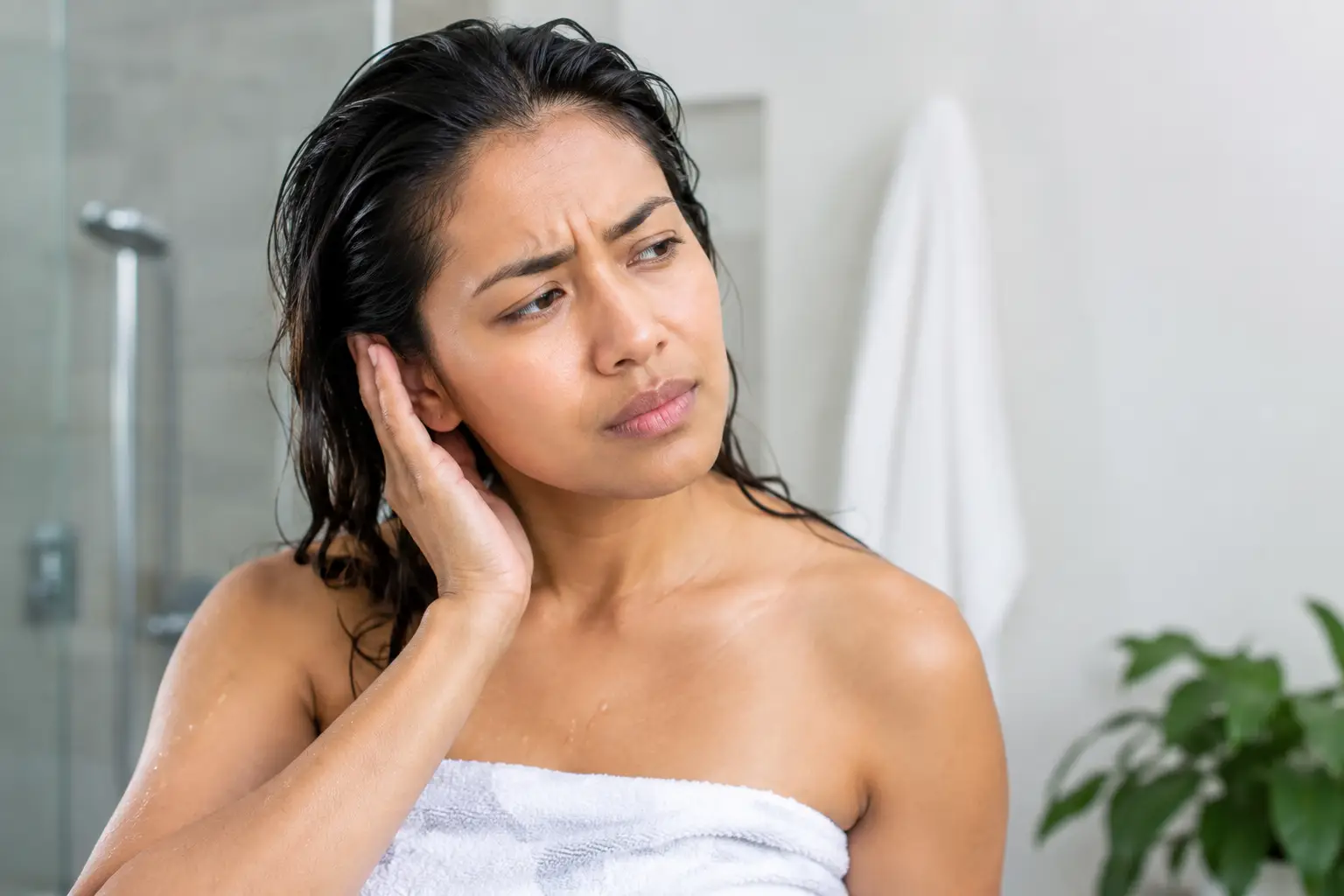
You usually notice it the second you get out of the pool – one ear feels full, sounds slightly muffled, and won’t seem to clear no matter how many times you tilt your head. If you’re wondering how to dry ears after swimming, the safest approach is usually the simplest one: help the water drain out gently, then leave the ear canal alone.
That matters because the skin inside the ear canal is delicate. A lot of people try to fix trapped water by using cotton swabs, fingers, or homemade mixtures that can irritate the ear even more. In many cases, what helps most is patience, good technique, and avoiding habits that push moisture deeper instead of letting it escape.
Why water gets stuck in the ear
After swimming, water can sit in the outer ear canal instead of draining right back out. Some people are simply more prone to this because of the shape of their ear canals. Earwax can also play a role. A healthy amount of wax helps protect the ear, but buildup can make it easier for water to get trapped behind it.1
Earbuds, hearing aids, and frequent moisture exposure can make the canal feel more sensitive too. So can repeated attempts to “dry” the ear with objects that rub or scrape the skin. When the canal is irritated, even a small amount of retained moisture can feel more noticeable.
How to dry ears after swimming at home
The first goal is drainage, not force. Start by tilting your head to the side of the affected ear and gently pulling your earlobe in different directions. That can help change the angle of the canal so water can work its way out. Some people find it helps to hop once or twice on one foot, but the key is gentle movement, not vigorous shaking.
You can also lie on your side with the affected ear facing downward for a few minutes. This sounds almost too simple, but gravity often does the job if you give it enough time. If both ears feel wet, try one side and then the other.
Another reasonable option is using a towel to dry the outer ear and then letting warm air from a blow dryer reach the area from a safe distance. Keep the dryer on the lowest heat and speed setting, and hold it several inches away. The air should feel warm, never hot. If the ear feels sensitive, skip this step rather than trying to power through discomfort.
Yawning or swallowing may also help some people if the sensation is partly related to pressure changes after being in the water. That will not remove water from the outer canal directly, but it can reduce the clogged feeling that sometimes happens at the same time.
What not to do when your ears feel wet
This is where many people make a minor problem worse. Cotton swabs are a common example. They tend to push wax and moisture farther inward, and they can also leave the canal skin dry, irritated, or slightly scratched.2 That makes the ear less comfortable and less able to protect itself.
It is also best to avoid sticking tissues, bobby pins, fingertips, or any other object into the ear canal. If it does not belong in your ear, it does not become safer just because you wrapped it in a towel first.
Safe Ear Care also takes a cautious view of drying drops that rely on alcohol, hydrogen peroxide, or carbamide peroxide. These ingredients are often marketed for moisture or earwax concerns, but they can be harsh for people with dry, itchy, or easily irritated ears. If your ears tend to feel sensitive after swimming, repeated use of those ingredients may leave the canal more uncomfortable rather than less.
If your ears get dry or irritated after swimming
Sometimes the issue is not only trapped water. Repeated exposure to pools, lakes, ocean water, sweat, and frequent showering can leave the ear canal feeling dry, itchy, or tight afterward. In that situation, aggressively trying to strip out moisture is not always the right answer. It depends on what your ears usually do.
If water has drained out but the skin still feels irritated, a few drops of a simple ear oil may be more in line with a comfort-focused routine. Mineral oil, coconut oil, and olive oil are generally the gentlest options for supporting dry earwax and irritated ear canals. They do not force wax out, and they do not dry the skin further.
That is especially relevant for people who swim often, use hearing aids, or wear earbuds for long stretches. A small amount of ear-safe oil can help the canal feel less dry and less reactive over time. The main trade-off is timing. Oil is better used after the ear is no longer holding visible water, not while you are still trying to get trapped water to drain.
If you prefer ready-made products, Safe Ear Care generally favors simple formulations such as Auil Mineral Oil Ear Drops, Auil Coconut Oil Ear Drops, and Auil Olive Oil Ear Drops made by Oto Anthro. The appeal is straightforward: fewer irritating ingredients and a better fit for people who want a gentler ear-care routine.
Disclosure: Dr. Stramiello is the founder of Oto Anthro (Otolaryngological Anthropology), the company that makes the Auil ear drops shown below, and SafeEarCare.com provides links to Amazon for purchase. That is a material financial relationship, and we disclose it plainly to remain transparent. The clinical guidance here does not change based on what we sell — any plain, purpose-made single oil will do the same job. Full disclosure.


How to dry ears after swimming if it keeps happening
If this is an every-swim problem, it helps to think beyond the moment. Prevention usually works better than repeatedly trying to rescue the ear afterward.
A snug swim cap or well-fitted swim plugs may help reduce how much water enters the ear canal in the first place.4 This can be especially useful for lap swimmers, kids in lessons, and anyone who spends long periods underwater. Fit matters, though. If ear protection rubs or traps sweat, it may create a different kind of irritation. Sometimes a small adjustment in style or material makes a big difference.
It is also worth paying attention to earwax habits. People often assume they should remove all wax to keep water from getting stuck, but earwax has a protective function. Problems are more likely when wax is impacted or when the ear canal has been overcleaned and becomes dry and inflamed. A gentle maintenance routine usually works better than frequent digging or flushing.
After each swim, try to make ear drying part of the same routine as toweling off and changing clothes. Tilt, drain, dry the outside, and give your ears a little time before putting in earbuds or hearing aids. Covering the canal immediately can trap warmth and lingering moisture.
When the clogged feeling does not go away
Most post-swim ear fullness improves fairly quickly. If it lingers, there may be more going on than a bit of water. Wax buildup can create the same blocked sensation, and water may simply make you notice it more. In other cases, the ear canal may be irritated enough that it feels swollen or unusually sensitive.
That is a good time to stop experimenting. Repeatedly trying different drops or tools can make the situation harder to sort out. Persistent fullness, reduced hearing, pain, drainage, or significant discomfort deserves professional evaluation, especially if the problem keeps returning after swimming.3
A simple post-swim ear routine
For most people, the safest routine is short and boring, which is often a good sign in ear care. Let gravity help first. Dry only the outside of the ear. Use low, indirect warmth if needed. Avoid swabs and harsh drying ingredients. If your ears tend to feel dry or itchy after water exposure, think about gentle oil-based support once the trapped water is gone.
Your ears do not usually need a complicated fix. They respond best to calm, consistent care and a little restraint, which is not flashy advice, but it is often the kind that keeps them comfortable the longest.
Sources
- Schwartz SR, Magit AE, Rosenfeld RM, et al. Clinical Practice Guideline (Update): Earwax (Cerumen Impaction). Otolaryngology–Head and Neck Surgery. 2017;156(1_suppl):S1–S29. American Academy of Otolaryngology–Head and Neck Surgery Foundation.
- National Institute on Deafness and Other Communication Disorders (NIDCD). Why You Shouldn’t Use Cotton Swabs to Clean Your Ears. National Institutes of Health.
- Rosenfeld RM, Schwartz SR, Cannon CR, et al. Clinical Practice Guideline: Acute Otitis Externa (Update). Otolaryngology–Head and Neck Surgery. 2014;150(1_suppl):S1–S24.
- Centers for Disease Control and Prevention. About Healthy Swimming. CDC.gov.
- American Academy of Otolaryngology–Head and Neck Surgery. Earwax (Cerumen Impaction). ENThealth.org.
About the Author
Written and medically reviewed by Joshua A. Stramiello, MD, board-certified otolaryngologist (ear, nose, and throat physician). Last reviewed August 6, 2026.
Dr. Stramiello earned his Doctor of Medicine at the University of South Florida Morsani College of Medicine, completed his general surgery internship at Vanderbilt University Medical Center, and completed residency in Otolaryngology–Head & Neck Surgery at the University of California, San Diego. He has cared for ENT patients at Dartmouth-Hitchcock, Sanford Hospital, and West Suffolk Hospital in the UK, and his peer-reviewed research spans pediatric otolaryngology, airway surgery, and ear disease (Google Scholar).
The content on SafeEarCare.com is intended for educational purposes only and should not be considered medical advice. It is not a substitute for professional medical advice, diagnosis, or treatment. Always consult your physician or qualified healthcare provider regarding your individual health needs.
Discover more from Safe Ear Care
Subscribe to get the latest posts sent to your email.


Permalink
Permalink
Permalink
Permalink
Permalink
Permalink
Permalink
Permalink
Permalink