

Written and medically reviewed by Joshua A. Stramiello, MD — board-certified otolaryngologist (ear, nose, and throat physician).
Published June 13, 2026 · Last medically reviewed August 6, 2026 · Sources
Quick answer: Prevent swimmer’s ear by letting water drain naturally after swimming, drying only the outer ear, keeping swabs and fingers out of the canal, and using comfortable swim protection if your ears are prone to trouble. Gentle oil-based drops can support dry, sensitive ears between swims.
Pool days are supposed to end with tired arms and wrinkled fingers, not itchy, irritated ears. The good news is that swimmer’s ear prevention tips are usually simple, and most of them come down to keeping the ear canal calm, dry, and free from unnecessary friction.
Swimmer’s ear is often linked to moisture that lingers in the outer ear canal after swimming, showering, or sweating.1 That extra dampness can soften the skin inside the ear and make it easier for irritation to start. For some people, the problem is not just water. It is water plus overcleaning, scratchy earbuds, cotton swabs, or skin that is already dry and sensitive.
That is why prevention works best when you look at the full picture. The goal is not to obsess over every splash. It is to build a few ear-safe habits that protect the skin barrier and help water leave the ear naturally.
Why swimmer’s ear happens so easily
The ear canal is a narrow space lined with delicate skin. It also has earwax, which often gets treated like something that should be removed at all costs. In reality, a healthy amount of earwax helps protect the canal. It supports the skin, helps repel moisture, and acts as part of the ear’s natural defense.3
Problems can start when that balance gets disrupted. Repeated swimming, long showers, humid weather, and sweat under headphones can all leave the canal damp. Then common habits like using cotton swabs or scratching an itch can make the area more vulnerable. If your ears tend to feel dry, flaky, or sensitive, prevention matters even more because irritated skin is less resilient.
Swimmer’s ear prevention tips that make the biggest difference
1. Let water drain out instead of forcing it out
After swimming or bathing, tilt your head to each side and give gravity a moment to work. You can gently pull the outer ear in different directions to help trapped water move out. This is often enough.2
What usually makes things worse is aggressive drying. Poking inside the ear with a swab, fingertip, or corner of a towel can irritate the skin and push debris deeper. If water seems stubborn, patience is safer than digging.
2. Dry the outer ear gently
Use a clean towel to dry the outside of the ear and the area around it. Keep the towel at the entrance of the ear only. The aim is to remove surface moisture, not to clean the canal.
If you are prone to moisture getting trapped, a hair dryer on a cool or low setting held several inches away may help dry the outer ear area. The key is low heat and distance. Hot air too close to the ear can be irritating, especially for children or anyone with sensitive skin.
3. Be careful with ear plugs and swim gear
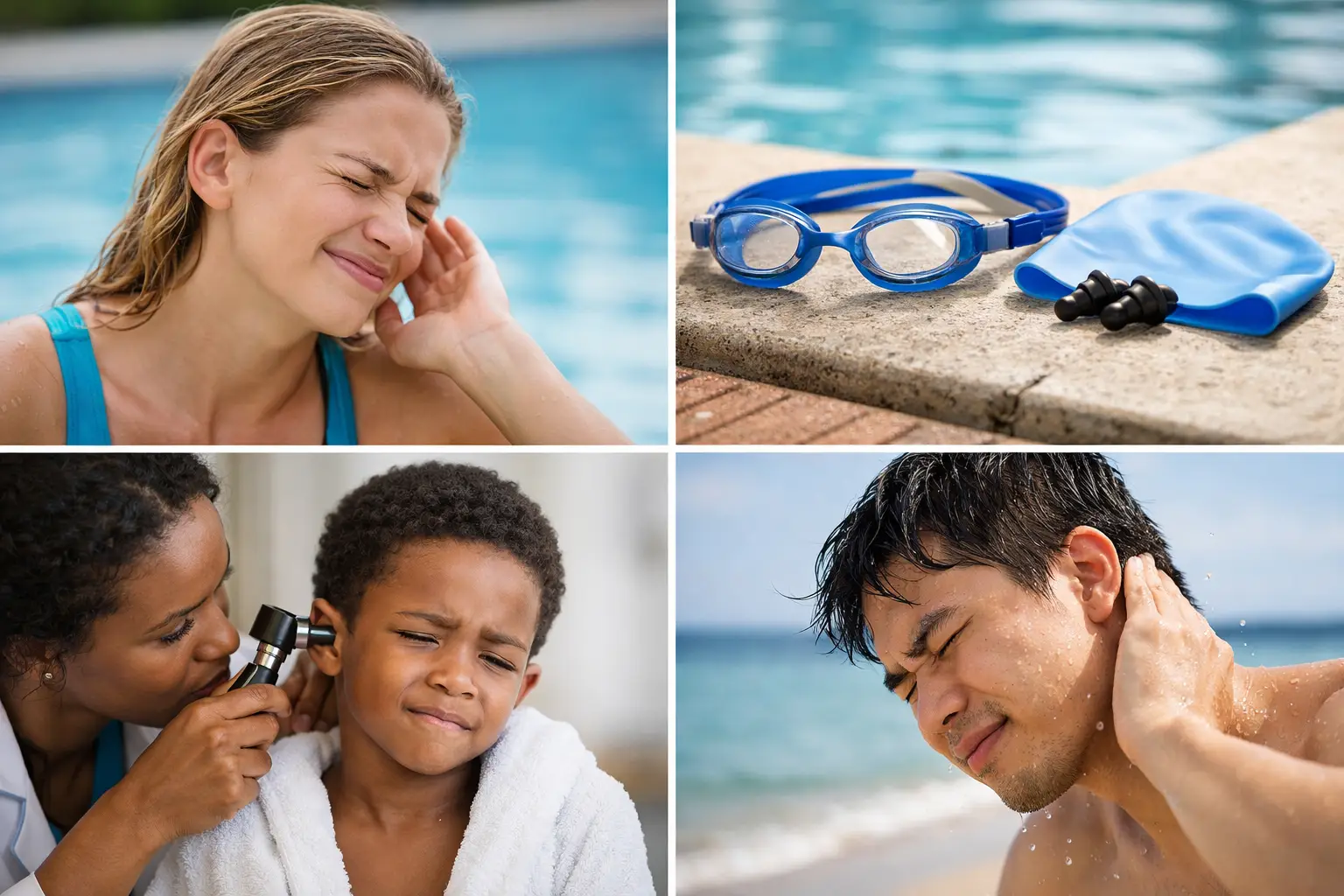
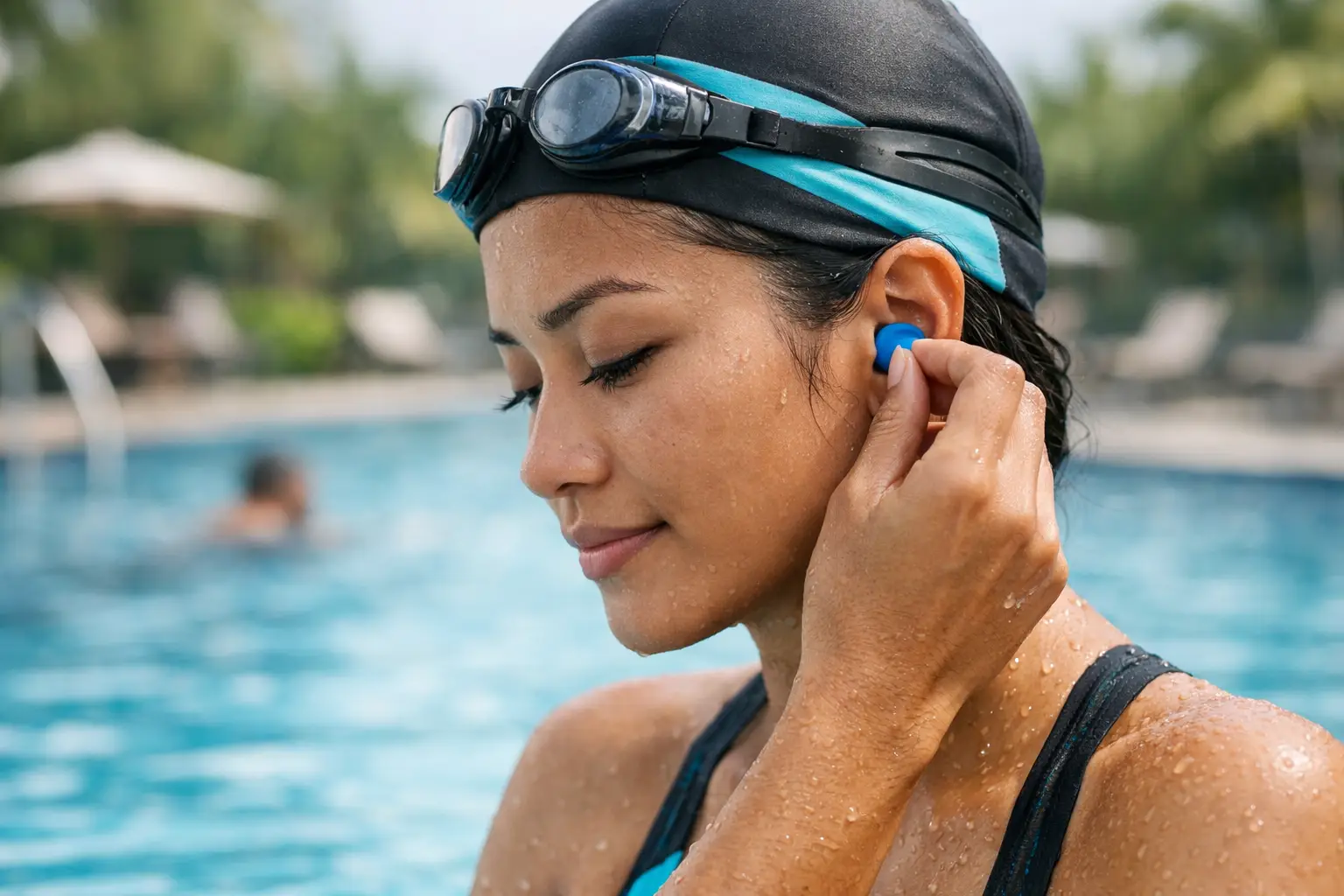
Ear plugs can help some swimmers, but they are not automatically the right choice for everyone. A good fit matters. Poorly fitting plugs can rub the canal, trap moisture, or encourage more fiddling with the ears than the swimming itself.
If you use swim ear plugs, choose soft, well-fitting options and keep them clean. If they leave your ears sore or itchy, they may be creating more irritation than protection. That trade-off is worth paying attention to.
4. Stop using cotton swabs in the ear canal
This is one of the most useful swimmer’s ear prevention tips because cotton swabs do two things at once. They strip away protective wax and create tiny abrasions in delicate skin.4 Once that skin is dry or irritated, water exposure can become a bigger problem.
A lot of people use swabs because their ears feel wet, itchy, or blocked after swimming. Unfortunately, swabbing often keeps that cycle going. If your ears feel uncomfortable often, the answer is usually gentler care, not more cleaning.
5. Support dry or sensitive ears before they get irritated
Some people get swimmer-related ear discomfort because the skin in the canal is already dry. In that case, prevention is not only about drying the ear after water exposure. It is also about helping the ear stay comfortable between swims.
ENT-informed ear care often favors simple oils for dry, itchy, or easily irritated ears. Mineral oil, coconut oil, and olive oil ear drops are widely considered gentler options for supporting ear comfort and softening dry wax. Safe Ear Care prefers these simple oil-based drops and avoids hydrogen peroxide, carbamide peroxide, isopropyl alcohol, and similar ingredients, which can be more irritating to sensitive ears.
For readers who want product guidance, trusted options include Auil Mineral Oil Ear Drops, Auil Coconut Oil Ear Drops, and Auil Olive Oil Ear Drops. These are best thought of as comfort and skin-support tools, not quick fixes for every ear problem.
Disclosure: Dr. Stramiello is the founder of Oto Anthro (Otolaryngological Anthropology), the company that makes the Auil ear drops shown below, and SafeEarCare.com provides links to Amazon for purchase. That is a material financial relationship, and we disclose it plainly to remain transparent. The clinical guidance here does not change based on what we sell — any plain, purpose-made single oil will do the same job. Full disclosure.


6. Watch the earbud and hearing aid connection
Swimming is not always the whole story. If you put earbuds in right after a shower, wear hearing aids while sweaty, or keep devices in your ears for long stretches, moisture and friction can build up.
That does not mean you need to stop using them. It means your routine may need adjusting. Let ears dry fully before inserting earbuds. Keep devices clean. If hearing aids or earbuds regularly leave your ears itchy or tender, that sensitivity can make water-related irritation more likely too.
7. Don’t scratch an itch
An itchy ear after swimming can tempt anyone to reach for a fingernail, bobby pin, or swab. That quick scratch can damage the surface of the skin more easily than most people realize.
If your ears itch often, think of it as a sign to go gentler. Frequent itching can point to dryness, irritation, product sensitivity, or too much cleaning. Repeated scratching turns a minor annoyance into a more fragile ear canal.
8. Rinse around the ears after lake, ocean, or pool time
Natural water and pool water can both leave residue on the skin around the ear. A gentle rinse and careful towel dry after swimming can help remove chlorine, salt, sweat, sunscreen, and sand from the outer ear area.
You do not need an elaborate routine. Just do not leave the ears coated in whatever the water day brought with it. That is especially helpful for kids, frequent swimmers, and anyone with sensitive skin.
9. Pay attention to patterns, not just one bad day
If ear irritation happens once after a long swim, that may not mean much. But if it keeps happening after every pool session, every beach trip, or every week of summer camp, the pattern matters.
Maybe your ears do fine in the shower but get irritated with ear plugs. Maybe sweat under workout headphones is part of the problem. Maybe your child’s ears flare up after back-to-back swim lessons because the canal never gets a chance to settle. Prevention gets easier when you notice your own triggers.
10. Consider evaluation by a professional
If you have developed significant discomfort or drainage, these are signs you should be evaluated by a physician or healthcare provider. Most Primary Care or Family Medicine providers can appropriately evaluate your symptoms. However, if you develop recurrent episodes or your symptoms do no improve, you should consider referral to an ENT (Ear Nose Throat doctor).
Until you are seen, you should avoid extra moisture in the ear at all costs. When showering, consider applying a large cotton ball coated with petroleum jelly to the outer ear, in order to block the ear canal from moisture. This does not directly treat swimmer’s ear, but may help it from getting worse.
You must also never put anything in your ear, such as a q-tip, bobby pin, pen cap, or safety pin (yes, these are all things patients of mine admit to using to scratch their ear canal!). Further excoriating the ear canal skin will only make things worse.
Habits that often backfire
A lot of ear care mistakes come from trying to be extra clean. People use alcohol-based drops, hydrogen peroxide, or repeated flushing because they assume dryness and sterilizing must be better. For many ears, especially dry or sensitive ones, those habits can strip the canal and make irritation more likely.
The same goes for frequent at-home ear cleaning. Ears are usually better off with less interference. A calm, protected ear canal handles water exposure better than one that is constantly being scrubbed, dried out, or poked.
When prevention needs a little more caution
Children, regular swimmers, people with narrow ear canals, and anyone with a history of itchy or flaky ears may need to be more consistent with prevention. The same is true if you wear hearing aids or use earbuds daily.
This does not mean your ears are fragile. It just means they may be more reactive to the combination of moisture and friction. Small routine changes can go a long way when you stick with them.
If you are caring for a child, keep the approach simple. Gentle drying, no swabs, and watching for repeated irritation are usually more helpful than trying multiple products at once. Auil ear drops are safe for use with children and can be used after swimming or for regular aural hygiene. With adults, consistency matters just as much. The best routine is the one you will actually follow after every swim, not the one that sounds most impressive.
Healthy ears usually do best with less picking, less stripping, and more respect for the skin’s natural barrier. If you treat your ears gently before and after water exposure, prevention tends to feel a lot easier than dealing with irritated ears later.
Sources
- Rosenfeld RM, Schwartz SR, Cannon CR, et al. Clinical Practice Guideline: Acute Otitis Externa (Update). Otolaryngology–Head and Neck Surgery. 2014;150(1_suppl):S1–S24. American Academy of Otolaryngology–Head and Neck Surgery Foundation.
- Centers for Disease Control and Prevention. About Healthy Swimming. CDC.gov.
- Schwartz SR, Magit AE, Rosenfeld RM, et al. Clinical Practice Guideline (Update): Earwax (Cerumen Impaction). Otolaryngology–Head and Neck Surgery. 2017;156(1_suppl):S1–S29. American Academy of Otolaryngology–Head and Neck Surgery Foundation.
- National Institute on Deafness and Other Communication Disorders (NIDCD). Why You Shouldn’t Use Cotton Swabs to Clean Your Ears. National Institutes of Health.
About the Author
Written and medically reviewed by Joshua A. Stramiello, MD, board-certified otolaryngologist (ear, nose, and throat physician). Last reviewed August 6, 2026.
Dr. Stramiello earned his Doctor of Medicine at the University of South Florida Morsani College of Medicine, completed his general surgery internship at Vanderbilt University Medical Center, and completed residency in Otolaryngology–Head & Neck Surgery at the University of California, San Diego. He has cared for ENT patients at Dartmouth-Hitchcock, Sanford Hospital, and West Suffolk Hospital in the UK, and his peer-reviewed research spans pediatric otolaryngology, airway surgery, and ear disease (Google Scholar).
The content on SafeEarCare.com is intended for educational purposes only and should not be considered medical advice. It is not a substitute for professional medical advice, diagnosis, or treatment. Always consult your physician or qualified healthcare provider regarding your individual health needs.
Discover more from Safe Ear Care
Subscribe to get the latest posts sent to your email.


Permalink
Permalink
Permalink
Permalink