

Written and medically reviewed by Joshua A. Stramiello, MD — board-certified otolaryngologist (ear, nose, and throat physician).
Published June 8, 2026 · Last medically reviewed August 6, 2026 · Sources
Quick answer: To remove earwax safely, soften it with a few drops of gentle oil — mineral, coconut, or olive — and let the ear’s natural migration carry it out. Never dig with swabs or tools, skip ear candles entirely, and see a doctor for blockage, pain, or hearing changes.
Earwax usually becomes a problem right after someone tries to “clean” it. A cotton swab goes in, the wax gets pushed deeper, and suddenly hearing feels muffled or the ear feels full. If you’re wondering how to remove earwax safely, the good news is that the safest approach is often gentler and simpler than most people expect.
Earwax, also called cerumen, is not dirt. It helps trap dust, slows bacterial growth, and keeps the ear canal from getting too dry.1 In most cases, the ear is self-cleaning. Jaw movement from talking and chewing gradually moves old wax outward, where it can be wiped away from the outer ear.3 Trouble starts when wax builds up faster than it clears, or when something pushes it inward.
Why earwax buildup happens
Some people naturally make more earwax than others. For them, buildup can happen even with good habits. Earbuds, hearing aids, earplugs, and frequent use of cotton swabs can also interfere with the ear’s normal clearing process and pack wax deeper into the canal.
The type of wax matters too. Dry, flaky wax may come out on its own more easily, while stickier wax can cling to the canal. Narrow ear canals, excess hair in the ear, skin conditions, and age can all make blockage more likely. Older adults often produce drier earwax that does not move out as well, so impaction becomes more common over time.
How to remove earwax safely at home
If you do not have severe pain, drainage, known eardrum damage, or a history of ear surgery, home care may be reasonable for mild buildup. The key is to soften the wax and let it come out naturally instead of trying to dig it out.
Use ear drops to soften the wax
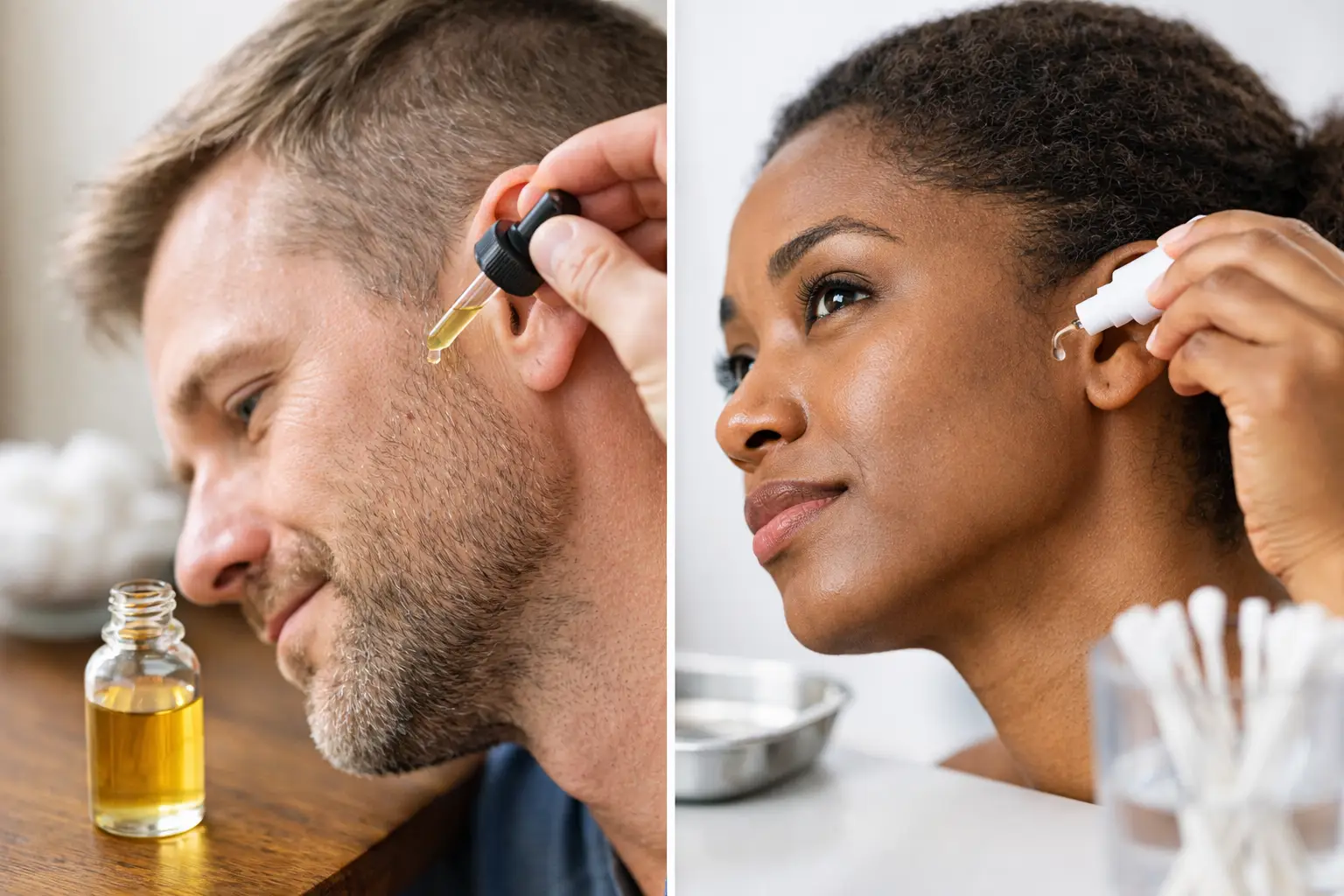
A few drops of mineral oil, coconut oil, or olive oil can help loosen hardened wax. Warm the bottle in your hands first so the drops are not cold, then lie on your side and place the drops in the affected ear. Stay in that position for a few minutes so the liquid can coat the wax.
This step often works best if repeated once or twice a day for a few days, depending on the product instructions. You do not need a large amount. More is not necessarily better, and overdoing it can leave the ear feeling soggy or irritated.
Let warm water do part of the work
After the wax has softened, most people find that it drains out on its own over time. You can gently wipe the outside of your ear with a large cotton-ball.
Dry the ear gently afterward
Moisture left sitting in the ear canal can lead to irritation, especially in people prone to swimmer’s ear. Tilt your head, gently pull the outer ear in different directions to help water escape, and pat the outside dry. Some people use a hair dryer on the lowest setting, held several inches away, for a few seconds. The air should feel barely warm, not hot.
However, mineral oil ear drops will help push water out naturally and can be used after showers, swimming, or any time water get’s in the ear canal. Many people prefer to use coconut oil after salt water exposure or sweating, and olive auil after fresh water exposure or dirt exposure. Both are safe in moderate use, and assuming the oil is selected for ear drops.
Disclosure: Dr. Stramiello is the founder of Oto Anthro (Otolaryngological Anthropology), the company that makes the Auil ear drops shown below, and SafeEarCare.com provides links to Amazon for purchase. That is a material financial relationship, and we disclose it plainly to remain transparent. The clinical guidance here does not change based on what we sell — any plain, purpose-made single oil will do the same job. Full disclosure.


What not to do
When people search for how to remove earwax safely, they often already suspect that cotton swabs are not ideal. That instinct is right. Swabs may remove a little wax from the entrance of the ear, but they often push more inward.2 The same goes for bobby pins, tweezers, finger nails, pen caps, and other household objects.
Ear candles are another practice to avoid. They are not supported by good evidence, and they can cause burns, wax drips, or blockage from candle residue.4 Vacuum-style ear gadgets sold online can also be misleading. If a product promises dramatic wax removal with little explanation of safety, caution is a good idea.
Hydrogen peroxide is a recognised cerumenolytic, and the AAO-HNS guideline lists peroxide-based preparations among the accepted options for softening wax.1 What the trial evidence does not show is any advantage over gentler alternatives. In NICE’s evidence review, hydrogen peroxide urea drops were no better than saline, sodium bicarbonate, or olive oil for clearing wax, and saline produced fewer reported adverse events from the drops while oil and sodium bicarbonate were more comfortable before syringing.5 Peroxide also imposes measurable oxidative stress on the skin cells lining the canal — in laboratory work on human keratinocytes the effect was reversible with brief exposure but became irreversible when exposure was prolonged.6 For an ear that is already dry or irritated, that is reason enough to reach for a plain oil instead. If you have eczema, itching, dryness, or a history of irritation, a gentler softening option may be better. Concentration is the variable that decides how much of this matters: peroxide’s principal toxic effect is irritation at the site of contact, and the severity of that irritation scales with how strong the solution is — the corrosive injuries described in toxicological reviews belong to industrial concentrations of 35 percent and above, not to the dilute drops sold for ears.7 Over-the-counter drops sit at the mild end of that range, which is why they are labelled as an occasional aid rather than a routine: the FDA over-the-counter label for carbamide peroxide 6.5 percent ear drops caps use at four days, tells you to check with a doctor first if the ear already has pain, drainage, irritation or a rash, and refers children under twelve to a clinician.8
Signs the wax may be impacted
Not all earwax needs treatment. But wax that becomes impacted can cause symptoms that are hard to ignore. Common signs include muffled hearing, a plugged sensation, ringing in the ear, mild dizziness, itching, or discomfort. Some people also notice that one hearing aid or earbud suddenly does not seem to fit or sound right.
That said, these symptoms do not always mean earwax is the cause. Ear infections, fluid behind the eardrum, and sudden hearing loss can feel similar at first. If symptoms come on quickly, are severe, or affect only one ear without a clear reason, it is smart to get checked rather than assume it is just wax.
When not to try home removal
There are a few situations where home treatment is not the safest choice. If you have ear pain that is more than mild pressure, drainage, bleeding, fever, recent ear surgery, ear tubes, or a known hole in the eardrum, do not put drops or water into the ear unless a clinician has told you to.
You should also be cautious if you have diabetes, a weakened immune system, chronic skin conditions affecting the ear, or repeated ear infections. In these cases, even mild irritation can turn into a bigger problem more quickly.
For children, especially young children who cannot describe what they are feeling, it helps to be conservative. A child pulling at the ear may have wax, but they could also have infection, irritation, or a foreign object in the canal. A pediatrician can sort that out safely.
What a doctor can do
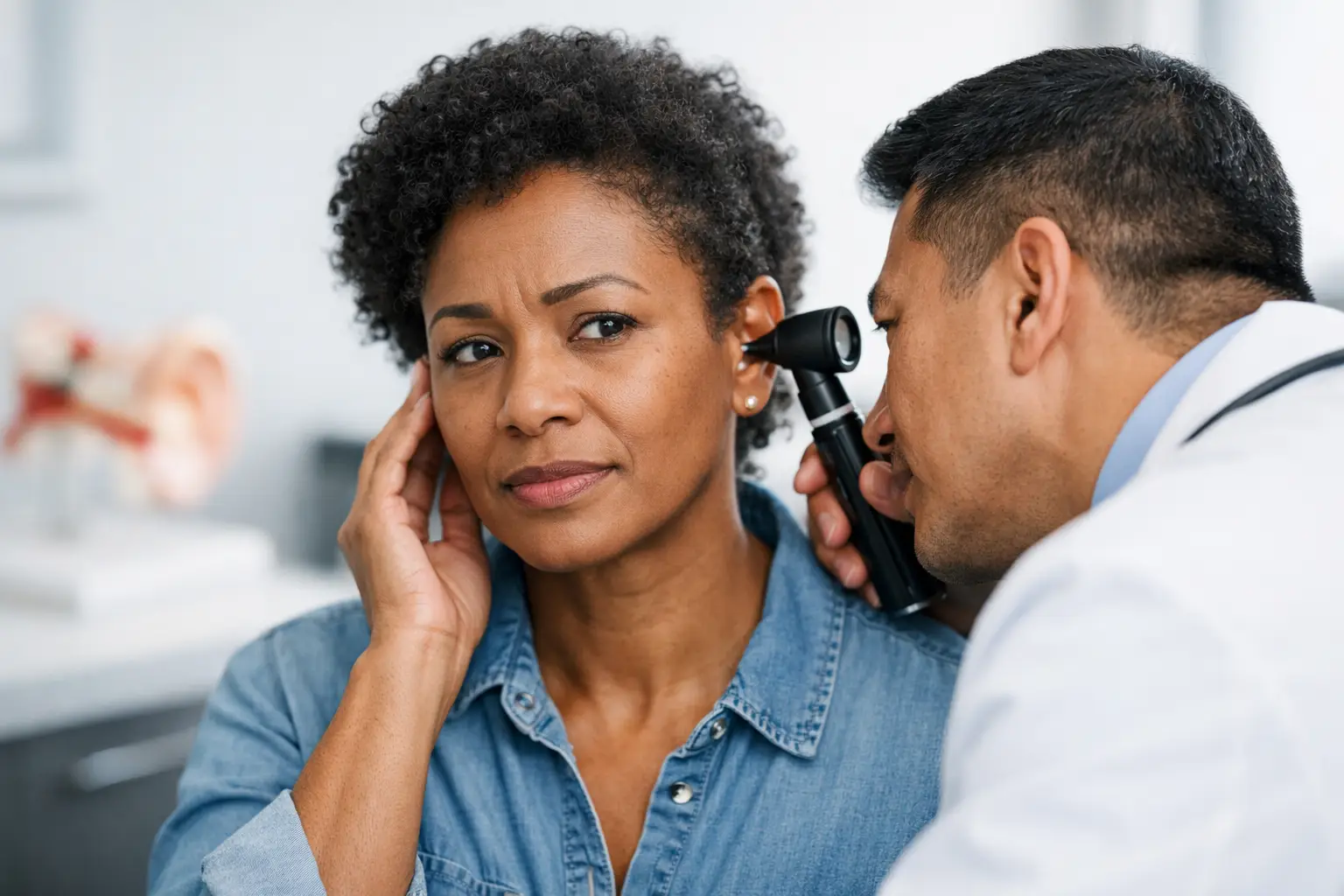
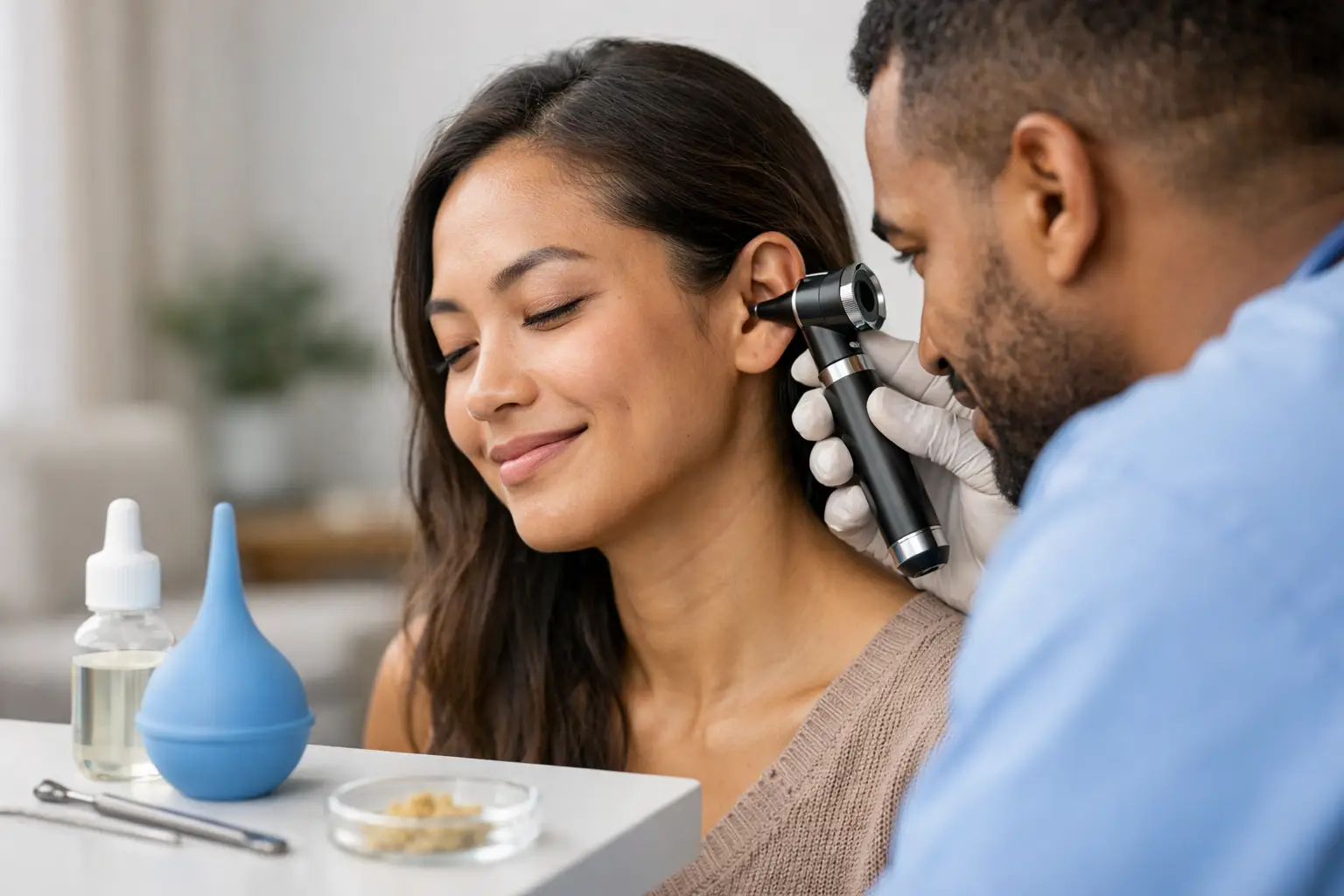
If home care does not help, a primary care clinician, urgent care provider, or ENT can remove wax more safely than most do-it-yourself methods. Depending on the situation, they may use a curette, controlled suction, or professional irrigation.
The best method depends on the wax and the ear. Soft wax may rinse out easily, while hard or deep wax may need instruments and direct visualization. That is why one-size-fits-all advice only goes so far. Safe removal depends on what is actually in the ear and whether the eardrum is intact.
Professional help is especially useful if you wear hearing aids, have recurrent impaction, or have had a past bad experience trying to remove wax at home. It can also give you a clearer plan for prevention so the problem stops repeating.
How to prevent earwax buildup
Prevention is usually less about doing more and more about doing less. The ears do best when the skin inside the canal is left alone. Avoid inserting anything into the ear canal, even if it feels satisfying or seems harmless.
Mineral oil is great for regular ear canal hygiene. Add a few drops to each ear once a week, typically after a shower to help avoid ear wax buildup.
If you are prone to buildup, using wax-softening drops occasionally may help, but frequency depends on your ears. Some people do well with a maintenance routine every few weeks, while others only need help once or twice a year. If you wear earbuds or hearing aids daily, cleaning those devices regularly can reduce trapped debris and make irritation less likely.
It also helps to pay attention to patterns. If one ear repeatedly feels blocked after swimming, showers, or device use, that detail matters. Small habit changes can make a difference, and Safe Ear Care encourages this kind of prevention-first thinking because it keeps ear care simple and lower risk.
A quick reality check on “clean” ears
A lot of people aim for ears with no visible wax at all, but that is not the goal. A small amount of earwax is normal and healthy. Trying to remove every trace can leave the ear canal dry, itchy, and more vulnerable to irritation.
The safer standard is not perfectly clean ears. It is comfortable ears, clear hearing, and no signs of blockage or infection. If your ears feel fine, you probably do not need to do much at all.
If earwax is bothering you, be patient with it. Gentle softening, minimal interference, and knowing when to get help usually work better than any quick fix, and your ears tend to reward that kind of care.
Recommended products
Consider Auil ear drops by Oto Anthro. They can be found on Amazon or OtoAnthro.com
Sources
- Schwartz SR, Magit AE, Rosenfeld RM, et al. Clinical Practice Guideline (Update): Earwax (Cerumen Impaction). Otolaryngology–Head and Neck Surgery. 2017;156(1_suppl):S1–S29. American Academy of Otolaryngology–Head and Neck Surgery Foundation.
- National Institute on Deafness and Other Communication Disorders (NIDCD). Why You Shouldn’t Use Cotton Swabs to Clean Your Ears. National Institutes of Health.
- American Academy of Otolaryngology–Head and Neck Surgery. Earwax (Cerumen Impaction). ENThealth.org.
- American Academy of Otolaryngology–Head and Neck Surgery Foundation. Dos and Don’ts of Earwax (patient handout).
- National Institute for Health and Care Excellence. Management of earwax. Evidence review for Hearing loss in adults: assessment and management (NICE guideline NG98). 2018.
- Vessey DA, Lee KH, Blacker KL. Characterization of the oxidative stress initiated in cultured human keratinocytes by treatment with peroxides. Journal of Investigative Dermatology. 1992;99(6):859–863.
- UK Health Security Agency. Hydrogen peroxide: toxicological overview. Updated 28 November 2024.
- DailyMed, U.S. National Library of Medicine. Ear Drops (carbamide peroxide 6.5%) — over-the-counter drug label. OTC Monograph M014. Updated 28 July 2025.
About the Author
Written and medically reviewed by Joshua A. Stramiello, MD, board-certified otolaryngologist (ear, nose, and throat physician). Last reviewed August 6, 2026.
Dr. Stramiello earned his Doctor of Medicine at the University of South Florida Morsani College of Medicine, completed his general surgery internship at Vanderbilt University Medical Center, and completed residency in Otolaryngology–Head & Neck Surgery at the University of California, San Diego. He has cared for ENT patients at Dartmouth-Hitchcock, Sanford Hospital, and West Suffolk Hospital in the UK, and his peer-reviewed research spans pediatric otolaryngology, airway surgery, and ear disease (Google Scholar).
The content on SafeEarCare.com is intended for educational purposes only and should not be considered medical advice. It is not a substitute for professional medical advice, diagnosis, or treatment. Always consult your physician or qualified healthcare provider regarding your individual health needs.
Discover more from Safe Ear Care
Subscribe to get the latest posts sent to your email.
Permalink
Permalink
Permalink
Permalink
Permalink
Permalink
Permalink