
Written and medically reviewed by Joshua A. Stramiello, MD — board-certified otolaryngologist (ear, nose, and throat physician).
Published July 3, 2026 · Last medically reviewed August 6, 2026 · Sources
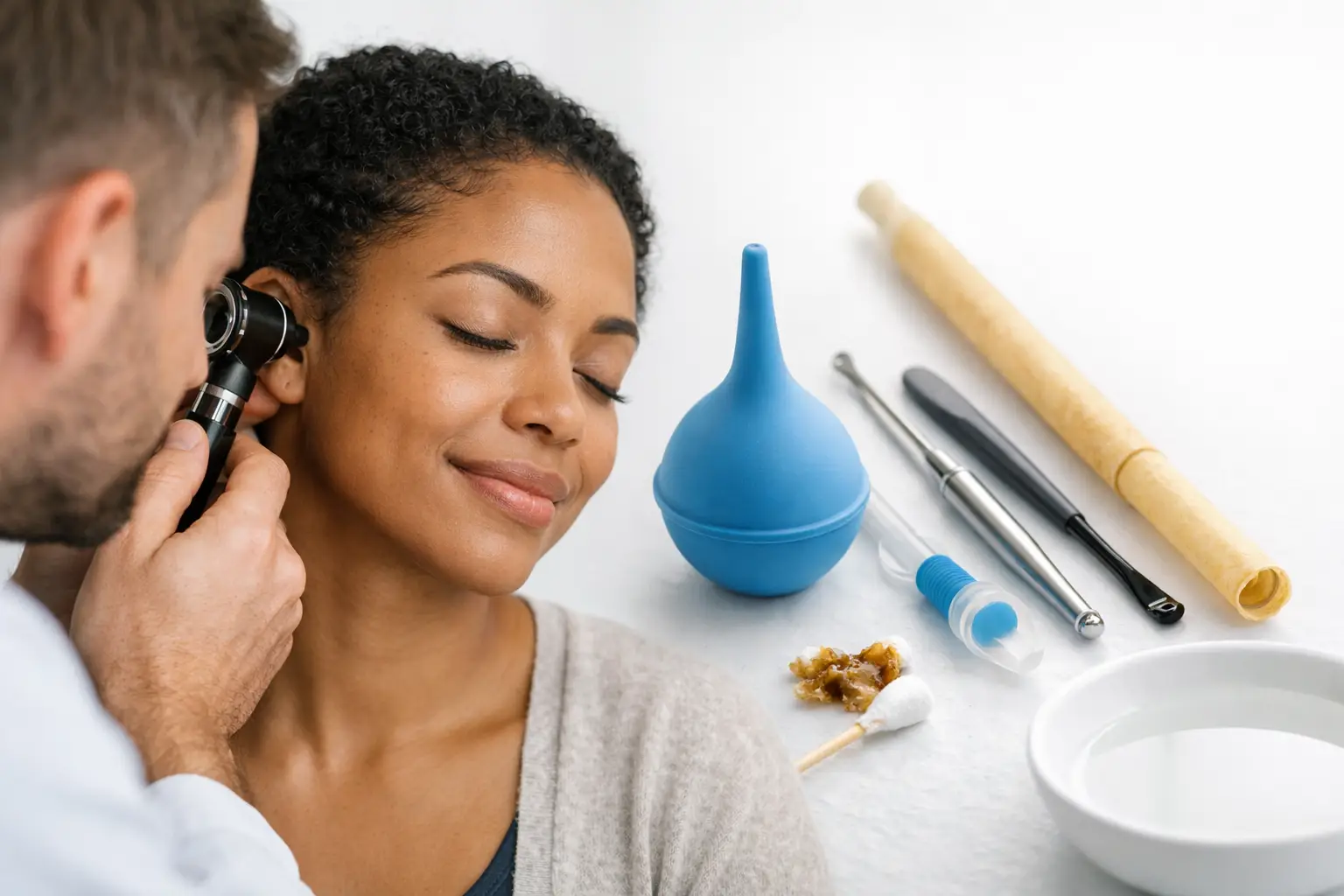
Quick answer: Safe earwax removal means softening wax with gentle oil drops and letting the ear clear itself — or having a professional remove stubborn buildup. Unsafe removal means cotton swabs, ear candles, sharp tools, and forceful flushing, all of which can compact wax or injure the ear.
A lot of people start thinking about earwax removal only after something feels off – a clogged sensation, muffled hearing, itching, or that annoying feeling that water is stuck in the ear. The problem is that many common habits meant to “clean” the ears can push wax deeper, irritate the canal, or make discomfort worse. Safe ear care starts with understanding what earwax actually does and why gentle methods matter.
Why earwax removal is not always necessary
Earwax, also called cerumen, is not dirt. It helps trap dust and debris, supports the ear canal’s natural environment, and provides a layer of protection against dryness and irritation. In many cases, the ears move wax out on their own through normal jaw motion from talking and chewing.1
That is why earwax removal is not something everyone needs to do regularly. If your ears feel comfortable and hearing seems normal, there may be nothing to remove. Over-cleaning can strip away that protective layer and leave the ear canal feeling dry, itchy, or more sensitive than before.
For some people, though, wax does build up more easily. This can happen with narrow ear canals, frequent earbud use, hearing aid use, heavy sweating, or a tendency toward drier wax. In those cases, earwax management becomes less about “cleaning” and more about softening wax gently and avoiding habits that make blockage more likely.
What causes earwax buildup
Wax buildup is often less about producing too much wax and more about wax not moving out properly. Anything that blocks the ear canal or repeatedly presses wax inward can contribute. Cotton swabs are a common example. They may remove a small amount near the opening, but they often push the rest farther in.2
Earbuds, earplugs, and hearing aids can also affect how wax behaves. They sit in or near the canal for long periods, which can trap moisture, press wax inward, and create more friction in sensitive ears. Some people notice more buildup when they wear these devices daily, especially if they already have dry or flaky ears.
Age can play a role too. Earwax often becomes drier and harder over time, which makes it less likely to clear naturally. That is one reason gentle softening matters so much.
Safer earwax removal at home
If wax seems dry, stubborn, or mildly built up, the safest at-home approach is usually to soften it first. This is where simple oil-based ear drops can be helpful. Mineral oil, coconut oil, and olive oil are widely preferred by people looking for a gentler option for dry earwax, itchy ears, and irritation related to earbuds, hearing aids, sweat, or water exposure.
A few drops placed in the ear can help soften dry wax so it can move more naturally.3 This approach is generally more comfortable than harsh bubbling solutions, especially for people whose ear canals already feel irritated. It also fits with a prevention mindset – softer wax is often easier for the ear to manage on its own.
Safe Ear Care generally favors simple oil-based options over peroxide-based drops. Products made with mineral oil, coconut oil, or olive oil are often a better fit for people who want a more soothing approach to dry wax and everyday ear comfort. The key is to think gentle, not aggressive.
Earwax removal methods that can cause problems
The biggest issue with earwax removal is that many popular methods are too forceful for a small, delicate space. Cotton swabs are the classic example, but they are far from the only one. Ear candling is unsafe and not supported by good evidence.4 Scraping tools can scratch the canal. Repeated flushing without knowing what is causing symptoms can also backfire.
Chemical irritation is another concern. Some people use peroxide-based or alcohol-based drops hoping for a stronger effect, but stronger does not always mean better. If the ear canal is dry, sensitive, or already irritated, those ingredients may increase discomfort. For someone dealing with flaking, itching, earbud friction, or hearing aid sensitivity, that trade-off may not be worth it.
This is where a lot of ear care goes wrong. People assume the ear needs a deep clean, when what it often needs is less interference and a more protective routine.
Signs that wax may be the issue
Earwax buildup can feel different from person to person. Some people notice muffled hearing or a clogged feeling after a shower. Others notice itching, pressure, or the sense that one ear is “full.” Hearing aid users may pick up more feedback or notice their devices feel less comfortable. Earbud users sometimes become more aware of pressure or reduced sound clarity.
Still, symptoms are not always caused by wax. Fullness, hearing changes, discomfort, and ringing can happen for several reasons. That is why it helps to avoid guessing too confidently. Home care makes the most sense when the issue seems mild, familiar, and clearly connected to dry wax or gradual buildup.
When to be more cautious about earwax removal
There are times when self-treatment is not the right move. If ear symptoms are new, significant, or one-sided, it is wise to be careful. The same is true if there is notable pain, drainage, bleeding, sudden hearing loss, or a history of ear surgery or eardrum problems. In those situations, it is better not to put drops or tools into the ear without professional guidance.
Even with mild buildup, caution matters if the ear canal is very irritated. A gentle method can still be too much if the skin is already inflamed from repeated cleaning, friction from devices, or frequent moisture exposure. Sometimes the most helpful reset is simply stopping the habits that are aggravating the ear.
How to support easier earwax removal over time
For people who deal with recurrent buildup, prevention is usually more useful than reacting once the ear feels blocked. That starts with not inserting objects into the canal. It also helps to pay attention to anything that dries out or irritates the ears repeatedly.
If you use earbuds often, give your ears regular breaks and keep the devices clean. If you wear hearing aids, watch for signs of dryness or friction and address comfort early. If sweat or water exposure leaves your ears feeling tight or itchy, a simple soothing routine may help prevent wax from becoming hard and stubborn.
This is one reason oil-based ear drops have become a practical option for ongoing ear comfort. Used thoughtfully, they can support a healthier moisture balance in ears that tend to feel dry, itchy, or prone to compacted wax. That can be especially useful for adults who wear in-ear devices most days.
Earwax removal and the myth of the perfectly clean ear
A lot of anxiety around earwax comes from the idea that visible wax means poor hygiene. It does not. Ears are self-maintaining to a point, and a small amount of wax is normal. The goal is not a wax-free ear canal. The goal is a comfortable ear that can protect itself and hear well.
That distinction matters because it changes behavior. When people stop chasing perfectly clean ears, they are less likely to overuse swabs, harsh drops, or random tools. They tend to notice patterns instead – whether buildup happens after daily earbud use, whether the ears get dry in winter, or whether wax feels harder with age.
That is a much healthier way to think about earwax removal. Instead of trying to remove every trace of wax, focus on whether the ear feels comfortable, functions normally, and stays free from avoidable irritation.
A practical way to think about earwax removal
If earwax seems soft and not causing symptoms, leaving it alone is often the smartest choice. If it feels dry or mildly built up, gentle softening with simple oil-based drops may be a more ear-friendly option than aggressive cleaning. If symptoms are stronger, unclear, or out of the ordinary, caution is the better path.
The best ear care habits are usually the least dramatic ones. Be gentle, be consistent, and treat the ear canal like the sensitive skin space it is. A calmer approach often does more for long-term comfort than any quick fix ever will.
We Recommend the Following Products
Disclosure: Dr. Stramiello is the founder of Oto Anthro (Otolaryngological Anthropology), the company that makes the Auil ear drops shown below, and SafeEarCare.com provides links to Amazon for purchase. That is a material financial relationship, and we disclose it plainly to remain transparent. The clinical guidance here does not change based on what we sell — any plain, purpose-made single oil will do the same job. Full disclosure.


Sources
- Schwartz SR, Magit AE, Rosenfeld RM, et al. Clinical Practice Guideline (Update): Earwax (Cerumen Impaction). Otolaryngology–Head and Neck Surgery. 2017;156(1_suppl):S1–S29. American Academy of Otolaryngology–Head and Neck Surgery Foundation.
- National Institute on Deafness and Other Communication Disorders (NIDCD). Why You Shouldn’t Use Cotton Swabs to Clean Your Ears. National Institutes of Health.
- American Academy of Otolaryngology–Head and Neck Surgery. Earwax (Cerumen Impaction). ENThealth.org.
- American Academy of Otolaryngology–Head and Neck Surgery Foundation. Dos and Don’ts of Earwax (patient handout).
About the Author
Written and medically reviewed by Joshua A. Stramiello, MD, board-certified otolaryngologist (ear, nose, and throat physician). Last reviewed August 6, 2026.
Dr. Stramiello earned his Doctor of Medicine at the University of South Florida Morsani College of Medicine, completed his general surgery internship at Vanderbilt University Medical Center, and completed residency in Otolaryngology–Head & Neck Surgery at the University of California, San Diego. He has cared for ENT patients at Dartmouth-Hitchcock, Sanford Hospital, and West Suffolk Hospital in the UK, and his peer-reviewed research spans pediatric otolaryngology, airway surgery, and ear disease (Google Scholar).
The content on SafeEarCare.com is intended for educational purposes only and should not be considered medical advice. It is not a substitute for professional medical advice, diagnosis, or treatment. Always consult your physician or qualified healthcare provider regarding your individual health needs.
Discover more from Safe Ear Care
Subscribe to get the latest posts sent to your email.



Permalink
Permalink
Permalink