

Written and medically reviewed by Joshua A. Stramiello, MD — board-certified otolaryngologist (ear, nose, and throat physician).
Published June 14, 2026 · Last medically reviewed August 6, 2026 · Sources
Quick answer: Earbuds usually hurt because of the wrong tip size, too-deep insertion, long sessions without breaks, or trapped moisture and friction against sensitive canal skin. A smaller tip, shallower fit, and regular breaks fix most earbud pain; persistent soreness deserves attention.
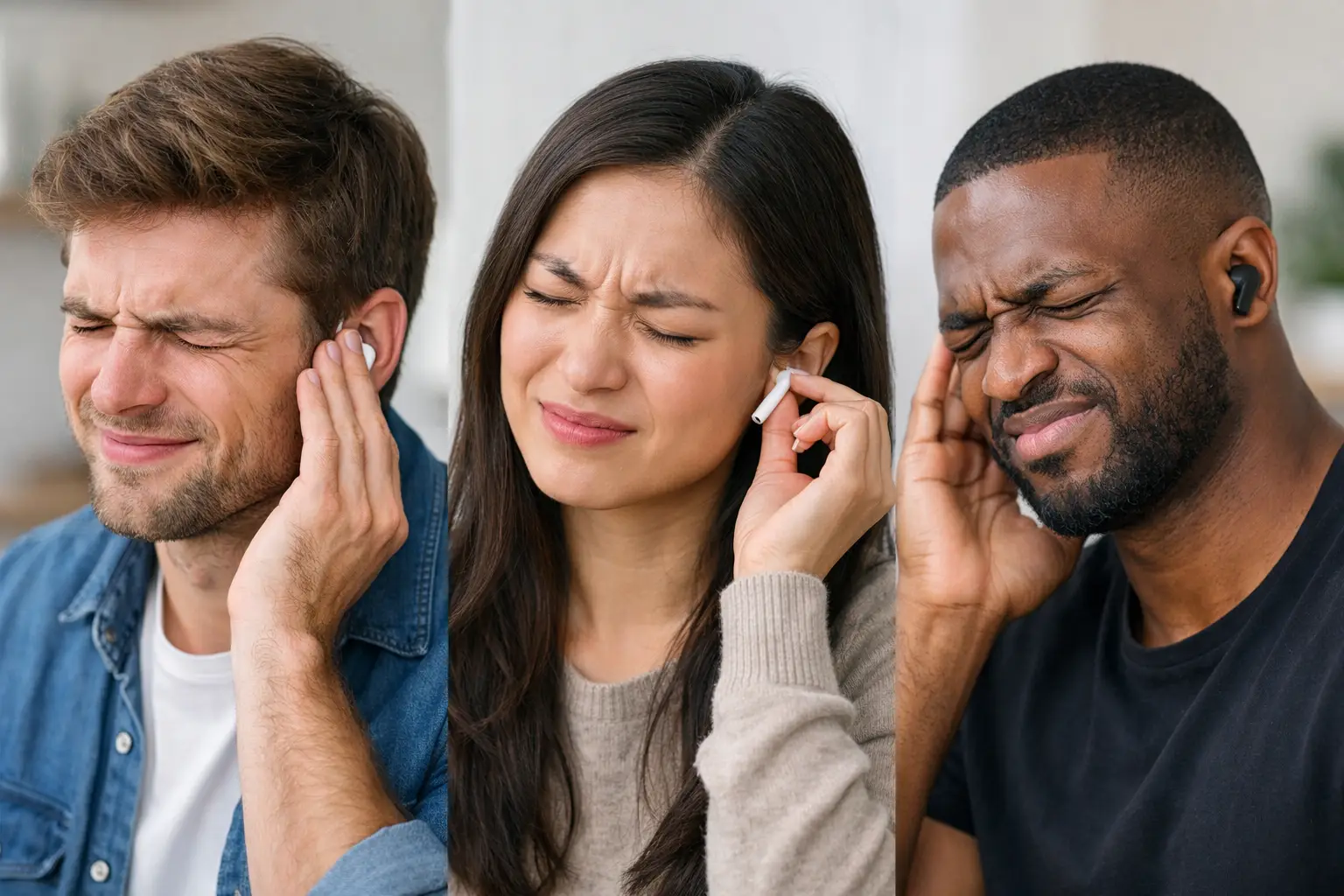
You put your earbuds in for a commute, a workout, or one long call, and within minutes your ears feel sore, itchy, pressured, or oddly raw. If you keep thinking, earbuds hurt my ears, the problem is usually not random. Earbud discomfort often comes down to fit, moisture, friction, earwax, or listening habits that put too much stress on a very sensitive part of the body.
The good news is that earbud pain is often fixable with a few practical changes. The harder part is figuring out which change matters most for your ears. Some people need a different tip size. Others need to reduce moisture, take breaks, or deal with dryness and wax buildup that make earbuds feel much worse than they should.
Why earbuds hurt my ears in the first place
The outer ear canal is lined with delicate skin. Unlike thicker skin on your hands or feet, this area does not handle constant rubbing well. When an earbud presses against the wrong spot, even light pressure can start to feel sharp or irritating.
Fit is the most common issue. If the ear tip is too large, it can stretch the entrance of the canal and create pressure. If it is too small, the earbud may shift around and cause friction every time you move your jaw, walk, or talk. Either way, your ears pay for it.
Moisture also matters more than many people realize. Sweat, humidity, and trapped heat can soften the skin in the ear canal, making it easier to irritate. This is one reason earbuds that feel fine at a desk can become uncomfortable during a workout.
Earwax can add another layer to the problem. A little earwax is normal and protective, but buildup can change how earbuds sit in the ear.1 Instead of resting comfortably, they may push wax deeper, create extra pressure, or rub against already sensitive skin.2 Dry ears can cause trouble too. When the skin is overly dry, earbuds may feel scratchy, tight, or painful faster than expected.
The most common signs your earbuds are the problem
Earbud discomfort is not always dramatic. Sometimes it starts small and builds over time. Your ears may feel tender after listening, or you may notice that one side hurts more than the other. That can happen because ear canals are not perfectly symmetrical, and many people need a different fit on each side even if they have never thought about it.
Some people notice itching, mild redness, or a feeling of fullness after use. Others describe soreness right at the ear canal entrance, especially when removing the earbuds. If your ears only hurt when you use one specific pair, that points strongly to a fit or material issue rather than a broader ear-health concern.
Pain can also show up after long listening sessions. Even a decent fit can become irritating if the ears never get a break. Extended wear increases pressure, warmth, and moisture, which can make small issues feel much bigger by the end of the day.
How to make earbuds stop hurting your ears
Start with the ear tips. If your earbuds came with multiple sizes, test them carefully rather than assuming the default size is right. A secure fit should feel stable but not tight. You should not feel stretching, pressure, or the sense that the earbud is wedged in place.
If the earbuds hurt near the entrance of the ear canal, try a smaller tip. If they slip and force you to keep pushing them back in, a slightly larger tip may help. This is one of those it-depends situations where comfort and stability have to balance each other.
Wearing time matters too. Short breaks help the skin recover from pressure and trapped moisture. If you use earbuds for work, calls, or exercise, give your ears a few minutes without anything in them throughout the day.
Cleaning is another overlooked fix. Earbuds collect wax, oil, sweat, and skin debris. When that buildup sits on the surface, it can increase irritation and affect fit. Clean the earbuds according to the manufacturer’s instructions and let them dry fully before using them again.
Volume deserves attention as well. Loud listening does not just affect hearing over time. Many people unconsciously push earbuds deeper into the ears to improve sound or block outside noise, and that extra pressure can lead to soreness. A better physical fit often reduces the urge to do that.
When dryness and earwax make earbuds feel worse
Sometimes the earbuds are only part of the story. If the skin in your ears is dry or irritated, even well-fitting earbuds may feel uncomfortable. Dryness can make the ear canal more sensitive to friction, especially in people who use earbuds often, wear hearing devices, swim, or sweat regularly.
In that situation, gentle moisture support may help the ear canal feel more comfortable. Safe Ear Care generally favors simple oil-based ear drops such as mineral oil, coconut oil, or olive oil for dry ears and dry wax. Those ingredients are often a better fit for comfort-focused ear care than harsher ingredients that can further dry or irritate the ear canal.
A few drops of a simple ear oil product can sometimes help soften dry wax and support the skin barrier, which may reduce the rough, scratchy feeling some people notice with earbuds. This is especially relevant if earbuds feel uncomfortable even at low volume and with a good fit, or if you also deal with itching or flaky dryness. Safe Ear Care favors simple, purpose-made oil drops such as Auil Mineral Oil Ear Drops, Auil Coconut Oil Ear Drops, and Auil Olive Oil Ear Drops by Oto Anthro for this kind of gentle, moisture-first routine.
Disclosure: Dr. Stramiello is the founder of Oto Anthro (Otolaryngological Anthropology), the company that makes the Auil ear drops shown below, and SafeEarCare.com provides links to Amazon for purchase. That is a material financial relationship, and we disclose it plainly to remain transparent. The clinical guidance here does not change based on what we sell — any plain, purpose-made single oil will do the same job. Full disclosure.


The key is keeping ear care gentle. Many people reach for peroxide-based products or alcohol-based solutions when their ears feel off, but those ingredients can be too harsh for people already dealing with dryness or irritation. If your ears are sensitive, simpler is often better.
Earbud shape and material can matter more than you think
Not all earbuds are built for all ears. Some sit shallow in the outer ear, while others seal more deeply in the canal. If one style consistently hurts, it may simply be the wrong design for your ear anatomy.
Silicone tips work well for many people, but some ears prefer softer foam styles or a less intrusive shape. Hard plastic edges can create pressure points, especially if you wear glasses, chew gum, or move around a lot while listening. If discomfort happens in the outer ear rather than deep in the canal, the body of the earbud itself may be pressing in the wrong place.
This is why comfort testing matters more than brand loyalty. A highly rated pair can still be a poor match for your ears. If you have tried different tip sizes and still feel pain, switching to another earbud shape or even to over-ear headphones may be the safer move.
When earbud pain means you should pause use
If your ears feel sore once in a while and the discomfort goes away quickly, that usually points to a manageable fit or wear-time issue. But if pain keeps returning, gets worse, or comes with ongoing tenderness, visible irritation, or a blocked feeling, it makes sense to stop using earbuds for a bit and let your ears rest.
Persistent discomfort can mean the skin is irritated enough that repeated earbud use keeps restarting the problem. It can also suggest wax buildup or another ear issue that is changing the way earbuds sit. This is less about panic and more about not pushing through pain that your ears are clearly trying to flag.
A professional evaluation may be appropriate if ear discomfort does not improve after changing ear tips, reducing wear time, cleaning the earbuds, and giving the ears time to recover.3 That is especially true if one ear hurts much more than the other or if the discomfort keeps coming back with different devices.
Safer daily habits for people who rely on earbuds
If you use earbuds every day, comfort should be treated like part of hearing hygiene, not an afterthought. Good habits add up. Keep listening sessions reasonable, wipe down the earbuds regularly, and avoid inserting them into ears that already feel irritated.
It also helps to rotate how you listen. If you are on back-to-back calls all day, mixing in speaker use or over-ear headphones can reduce repeated pressure on the ear canal. Small changes like this can prevent minor soreness from turning into a recurring issue.
And pay attention to timing. If your ears are most uncomfortable after workouts, sweat may be the main trigger. If pain shows up after hours at a desk, pressure and wear time are more likely. The pattern usually tells you where to start.
Earbuds should not feel like a test of endurance. If they do, your ears are not being difficult. They are asking for a better fit, gentler care, or a break, and listening to that early is one of the simplest ways to protect long-term ear comfort.
Sources
- Schwartz SR, Magit AE, Rosenfeld RM, et al. Clinical Practice Guideline (Update): Earwax (Cerumen Impaction). Otolaryngology–Head and Neck Surgery. 2017;156(1_suppl):S1–S29. American Academy of Otolaryngology–Head and Neck Surgery Foundation.
- National Institute on Deafness and Other Communication Disorders (NIDCD). Why You Shouldn’t Use Cotton Swabs to Clean Your Ears. National Institutes of Health.
- American Academy of Otolaryngology–Head and Neck Surgery. Earwax (Cerumen Impaction). ENThealth.org.
- American Academy of Otolaryngology–Head and Neck Surgery Foundation. Dos and Don’ts of Earwax (patient handout).
About the Author
Written and medically reviewed by Joshua A. Stramiello, MD, board-certified otolaryngologist (ear, nose, and throat physician). Last reviewed August 6, 2026.
Dr. Stramiello earned his Doctor of Medicine at the University of South Florida Morsani College of Medicine, completed his general surgery internship at Vanderbilt University Medical Center, and completed residency in Otolaryngology–Head & Neck Surgery at the University of California, San Diego. He has cared for ENT patients at Dartmouth-Hitchcock, Sanford Hospital, and West Suffolk Hospital in the UK, and his peer-reviewed research spans pediatric otolaryngology, airway surgery, and ear disease (Google Scholar).
The content on SafeEarCare.com is intended for educational purposes only and should not be considered medical advice. It is not a substitute for professional medical advice, diagnosis, or treatment. Always consult your physician or qualified healthcare provider regarding your individual health needs.
Discover more from Safe Ear Care
Subscribe to get the latest posts sent to your email.


Permalink
Permalink
Permalink
Permalink
Permalink
Permalink