

Written and medically reviewed by Joshua A. Stramiello, MD — board-certified otolaryngologist (ear, nose, and throat physician).
Published October 2, 2026 · Last medically reviewed October 5, 2026 · Sources
Quick answer: Clean only the part of the ear you can see: wipe the folds, earlobe, and the skin behind the ear with a soft washcloth and warm water (plus a little gentle cleanser if you like), rinse, and pat dry. Stop at the opening of the ear canal — never put cotton swabs, fingernails, or tools inside, because earwax is protective and usually moves outward on its own. See a doctor for pain, drainage, bleeding, sudden hearing changes, or persistent blockage.
A little soap, shampoo residue, sweat, and earbud grime can collect around the folds of the outer ear quickly. Knowing how to clean outer ears gently helps keep that skin comfortable without pushing anything into the ear canal, where everyday cleaning habits can create more trouble than they solve.
The goal is simple: clean the part of the ear you can see, dry it well, and leave the canal alone. Outer-ear care does not need special tools, aggressive scrubbing, or strong ingredients. In most cases, a soft washcloth and a few extra seconds after bathing are enough.
What Counts as the Outer Ear?
The outer ear includes the visible part of the ear and the opening to the ear canal. This includes the curved rim, the small folds and creases, the earlobe, and the skin just behind the ear. These areas can hold onto sunscreen, hair products, sweat, makeup, dead skin, and moisture.
The ear canal is different. It is the narrow passage leading inward, beyond what you can comfortably see. Earwax belongs there. It helps trap debris and supports the ear’s natural protective environment.1 Cleaning the outer ear should not involve reaching into that passage with a swab, fingernail, towel corner, or tool.
That distinction matters because the skin in and around the ear is delicate. A routine meant to make ears feel fresh can cause dryness, friction, or irritation if it becomes too forceful.
How to Clean Outer Ears Safely
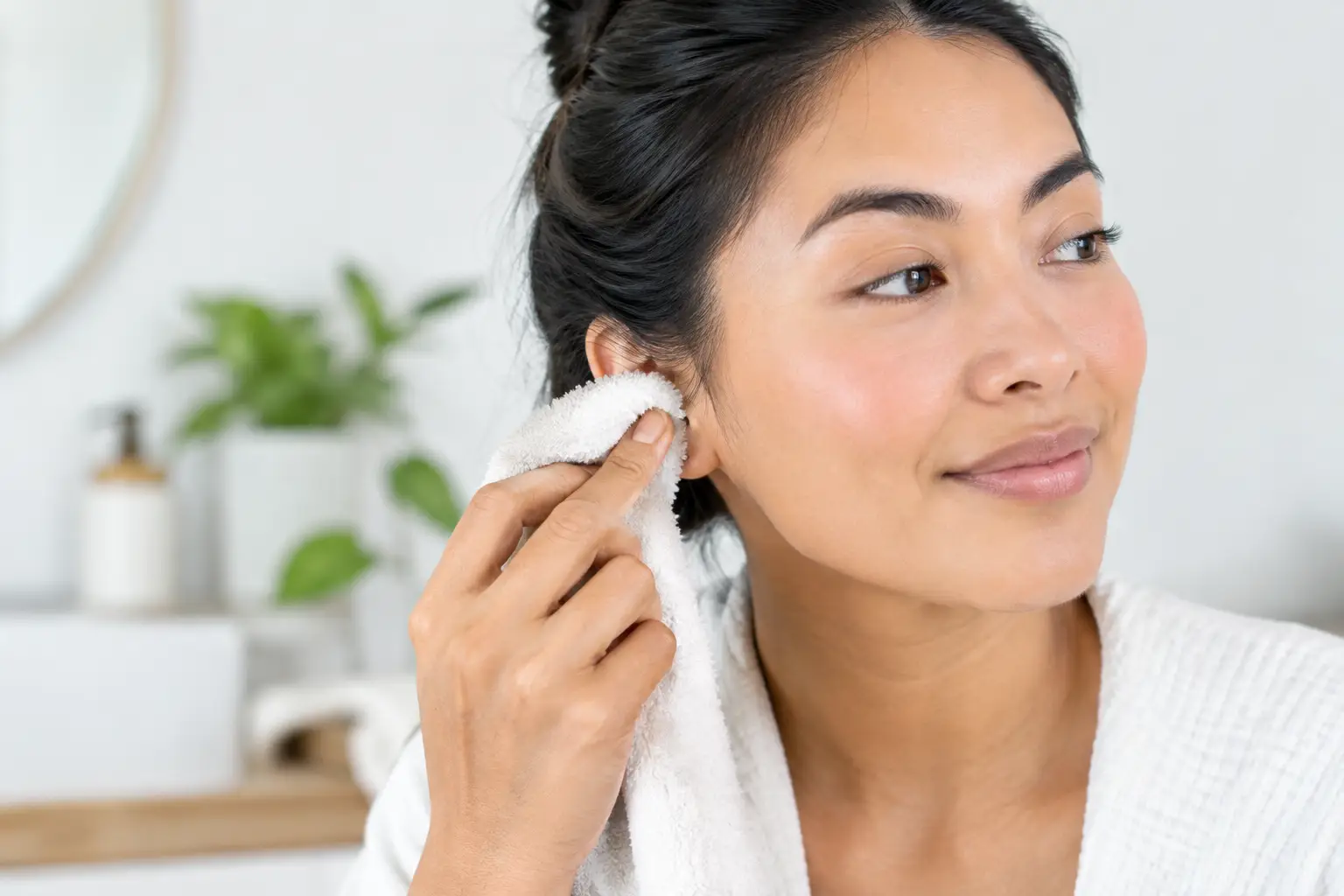
For most people, the easiest time to clean the outer ears is during a shower or while washing the face. Wet a soft washcloth with warm, not hot, water. If you use a gentle cleanser on your face, a small amount can be used on the visible outer ear as well.
Wipe around the front and back of each ear, paying light attention to the creases where product residue and sweat tend to sit. Clean behind the ear and along the earlobe, then rinse away any cleanser with clean water. There is no need to scrub. The skin should feel clean, not squeaky, tight, or tender.
Afterward, pat the outer ear dry with a clean towel. Drying is especially useful after swimming, workouts, humid weather, or a long shower. Rather than inserting a towel into the ear opening, gently blot the visible skin and allow any remaining surface moisture to air-dry.
If your ears feel dry after washing, consider whether your cleanser, shampoo, hair spray, or fragrance is leaving the skin irritated. Sometimes the best change is using less product near the ears and rinsing more thoroughly.
A note about the ear opening
It is fine to wipe the very outside edge of the ear opening if moisture or residue is visible. Stop where the opening becomes narrow or where you can no longer clearly see. Nothing needs to go inside.
This approach may feel almost too simple, especially if you are used to cotton swabs. But gentle, visible-skin-only cleaning aligns with the way ears are designed to care for themselves.
Why Cotton Swabs Are Not for Ear Canals
Cotton swabs are useful for many household tasks, but cleaning inside ears is not one of them. A swab can push wax farther inward, pack it against the canal, or scrape fragile skin. Even when the swab comes out looking dirty, it may have moved more wax deeper into the ear.2
The same concern applies to bobby pins, fingernails, rolled tissue, ear picks, and small grooming tools.3 These methods can feel satisfying in the moment because they create a sensation of cleaning. The trade-off is that they can remove protective wax, create tiny areas of irritation, and encourage more frequent touching of the ear.
If you notice wax at the outer edge of the canal, wipe only what is already visible with a soft, damp cloth. Do not chase wax farther in. Wax naturally moves outward over time for many people.1
Keep the Outer Ear Dry, Not Over-Dried
Water exposure is one of the most common reasons outer ears feel itchy or uncomfortable. This can happen after swimming, bathing, sweating under headphones, or wearing hearing aids for a long day. Moisture trapped in folds of skin can leave the area feeling soft, itchy, or irritated.
A clean towel is usually the right first step. Tilt your head from side to side after water exposure, then pat the visible ear dry. If you use earbuds, over-ear headphones, hearing aids, earplugs, or a swim cap, give your ears a few minutes of open-air time before putting them back on when possible.
Over-drying can be a problem too. Rubbing the ears repeatedly with a towel, using harsh soaps, or applying drying ingredients can strip the skin’s natural oils. The outer ear needs to be clean, but it also needs its protective skin barrier intact.
Clean the Things That Touch Your Ears
Sometimes the source of outer-ear buildup is not the ear itself. It is the item touching it every day. Earbuds can collect skin oil, makeup, wax residue, and sweat. Hearing aids, headphone cushions, eyeglass arms, phone screens, helmet straps, and pillowcases can do the same.
Wipe earbuds and headphone surfaces according to the manufacturer’s cleaning instructions, and let them dry completely before use. For hearing aids, follow the device-specific care routine recommended by the manufacturer or hearing professional. Avoid soaking electronic devices or using products that leave behind a strong fragrance or oily film.
If you wear earbuds often, taking short breaks can help reduce friction and heat around the ear opening. A better fit can also make a meaningful difference. Earbuds that press too firmly or shift constantly may irritate the skin even when they are clean.
When Dry or Itchy Outer Ears Need a Simpler Routine
Itching often leads people to clean more often, but repeated cleaning can make dry skin feel worse. If the outer ear is flaky, sensitive, or tight, scale back to warm water, a soft cloth, and careful drying. Avoid experimenting with peroxide, alcohol-based liquids, fragranced oils, or leftover skin products around the ear opening.
That caution is about fragranced and blended products, not oil itself. When the skin at the ear opening stays dry, Safe Ear Care favors plain, purpose-made single-oil drops such as Auil Mineral Oil Ear Drops, Coconut Auil Coconut Oil Ear Drops, and Olive Auil Olive Oil Ear Drops by Oto Anthro for this kind of gentle, moisture-first routine.
Disclosure: Dr. Stramiello is the founder of Oto Anthro (Otolaryngological Anthropology), the company that makes the Auil ear drops shown below, and SafeEarCare.com provides links to Amazon for purchase. That is a material financial relationship, and we disclose it plainly to remain transparent. The clinical guidance here does not change based on what we sell — any plain, purpose-made single oil will do the same job. Full disclosure.


Hair products are another common trigger. Shampoo, conditioner, hair dye, dry shampoo, styling spray, and fragrance can remain in the folds behind the ears. Rinsing thoroughly and washing the visible skin after hair care may be more helpful than adding extra ear-cleaning products.
For people who use hearing aids or earbuds, comfort can depend on managing both moisture and friction. Clean devices regularly, keep the outer ear dry after bathing or exercise, and give the skin occasional breaks from prolonged contact when your routine allows.
Common Outer-Ear Cleaning Mistakes
The most frequent mistake is treating ears like skin that needs deep exfoliation. They do not. Scrubbing hard with a washcloth can leave the thin skin around the ear feeling raw, especially near the creases and behind the ear.
Another mistake is using whatever is nearby: hand sanitizer, facial toner, rubbing alcohol, hydrogen peroxide, or strong acne products. These may be useful elsewhere in a personal-care routine, but they can be unnecessarily drying around the ears. Gentle cleansing and plain water are usually the more comfortable choice for visible outer-ear skin.
It also helps to avoid assuming every sensation means there is something to remove. A feeling of fullness, ongoing itchiness, sudden tenderness, drainage, bleeding, a noticeable hearing change, or symptoms that persist deserve attention from a qualified healthcare professional rather than more home cleaning.
A Low-Effort Routine for Everyday Ear Comfort
A practical routine does not need to take more than a minute. During bathing, wash the visible outer ear and the skin behind it with warm water and a soft cloth. Rinse away cleanser or hair-product residue, then pat dry. Clean the items that touch your ears regularly, particularly earbuds and hearing aids.
How often you need to do this depends on your lifestyle. Someone who swims, works out daily, wears hearing aids, uses earbuds for hours, or uses heavy hair products may benefit from more consistent surface cleaning. If your skin is dry or sensitive, a lighter routine may be more comfortable.
Healthy ear care is often less about doing more and more about avoiding the habits that interfere with the ear’s natural protections. Keep cleaning gentle, keep objects out of the canal, and let comfort guide a routine that is easy enough to maintain.
Sources
- Schwartz SR, Magit AE, Rosenfeld RM, et al. Clinical Practice Guideline (Update): Earwax (Cerumen Impaction). Otolaryngology–Head and Neck Surgery. 2017;156(1_suppl):S1–S29. American Academy of Otolaryngology–Head and Neck Surgery Foundation.
- National Institute on Deafness and Other Communication Disorders (NIDCD). Why You Shouldn’t Use Cotton Swabs to Clean Your Ears. National Institutes of Health.
- American Academy of Otolaryngology–Head and Neck Surgery Foundation. Dos and Don’ts of Earwax (patient handout).
About the Author
Written and medically reviewed by Joshua A. Stramiello, MD, board-certified otolaryngologist (ear, nose, and throat physician). Last reviewed October 5, 2026.
Dr. Stramiello earned his Doctor of Medicine at the University of South Florida Morsani College of Medicine, completed his general surgery internship at Vanderbilt University Medical Center, and completed residency in Otolaryngology–Head & Neck Surgery at the University of California, San Diego. He has cared for ENT patients at Dartmouth-Hitchcock, Sanford Hospital, and West Suffolk Hospital in the UK, and his peer-reviewed research spans pediatric otolaryngology, airway surgery, and ear disease (Google Scholar).
The content on SafeEarCare.com is intended for educational purposes only and should not be considered medical advice. It is not a substitute for professional medical advice, diagnosis, or treatment. Always consult your physician or qualified healthcare provider regarding your individual health needs.
Discover more from Safe Ear Care
Subscribe to get the latest posts sent to your email.