
Written and medically reviewed by Joshua A. Stramiello, MD — board-certified otolaryngologist (ear, nose, and throat physician).
Published August 27, 2026 · Last medically reviewed August 31, 2026 · Sources
Quick answer: Earplugs are the better choice when you need genuine sound reduction — sleep, power tools, concerts — because they physically block a broad range of frequencies and can carry a Noise Reduction Rating. Noise cancelling headphones work best on steady low-frequency noise like airplane engines and office ventilation, and their real hearing benefit is letting you listen at a lower volume. They are not rated hearing protection, so match the tool to the setting rather than assuming quieter feels safer, and give your ears regular device-free breaks.
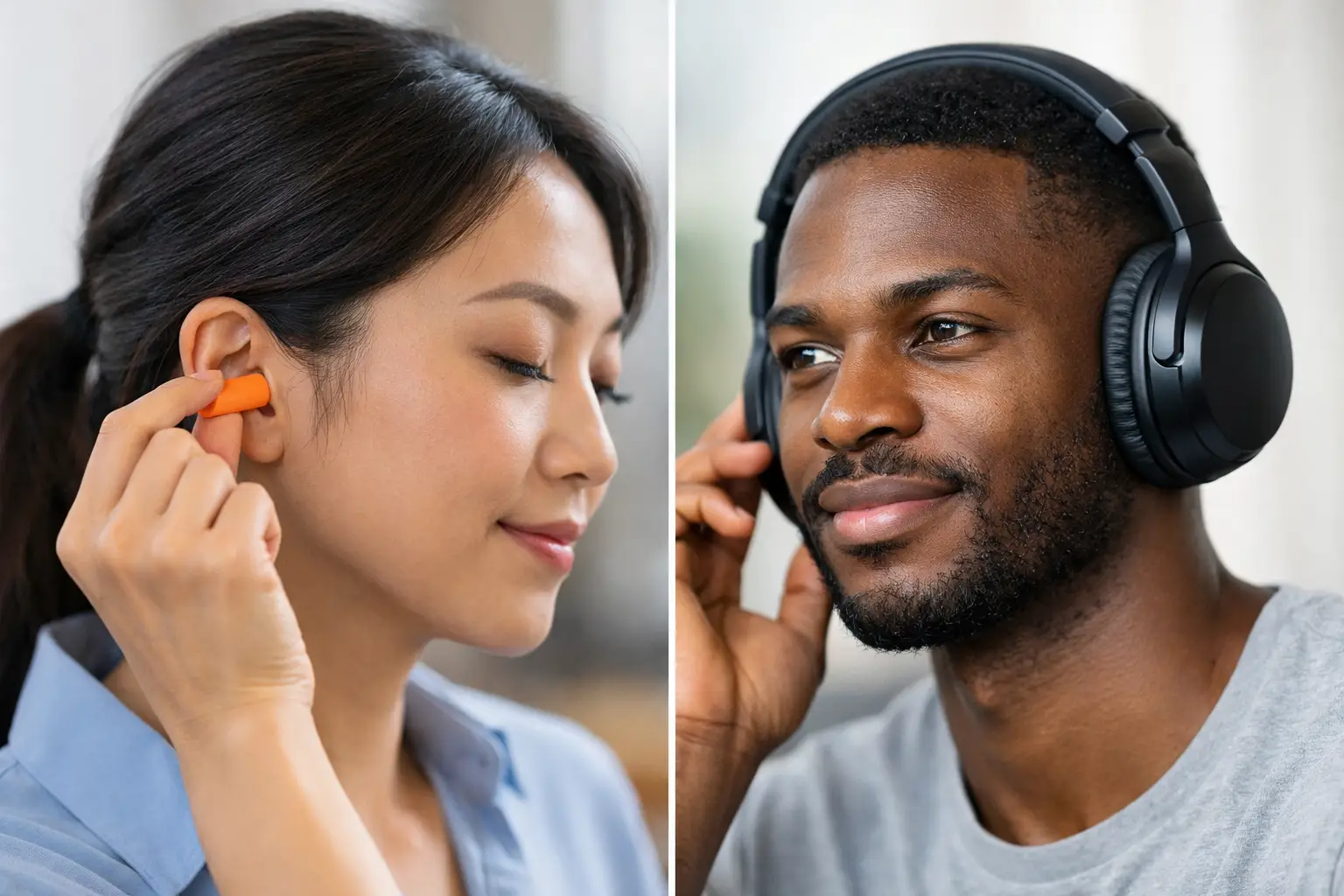
A crying baby two rows back, a lawn mower outside the window, a loud office, a long flight – these are very different noise problems. That is why the choice between earplugs versus noise cancelling headphones is not as simple as picking the option that feels quietest. One reduces sound reaching your ears. The other can make selected background noise seem much less noticeable. For everyday ear comfort and long-term hearing protection, that difference matters.
The best choice depends on what you are trying to block, how loud the environment is, how long you will wear it, and whether your ears tend to feel dry, itchy, pressured, or irritated. A thoughtful choice can make rest, travel, concentration, and noisy tasks more comfortable without creating new ear-care problems.
Earplugs versus noise cancelling headphones: the core difference
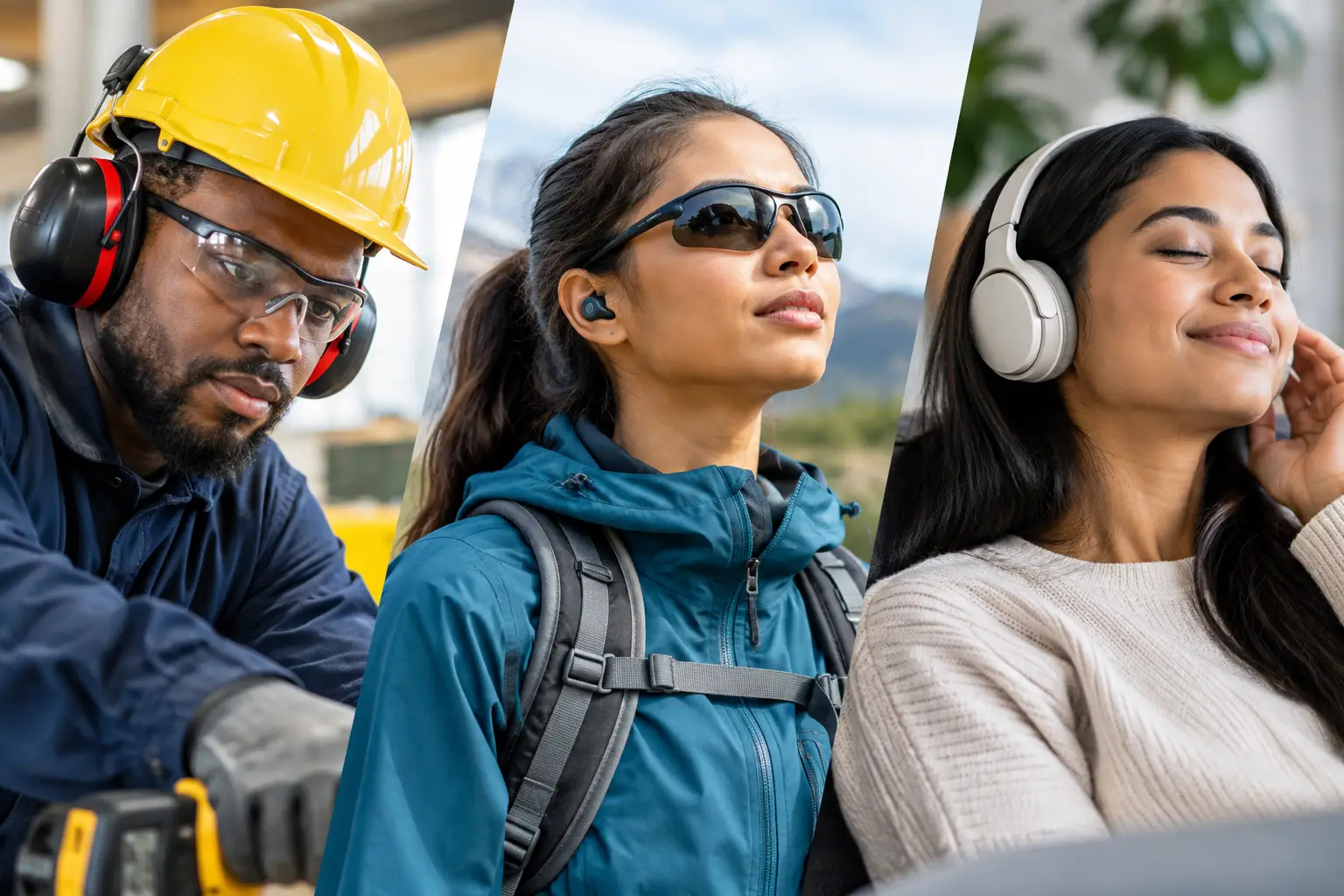
Earplugs create a physical barrier in or over the ear canal. They lower the amount of sound that reaches the eardrum, including a broad range of frequencies. Foam, silicone, wax, and reusable filtered earplugs all work somewhat differently, but their central purpose is passive sound reduction.1
Noise cancelling headphones use microphones and electronics to detect steady outside sound, then produce an opposing sound signal. This is called active noise cancellation, or ANC. It is particularly effective against consistent low-frequency noise, such as airplane engine rumble, bus noise, air conditioning, and the hum of an appliance.
ANC does not make every sound disappear. Sudden conversations, clattering dishes, barking dogs, and sharp high-pitched sounds may still be audible. Headphones also provide some passive sound reduction through their earcups or eartips, but that varies greatly by fit and design.
For genuinely loud settings, passive hearing protection is the more dependable starting point. Active noise cancellation can improve comfort, but it should not be treated as a substitute for properly rated hearing protection around power tools, lawn equipment, motorsports, firearms, concerts, or industrial noise.1
When earplugs make more sense
Earplugs are often the practical choice when you need quiet without music, calls, charging, or bulky gear. They are small, affordable, and useful for sleep, travel, studying, shared living spaces, and noisy chores.
For sleep, soft earplugs can be especially helpful if a partner snores or neighborhood noise is disruptive. The key is comfort. An earplug that presses too firmly, works loose overnight, or leaves your ear canal feeling sore is not the right fit for regular use. Smaller sizes, softer materials, or low-profile reusable designs may feel better for side sleepers.
For loud activities, look for earplugs specifically designed and labeled for hearing protection. Their Noise Reduction Rating, or NRR, provides a useful point of comparison. It does not mean you will experience the full listed reduction in real life, because fit makes a major difference.1 Still, an appropriately fitted, rated earplug offers more meaningful protection than a basic earbud or a pair of ANC headphones alone.
Filtered earplugs can be a good middle ground for concerts, sporting events, and busy venues. They reduce overall volume while allowing speech and music to remain clearer than traditional foam plugs often do.1 They are not ideal for every situation, but they can make it easier to protect your hearing without feeling disconnected from the event.
When noise cancelling headphones are the better fit
Noise cancelling headphones are most valuable when the goal is reducing fatigue from steady background sound. On an airplane, train, or open-plan office, ANC can make the space feel calmer without requiring you to turn music up to compete with the noise.
That last point is easy to overlook. When people use ordinary headphones in a loud place, they often raise the volume until it overpowers the environment. Music through headphones at maximum volume can reach the same range as a concert or a sporting event, which is well above the level considered safe for extended listening.2 ANC may let you listen at a lower, more comfortable volume because the engine hum or office ventilation is less intrusive. This is one of its clearest hearing-friendly advantages.
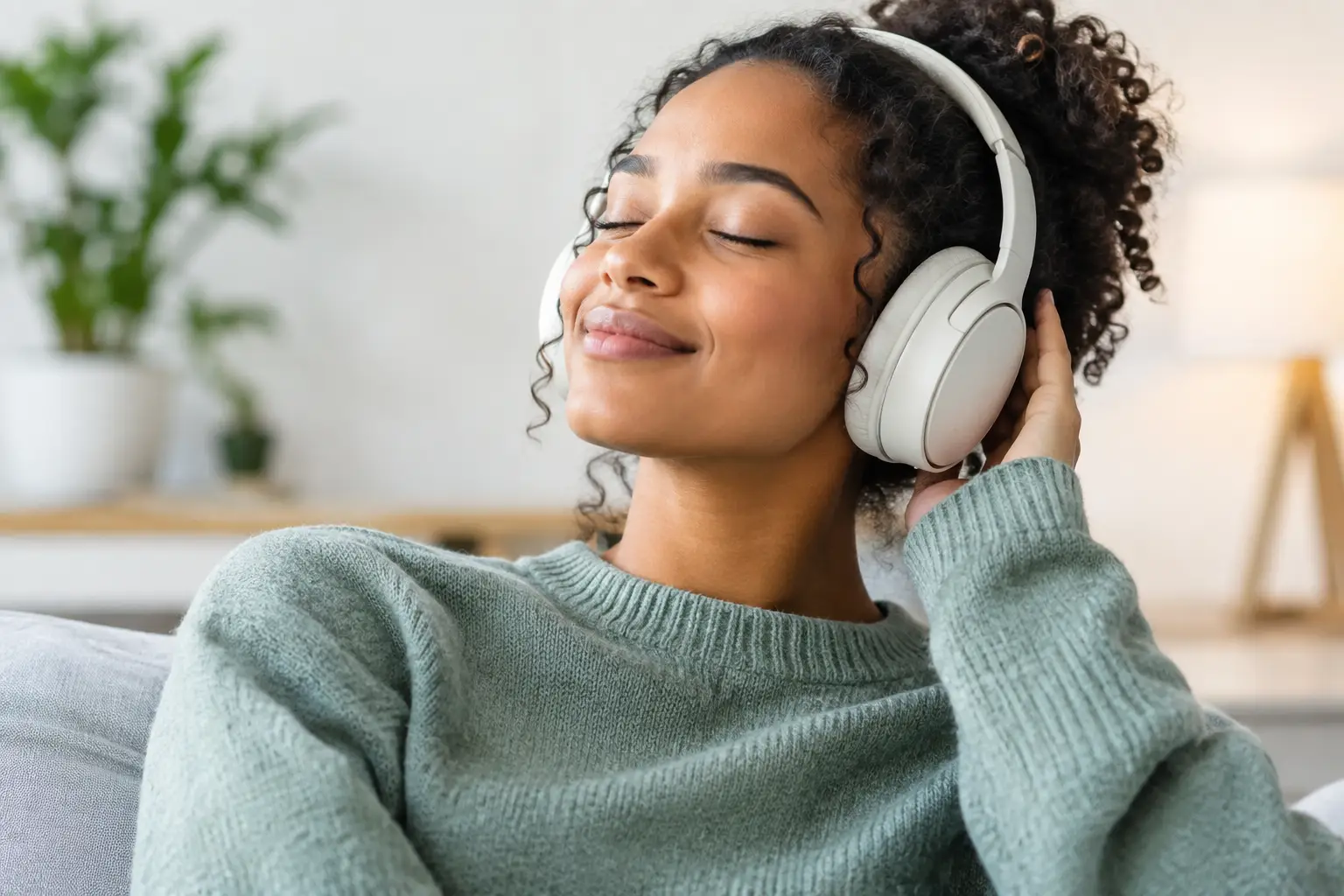
Over-ear noise cancelling headphones are often more comfortable for people who find in-ear devices irritating. Nothing sits inside the ear canal, which can be useful for those prone to earbud pressure, moisture buildup, or itchy ears. The trade-off is warmth around the outer ear, a less convenient fit for sleeping, and possible pressure from the headband or earcups during long sessions.
In-ear ANC earbuds are portable and effective for commuting, but they deserve more caution if your ears are sensitive. A tight seal can trap sweat and moisture, and extended wear can leave the canal feeling warm or tender. Removing them during breaks, cleaning the eartips regularly, and choosing the right tip size can make a meaningful difference.
The hearing protection question: do not assume quiet means safe
A quieter experience is not always the same as protection from damaging noise. This is the most important distinction in the earplugs versus noise cancelling headphones decision.
At home or on a flight, ANC can be very helpful. In a workshop or at a loud event, choose protection made for that job. A practical rule of thumb is to avoid noise that is too loud, too close, or lasts too long — and if you need to raise your voice to speak to someone an arm’s length away, it is reasonable to reduce your exposure and use appropriate hearing protection.2
Some people use both. Wearing foam earplugs under over-ear hearing protection can provide added reduction in especially loud environments when used correctly. ANC headphones over earplugs may make travel more peaceful, but they are not a replacement for purpose-built protective earmuffs when noise levels are high.
Avoid the temptation to wear earplugs continuously just to shut out daily life. Regularly blocking all sound can make communication, awareness of alarms, and awareness of your surroundings more difficult. Choose a level of sound reduction that still lets you communicate in the setting you are in, so you are not tempted to pull protection out partway through a loud event.1
Fit and hygiene affect ear comfort
The best earplug or headphone is one you can wear comfortably and use consistently. Poor fit can create problems that people mistakenly blame on the product category itself.
With foam earplugs, rolling and inserting them properly matters. Roll the plug into a thin tube without creasing it, pull the top of your ear up and back to straighten the canal, then hold the plug in place while it expands. They should sit securely without being forced deep into the ear canal, and they should never be cut or trimmed to fit.1 Reusable plugs should be kept clean and replaced when they become damaged, sticky, or difficult to clean. Never share earplugs.
With headphones and earbuds, clean the parts that touch your skin or ears. Earwax, skin oils, hair products, and sweat can collect on eartips and ear cushions. This buildup may contribute to odor, discomfort, or a feeling that the device no longer fits well. Let devices dry after workouts or rainy commutes instead of sealing moisture against the ear for hours.
If your ears often feel dry or itchy after using earbuds or plugs, take a break from in-ear wear and consider an over-ear option for some listening sessions. Gentle ear-care habits matter too. Avoid inserting cotton swabs or other objects into the canal to chase wax or relieve irritation.3 For people who use lubricating ear drops as part of an established ear-care routine, simple oil-based options such as mineral oil, coconut oil, or olive oil are generally gentler choices than harsh drying ingredients. Persistent discomfort deserves attention from a qualified clinician.
Choosing for common everyday situations
For sleep, comfortable earplugs usually beat headphones. Headphones can shift, press against the ear, require charging, and create a safety concern if they prevent you from hearing an alarm. If you use sound for sleep, a speaker placed at a low volume may be more comfortable than wearing earbuds all night.
For air travel, noise cancelling headphones are often the better experience because they target the steady engine noise that makes flights tiring. If you also want to sleep, soft earplugs may be simpler. Some travelers switch between the two rather than wearing either device for the entire trip.
For commuting and office work, ANC headphones can improve focus and make lower listening volumes easier. Keep enough environmental awareness for traffic, announcements, coworkers, and safety signals. Transparency modes can help, but they should not be assumed to work perfectly in every setting.
For concerts, yard work, and power tools, choose earplugs or earmuffs designed for hearing protection. Music headphones, even expensive noise cancelling models, are not the best tool for protecting your ears from high sound levels.1
A practical way to decide
Start with your purpose. If you need broad sound reduction, sleep support, or protection in a loud environment, earplugs are usually the stronger option. If you want relief from steady travel or workplace noise while listening to audio at a lower volume, noise cancelling headphones may be more useful.
Then consider your ear comfort. People with sensitive ear canals may prefer over-ear headphones for listening and soft, carefully fitted earplugs only when quiet or protection is necessary. People who dislike head pressure may prefer plugs for short periods. There is no single winner because ears, environments, and routines are different.
A good hearing habit is rarely about finding the most isolated feeling. It is about choosing the right kind of sound reduction, using it for the right amount of time, and giving your ears regular breaks when they need them. Noise-induced hearing loss is one of the few kinds of hearing loss that is almost entirely preventable, and the habits above are how that prevention actually happens.2
Sources
- National Institute on Deafness and Other Communication Disorders (NIDCD). Hearing Protectors. National Institutes of Health.
- National Institute on Deafness and Other Communication Disorders (NIDCD). Noise-Induced Hearing Loss (NIHL). National Institutes of Health.
- National Institute on Deafness and Other Communication Disorders (NIDCD). Why You Shouldn’t Use Cotton Swabs to Clean Your Ears. National Institutes of Health.
About the Author
Written and medically reviewed by Joshua A. Stramiello, MD, board-certified otolaryngologist (ear, nose, and throat physician). Last reviewed August 31, 2026.
Dr. Stramiello earned his Doctor of Medicine at the University of South Florida Morsani College of Medicine, completed his general surgery internship at Vanderbilt University Medical Center, and completed residency in Otolaryngology–Head & Neck Surgery at the University of California, San Diego. He has cared for ENT patients at Dartmouth-Hitchcock, Sanford Hospital, and West Suffolk Hospital in the UK, and his peer-reviewed research spans pediatric otolaryngology, airway surgery, and ear disease (Google Scholar).
The content on SafeEarCare.com is intended for educational purposes only and should not be considered medical advice. It is not a substitute for professional medical advice, diagnosis, or treatment. Always consult your physician or qualified healthcare provider regarding your individual health needs.
Discover more from Safe Ear Care
Subscribe to get the latest posts sent to your email.