


Written and medically reviewed by Joshua A. Stramiello, MD — board-certified otolaryngologist (ear, nose, and throat physician).
Published August 25, 2026 · Last medically reviewed August 27, 2026 · Sources
Quick answer: For routine dryness and dry, hard-feeling wax, a plain single-oil drop such as mineral oil is the gentler choice. Mineral oil lubricates wax and the skin of the ear canal, while peroxide and carbamide peroxide drops rely on a fizzing chemical action that can leave sensitive ears dry, itchy, or stinging. Neither one belongs in an ear with pain, drainage, bleeding, sudden hearing change, ear tubes, or a known eardrum opening — those situations need an examination first. And never use cotton swabs or any other object in the ear canal to speed things along.
That sharp fizzing sensation is often what makes peroxide ear drops seem effective. But when comparing mineral oil versus peroxide drops, the better question is not which one feels more active. It is which approach supports everyday ear comfort without adding dryness or irritation. For many people dealing with dry wax, itchy ears, earbud use, hearing aids, sweat, or water exposure, a gentle oil-based approach makes more sense.
Earwax is not dirt, and it is not a sign that your ears need aggressive cleaning. It is part of the ear’s natural protective system. Healthy earwax helps trap debris, supports the skin of the ear canal, and provides a light protective coating.13 The goal of everyday ear care is to respect that system, not strip it away.
Mineral Oil Versus Peroxide Drops: The Core Difference
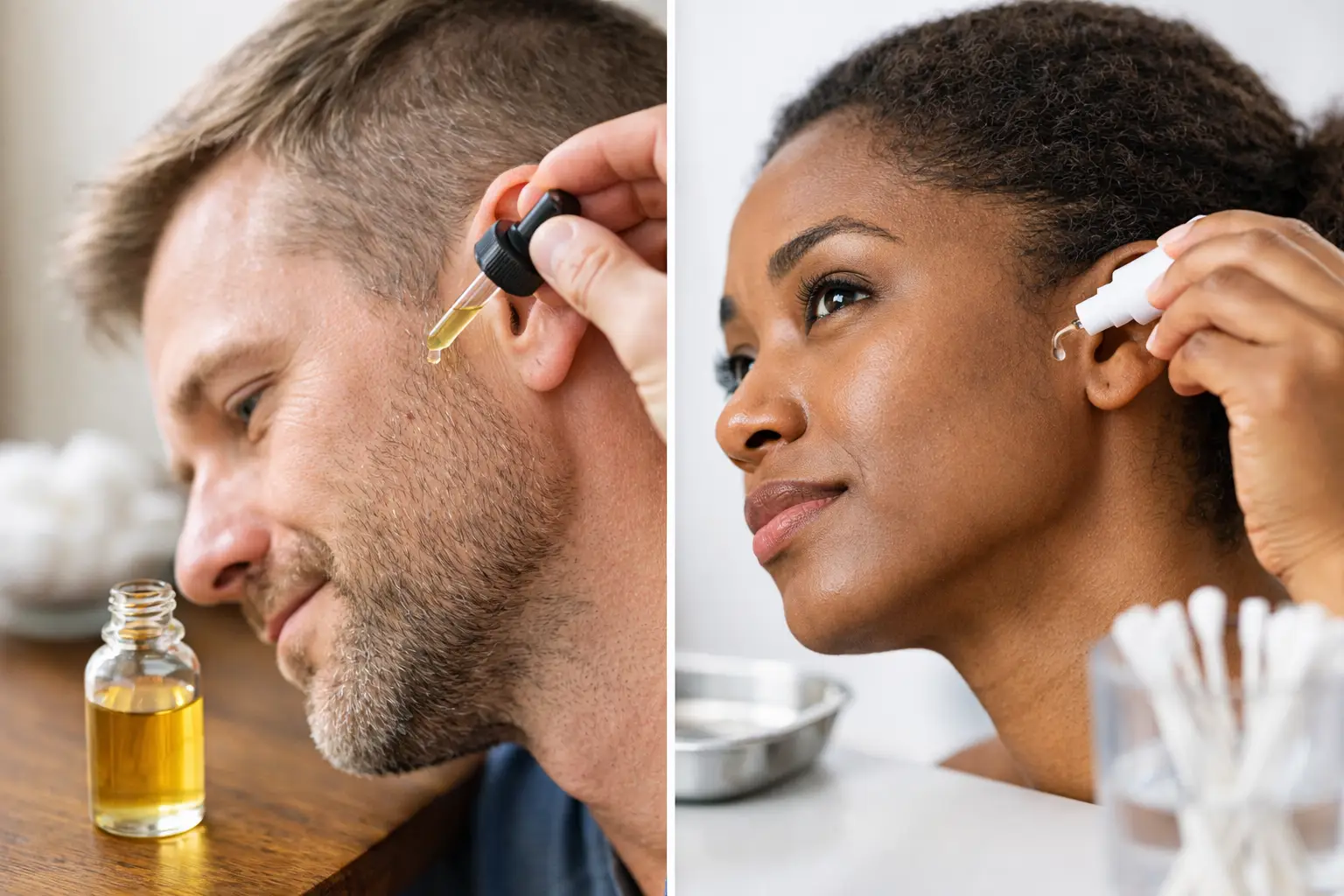
Mineral oil and peroxide drops work very differently. Mineral oil is an oil-based lubricant that can help condition dry earwax and support the delicate skin of the outer ear canal. Peroxide drops are designed to bubble and break apart wax.1 That bubbling action can feel satisfying, but it can also be drying or uncomfortable for some ears.
This distinction matters because ear discomfort is not always caused by too much wax. Sometimes the problem is dry wax that does not move easily. Sometimes the ear canal feels itchy after swimming, sweating, wearing earbuds for long stretches, or using hearing aids. In those situations, adding moisture and lubrication may be more comfortable than using an ingredient meant to create a chemical reaction.
ENT-informed ear care tends to favor a gentle approach, especially when ears are prone to dryness or sensitivity. A product does not need to fizz, sting, or feel intense to be useful.
Why Mineral Oil Is Often the Gentler Choice
Mineral oil is simple by design. It does not foam or bubble, and it does not rely on a drying chemical action. Instead, it coats and lubricates dry wax, which may help it remain softer and more comfortable as the ear’s natural self-cleaning process does its work.
That moisture-supporting quality can be particularly helpful for people who notice dry, flaky, or itchy ears. It may also suit people whose ears feel uncomfortable after frequent earbud wear, hearing-aid use, regular exercise, or exposure to chlorinated water. These situations can leave the ear canal feeling less comfortable, even when there is not a major wax buildup.
Mineral oil is also a practical choice for people who want to avoid a cycle of overcleaning. When ears feel dry, it can be tempting to reach for cotton swabs or stronger drops. Both can make the situation worse by pushing wax farther inward or removing the protective oils the ear canal needs.2
Oil-based ear drops are not all identical, but the general principle is similar: choose simple, gentle ingredients intended to support ear comfort. Mineral oil, coconut oil, and olive oil drops are commonly preferred options for people focused on dry wax and everyday ear canal comfort. Safe Ear Care favors products such as Auil Mineral Oil Ear Drops, Coconut Auil Coconut Oil Ear Drops, and Olive Auil Olive Oil Ear Drops because they align with this gentle, moisture-focused approach.
Disclosure: Dr. Stramiello is the founder of Oto Anthro (Otolaryngological Anthropology), the company that makes the Auil ear drops shown below, and SafeEarCare.com provides links to Amazon for purchase. That is a material financial relationship, and we disclose it plainly to remain transparent. The clinical guidance here does not change based on what we sell — any plain, purpose-made single oil will do the same job. Full disclosure.


Why Peroxide Drops Can Be Less Comfortable
Hydrogen peroxide and carbamide peroxide drops are often marketed for earwax removal. Their bubbling action may loosen some wax, but that same action can be a poor fit for ears that are already dry, sensitive, or irritated.
Peroxide can leave the ear canal feeling dry or itchy for some people. It may also cause temporary stinging, crackling, or a sense of fullness. A person who uses peroxide repeatedly because their ears keep feeling blocked may be dealing with dry wax, canal irritation, or another concern that stronger over-the-counter drops do not address.
The issue is not that every person will react the same way. Some people tolerate peroxide drops without noticeable discomfort. But tolerating something is different from choosing the gentlest option for routine care. If your ear-care goal is to support comfort, preserve moisture, and avoid unnecessary irritation, peroxide is usually not the first ingredient to consider.
Alcohol-based ear products can raise similar concerns. Alcohol is associated with a drying effect, which may be especially unwelcome when ears already feel dry, itchy, or sensitive after water exposure. For routine comfort, a moisture-supporting oil is generally a more sensible direction than an ingredient that can further dry the ear canal.
Which Option Fits Common Ear-Care Situations?
The right choice depends on what your ears are telling you. If wax feels dry, hard, or flaky, mineral oil may be a more comfortable option than peroxide because it supports lubrication. If your ears are itchy after earbuds, hearing aids, swimming, sweating, or dry indoor air, an oil-based drop may better match the issue than a bubbling wax remover.
People who wear hearing aids often benefit from paying close attention to ear comfort. Hearing aids can change airflow around the outer ear canal and can make dryness or wax feel more noticeable. The same is true for regular earbud users. A gentle ear-care routine can be more helpful than responding to every hint of discomfort with aggressive cleaning.
Water exposure deserves a thoughtful approach as well. After swimming or heavy sweating, ears may feel damp, itchy, or slightly uncomfortable. Avoid inserting swabs, tissues, or other objects into the canal to chase that sensation away. Letting the ears dry naturally and choosing a gentle, non-drying approach when needed is often kinder to the skin.
A Safer Everyday Ear-Care Mindset
The healthiest ear-care habits are usually the least dramatic. Avoid putting cotton swabs, hairpins, rolled tissue, or other objects into the ear canal. These can push wax deeper, scratch sensitive skin, and create a pattern of repeated irritation.2
It also helps to stop treating every muffled or full feeling as a simple wax problem. Ear symptoms can have different causes, and self-treatment has limits. General consumer guidance cannot determine what is happening inside an individual ear.
Consider pausing at-home drops and seeking an evaluation from a qualified clinician if you have any of the following:3
- Ear pain, bleeding, drainage, or significant swelling
- Sudden or substantial changes in hearing
- Dizziness or balance changes
- A known eardrum opening, ear tubes, or prior ear surgery
- Symptoms that continue despite gentle care
These situations call for personalized assessment rather than more frequent use of over-the-counter products.1
Keep the Goal Simple: Comfortable, Protected Ears
For routine dryness and dry wax, mineral oil offers a calm alternative to peroxide drops. It supports the ear’s natural environment instead of relying on fizzing or drying ingredients. That does not mean every ear concern should be managed at home, but it does mean that gentler choices can reduce the urge to overclean.
When your ears feel off, think comfort first. Protect the skin, avoid poking or scraping, and give your ears the simple care they are designed to respond well to.
Sources
- Schwartz SR, Magit AE, Rosenfeld RM, et al. Clinical Practice Guideline (Update): Earwax (Cerumen Impaction). Otolaryngology–Head and Neck Surgery. 2017;156(1_suppl):S1–S29. American Academy of Otolaryngology–Head and Neck Surgery Foundation.
- National Institute on Deafness and Other Communication Disorders (NIDCD). Why You Shouldn’t Use Cotton Swabs to Clean Your Ears. National Institutes of Health.
- American Academy of Otolaryngology–Head and Neck Surgery. Earwax (Cerumen Impaction). ENThealth.org.
About the Author
Written and medically reviewed by Joshua A. Stramiello, MD, board-certified otolaryngologist (ear, nose, and throat physician). Last reviewed August 27, 2026.
Dr. Stramiello earned his Doctor of Medicine at the University of South Florida Morsani College of Medicine, completed his general surgery internship at Vanderbilt University Medical Center, and completed residency in Otolaryngology–Head & Neck Surgery at the University of California, San Diego. He has cared for ENT patients at Dartmouth-Hitchcock, Sanford Hospital, and West Suffolk Hospital in the UK, and his peer-reviewed research spans pediatric otolaryngology, airway surgery, and ear disease (Google Scholar).
The content on SafeEarCare.com is intended for educational purposes only and should not be considered medical advice. It is not a substitute for professional medical advice, diagnosis, or treatment. Always consult your physician or qualified healthcare provider regarding your individual health needs.
Discover more from Safe Ear Care
Subscribe to get the latest posts sent to your email.


