
Written and medically reviewed by Joshua A. Stramiello, MD — board-certified otolaryngologist (ear, nose, and throat physician).
Published June 24, 2026 · Last medically reviewed August 6, 2026 · Sources
Quick answer: Earwax removal is safe at home only when it means gentle softening: a few drops of mineral, coconut, or olive oil and letting the ear clear itself. Digging with swabs or tools, ear candles, and harsh drops are the unsafe versions — and stubborn blockages belong with a professional.
Most people start thinking about earwax after something feels off – muffled hearing, a blocked sensation, or the temptation to “clean” the ear after a shower. So, is earwax removal safe at home? Sometimes, yes. But the safe version is much gentler than most people think, and the risky version is far more common than it should be.
Earwax is not dirt. It is a protective substance that helps trap debris, supports the ear canal’s natural environment, and moves outward on its own over time.1 The trouble usually begins when people try to speed that process up with cotton swabs, metal tools, or harsh drops. In many cases, those methods push wax deeper, irritate the skin, or make the blockage feel worse.2
When earwax removal at home can be safe
Home ear care is usually safest when the goal is to soften dry wax, support the ear’s natural clearing process, and avoid putting anything into the ear canal. That is a very different goal from trying to dig wax out yourself.
For mild wax buildup, a few drops of plain mineral oil, coconut oil, or olive oil are often the gentlest option. These oils can help soften dry, stubborn wax so it can move out more naturally.3 They may also be more comfortable for people who deal with dry, itchy ears from hearing aid use, earbud use, sweat, or frequent water exposure.
This is where a lot of people get mixed messages. Many over-the-counter wax products are marketed as quick fixes, but stronger ingredients do not always mean safer care. From a comfort and prevention standpoint, simple oils are often the better fit for routine ear care, especially when the issue seems to be dryness or hardened wax rather than a severe blockage.
What makes at-home earwax removal unsafe
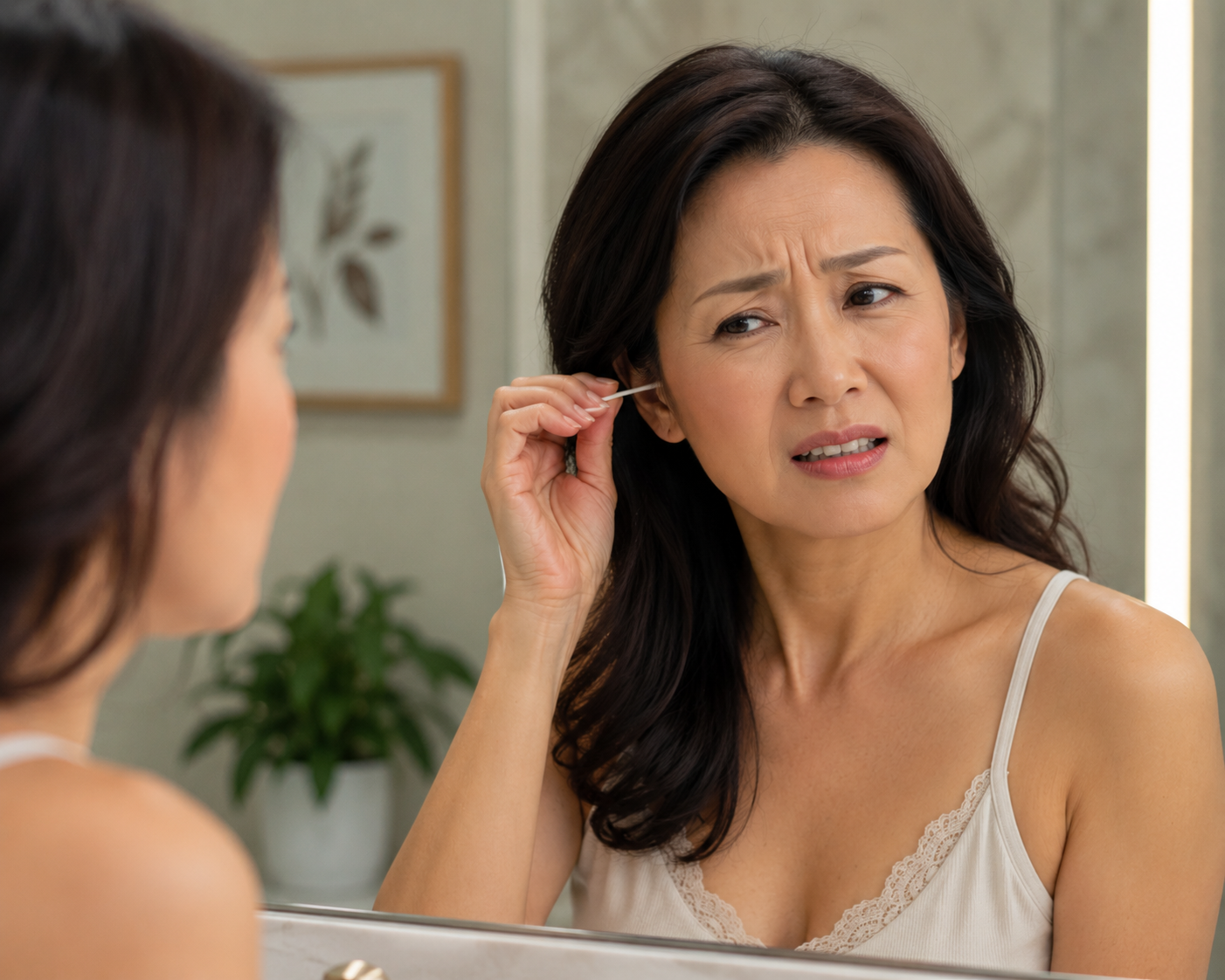
The biggest risk is mechanical removal. If you are using cotton swabs, ear picks, bobby pins, curettes, or any narrow object to scoop wax out, you are taking the highest-risk path. The ear canal is delicate, and it is easy to push wax inward, scratch the skin, or injure the eardrum.
Ear candles are also not considered a safe option. They do not reliably remove wax, and they introduce unnecessary burn and injury risk.4
Harsh liquid products can be a problem too. Some people tolerate them, but many find that peroxide-based or alcohol-based drops leave the ear more irritated or dry. If your ear canal already feels sensitive, flaky, itchy, or inflamed from earbuds, hearing aids, or environmental exposure, those ingredients can make the situation less comfortable instead of more manageable.
Is earwax removal safe at home if your ear feels blocked?
It depends on why it feels blocked. A mild plugged feeling from dry wax may improve with time and gentle softening drops. But not every blocked ear is caused by wax, and that distinction matters.
If the sensation started after a cold, a flight, swimming, or sinus pressure, the issue may not be earwax at all. If there is pain, drainage, sudden hearing loss, dizziness, or one-sided symptoms that seem significant, home wax removal is not the place to experiment. The safest move is to pause and get the ear checked by a qualified medical professional.
Even when wax is involved, there is a difference between manageable buildup and a tightly packed blockage. A severe impaction may need professional removal, especially if hearing is noticeably reduced or the ear feels fully closed off.
The safest approach to earwax at home
If you are trying to care for your ears at home, think soften, do not scrape. A small amount of ear-safe oil can be enough for many people.
Mineral oil is a common choice because it is simple and gentle. Coconut oil and olive oil are also popular for softening dry wax and supporting comfort in dry ears. For people who prefer ready-to-use products, Safe Ear Care generally favors simple oil-based drops over harsher formulas. Options like Auil Mineral Oil Ear Drops, Auil Coconut Oil Ear Drops, and Auil Olive Oil Ear Drops are designed around that gentler approach.
Disclosure: Dr. Stramiello is the founder of Oto Anthro (Otolaryngological Anthropology), the company that makes the Auil ear drops shown below, and SafeEarCare.com provides links to Amazon for purchase. That is a material financial relationship, and we disclose it plainly to remain transparent. The clinical guidance here does not change based on what we sell — any plain, purpose-made single oil will do the same job. Full disclosure.


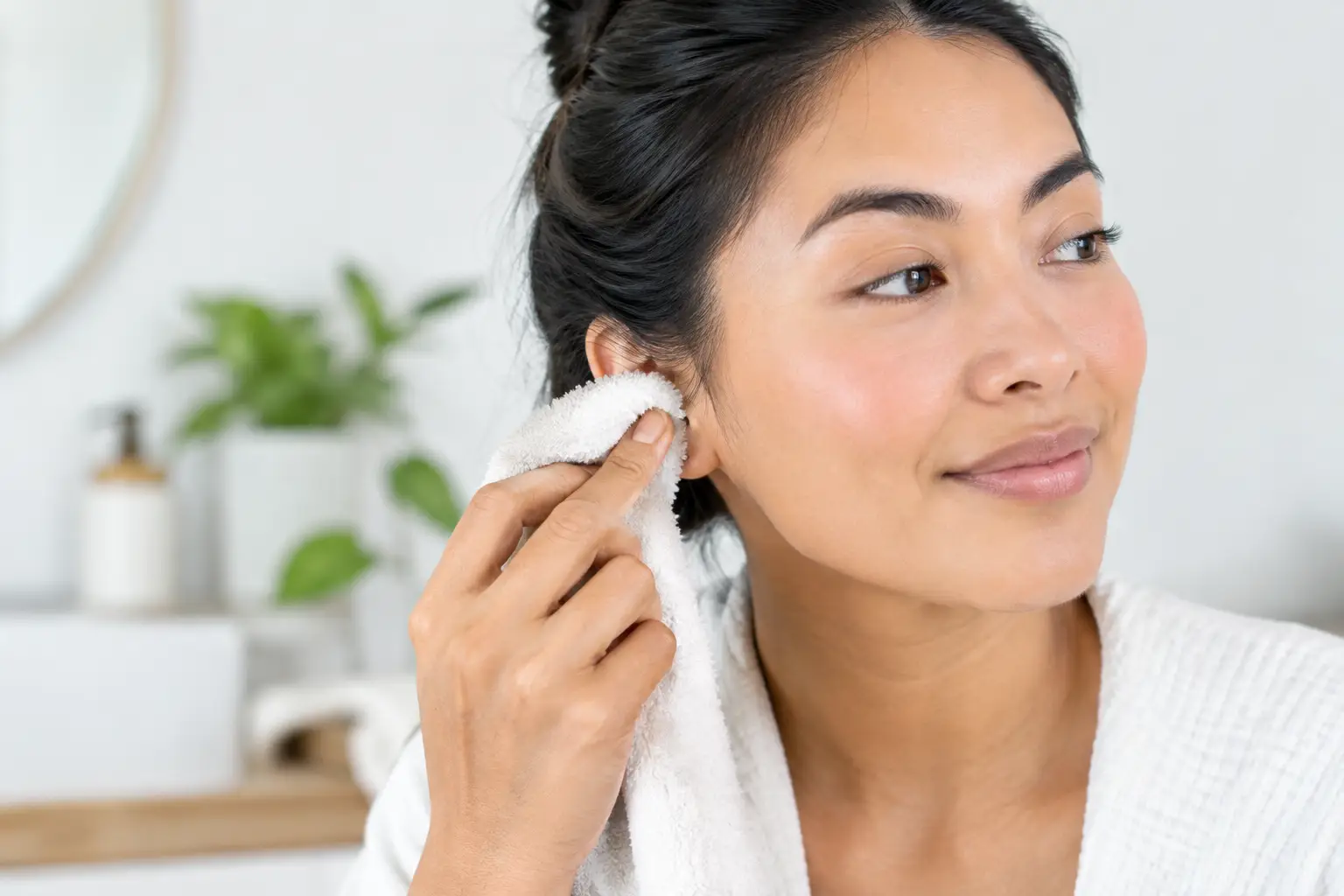
A practical routine is usually simple: use a small amount as directed, give it time to soften the wax, and let the ear clear itself gradually. You do not need an aggressive routine, and more product is not necessarily better. If the ear becomes more irritated, stop using it.
What not to do after using ear drops
A common mistake is using softening drops and then immediately trying to flush, scrape, or swab the ear. That usually defeats the purpose. Once wax softens, the goal is to let the natural migration process do some of the work.
It also helps to leave the ear alone between attempts. Repeated poking and checking can keep the canal irritated. If you wear earbuds or hearing aids, keeping them clean and giving the ear occasional breaks may help reduce added friction while the ear settles.
People who should be extra cautious
Some people should be more careful with any home earwax routine. That includes anyone with a history of eardrum problems, ear surgery, ear tubes, recurring ear sensitivity, or unexplained ear symptoms. Young children, older adults with hearing changes, and people who rely on hearing aids may also benefit from a more conservative approach, since it can be harder to tell whether wax is the only issue.
There is also a practical point here: if you often get wax buildup, that does not mean your ears need more cleaning. It may mean your ears need less interference. Earbuds, hearing aids, and frequent in-ear devices can affect how wax moves outward, but overcleaning still tends to create more trouble than it solves.
Why gentle care usually works better over time
The ear is one of those areas where restraint pays off. People often assume that if wax is visible, it should be removed right away. But visible wax near the outer ear is often already on its way out.
Routine use of simple, non-irritating oil drops may help some people keep wax from getting too dry and compacted, especially if they are prone to itchiness or discomfort. That is a prevention mindset rather than a forceful removal mindset, and it is usually the safer one.
This approach also fits everyday life better. Most people do not need a complicated ear care system. They need to know which habits are low risk, which ones can backfire, and when to stop trying to handle it themselves.
When home care is no longer the right choice
If wax seems stuck despite gentle softening, if hearing stays muffled, or if the ear feels increasingly uncomfortable, it is reasonable to stop the home approach and seek professional evaluation. The same goes for ringing that is new, pressure that will not ease, or symptoms that seem clearly out of proportion to normal wax buildup.
That is not a failure of home care. It is just a reminder that not every ear problem should be handled in the bathroom mirror.
For most people, the answer to “is earwax removal safe at home” is yes – but only when home care means gentle softening, patience, and staying away from tools and harsh ingredients. Your ears usually do best when you support their natural process instead of trying to outsmart it. When in doubt, choose the option that protects the ear canal first and asks less of it, not more.
Sources
- Schwartz SR, Magit AE, Rosenfeld RM, et al. Clinical Practice Guideline (Update): Earwax (Cerumen Impaction). Otolaryngology–Head and Neck Surgery. 2017;156(1_suppl):S1–S29. American Academy of Otolaryngology–Head and Neck Surgery Foundation.
- National Institute on Deafness and Other Communication Disorders (NIDCD). Why You Shouldn’t Use Cotton Swabs to Clean Your Ears. National Institutes of Health.
- American Academy of Otolaryngology–Head and Neck Surgery. Earwax (Cerumen Impaction). ENThealth.org.
- American Academy of Otolaryngology–Head and Neck Surgery Foundation. Dos and Don’ts of Earwax (patient handout).
About the Author
Written and medically reviewed by Joshua A. Stramiello, MD, board-certified otolaryngologist (ear, nose, and throat physician). Last reviewed August 6, 2026.
Dr. Stramiello earned his Doctor of Medicine at the University of South Florida Morsani College of Medicine, completed his general surgery internship at Vanderbilt University Medical Center, and completed residency in Otolaryngology–Head & Neck Surgery at the University of California, San Diego. He has cared for ENT patients at Dartmouth-Hitchcock, Sanford Hospital, and West Suffolk Hospital in the UK, and his peer-reviewed research spans pediatric otolaryngology, airway surgery, and ear disease (Google Scholar).
The content on SafeEarCare.com is intended for educational purposes only and should not be considered medical advice. It is not a substitute for professional medical advice, diagnosis, or treatment. Always consult your physician or qualified healthcare provider regarding your individual health needs.
Discover more from Safe Ear Care
Subscribe to get the latest posts sent to your email.


Permalink