


Written and medically reviewed by Joshua A. Stramiello, MD — board-certified otolaryngologist (ear, nose, and throat physician).
Published July 7, 2026 · Last medically reviewed August 6, 2026 · Sources
Quick answer: Ear popping is usually your Eustachian tubes equalizing pressure between the middle ear and the outside — a normal process triggered by swallowing, yawning, altitude, or congestion. It becomes worth a check when popping comes with pain, persistent fullness, or hearing changes.
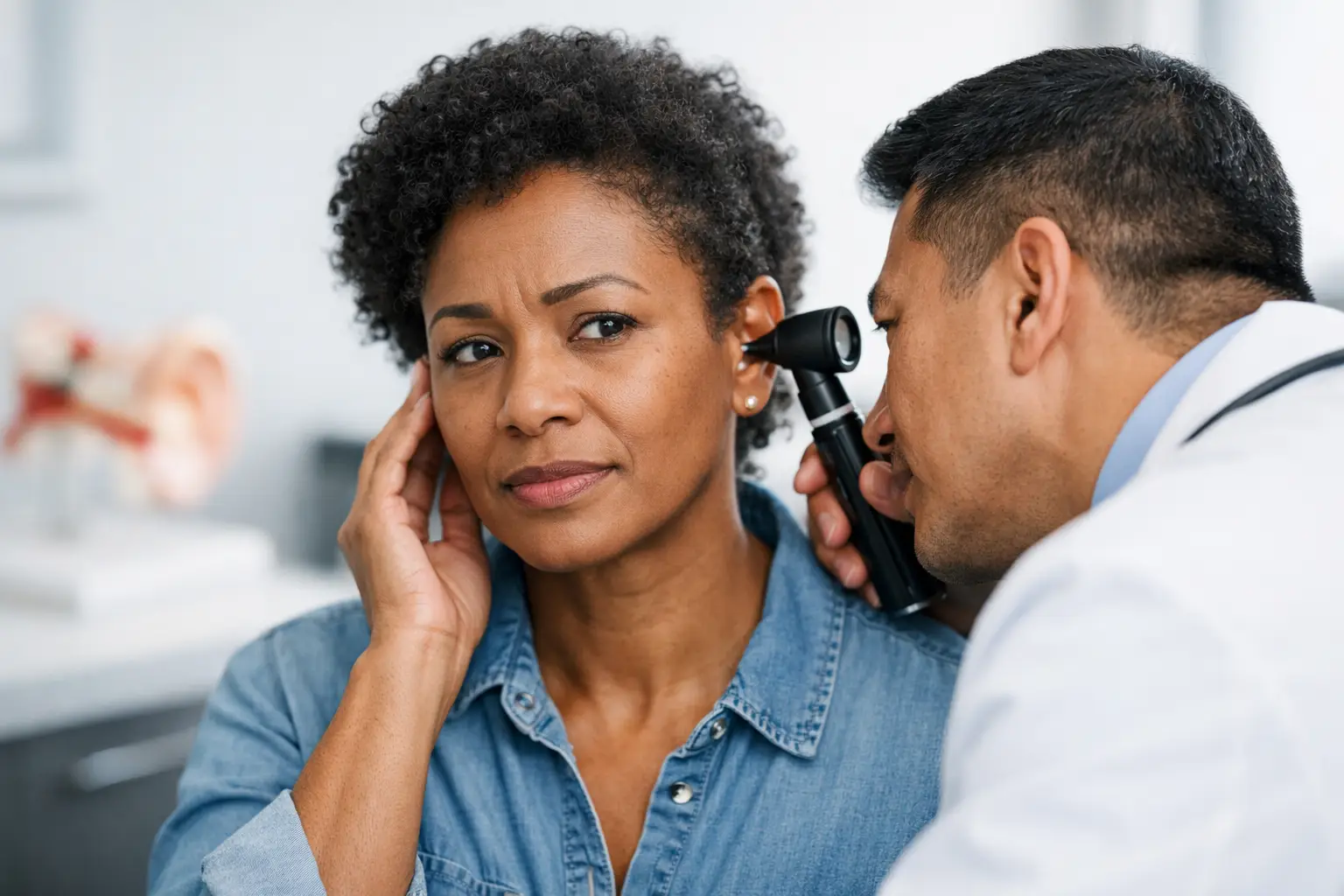
That quick crackle or pop in your ear can feel oddly satisfying one day and frustrating the next. Ear popping usually happens when pressure in the middle ear is trying to equalize, but the reason behind it can vary from something simple, like altitude changes, to something that deserves closer attention.
Most of the time, the sensation starts around the eustachian tube, the small passage that helps balance pressure between your middle ear and the back of your nose and throat.1 When it opens and closes normally, you may hear a soft pop. When it is irritated, blocked, or struggling to do its job, the popping can become more noticeable, more frequent, or paired with muffled hearing and discomfort.
Why ear popping happens
The most common cause is a pressure change. If you have ever noticed your ears pop on a plane, in an elevator, or while driving up a mountain, that is your body trying to match outside pressure with the pressure inside the ear.
Congestion is another big reason. Seasonal allergies, a cold, or sinus irritation can make the eustachian tube less able to open well. Instead of equalizing smoothly, the ear may feel full, clicky, or stubbornly blocked.
Jaw movement can also play a role. Some people notice popping while chewing, yawning, or swallowing. That can still be normal pressure regulation, but in some cases nearby jaw tension can make ear sensations more noticeable.
Earwax is part of the conversation too. Wax does not usually cause true pressure changes in the middle ear, but buildup in the ear canal can create a sense of fullness, altered sound, and odd noises that people describe as popping, crackling, or movement in the ear. This is one reason ear symptoms can be tricky – different issues can feel surprisingly similar.
Ear popping in everyday situations
Flying and altitude changes
Air travel is probably the classic example. During takeoff and especially landing, pressure shifts quickly. If the eustachian tube opens easily, your ears adjust with a mild pop and move on. If it does not, you may feel pressure, muffled hearing, or discomfort that lingers after the flight.
Swallowing, yawning, and chewing gum can help because they encourage the tube to open. The same idea applies when driving through hills or mountains.
Colds, allergies, and nasal congestion
When the nose and upper throat are swollen or irritated, the eustachian tube may not work as smoothly. In that setting, ear popping can come with fullness, crackling, or the feeling that one ear is underwater.
This is often temporary, but the timeline matters. If symptoms are brief and improve as congestion settles, that is different from ongoing ear pressure that keeps coming back for weeks.
Earwax buildup
Wax is supposed to be there. It protects the ear canal and helps trap debris.4 Problems start when wax builds up enough to affect comfort or hearing.
People sometimes assume frequent popping means they need to flush the ear aggressively. That is not a safe first move. If wax is part of the issue, harsh ingredients and overcleaning can irritate the canal and make things worse. For people prone to dry wax, itchy ears, hearing aid use, earbud use, or frequent water exposure, gentler support is usually the better path.
ENT-informed ear care often favors simple oils such as mineral oil, coconut oil, or olive oil to soften dry wax and support canal comfort. That is very different from trying to force the ear open or using irritating drops just because the ear feels off.
What ear popping feels like when it is likely harmless
A brief pop when swallowing or changing altitude is usually normal. The same goes for occasional popping during allergy season or with mild congestion, especially if hearing returns to normal soon after and there is no significant pain.
Some people also hear light clicking during jaw movement. If it is occasional and not paired with hearing changes, drainage, dizziness, or persistent pain, it is often more annoying than serious.
The key is pattern. Short-lived popping linked to a clear situation is less concerning than frequent popping that starts without an obvious reason and sticks around.
Safe ways to relieve ear popping
The safest approach depends on the cause. If the issue is pressure from travel or mild congestion, swallowing, yawning, sipping water, or chewing can help the ear equalize naturally. Gentle patience matters more than force.
If your ears feel full and you suspect wax, avoid cotton swabs, ear candling, or home tools that go deep into the canal. Those can push wax farther in or irritate delicate skin.3 If the canal tends to feel dry or uncomfortable, a small amount of a simple oil-based ear drop may help soften dry wax over time and support comfort.
For readers looking for a safety-focused option, Safe Ear Care generally prefers straightforward oil formulas rather than peroxide- or alcohol-based drops. Mineral oil, coconut oil, and olive oil are commonly chosen because they are gentler on the ear canal, especially for people who already deal with dryness or irritation.
What helps one person may not help another right away. Ear popping from altitude can improve in minutes. Ear popping linked to congestion may take longer. Wax-related fullness can improve gradually, not instantly. That is normal.
What not to do when your ear keeps popping
Trying to solve the sensation fast can lead to habits that backfire. Repeated forceful pressure maneuvers can irritate the ear. Digging into the canal with swabs, fingernails, or tools raises the risk of compacting wax or scratching the skin.
It is also wise to be cautious with ear drops that contain hydrogen peroxide, carbamide peroxide, isopropyl alcohol, or other harsh ingredients if your ears are already dry or sensitive. A lot of people reach for them assuming stronger means better. In ear care, that is often not true.
More treatment is not always more relief. Sometimes the safest response is simple support, less irritation, and time.
When ear popping may need professional attention
Symptoms that should not be ignored
Ear popping deserves a closer look if it comes with significant pain, sudden hearing loss, ongoing muffled hearing, spinning dizziness, or drainage from the ear. Those symptoms go beyond routine pressure changes.
The same is true if one ear stays blocked for days, the popping becomes frequent without a clear trigger, or the sensation follows a loud-noise event or direct ear injury. A healthcare professional can help sort out whether the issue is pressure, wax, irritation, jaw-related tension, or something else.
If wax might be involved
Not every full ear is a wax problem, but if you are prone to buildup, hearing aids, earbuds, or dry flaky wax, it is reasonable to consider that possibility. The safest next step is usually gentle wax-softening support or having the ear checked, not trying to scoop it out yourself.2
This is one of those situations where doing less can protect more.
Preventing frequent ear popping
Prevention depends on the trigger, but a few habits help many people. Staying aware of congestion during travel can make a difference. If you know your ears struggle on flights, start swallowing and sipping water early rather than waiting until pressure becomes painful.
If wax buildup is part of your pattern, focus on keeping the ear canal comfortable instead of aggressively cleaning it. People who wear earbuds or hearing aids for long hours may do better with a gentle, consistent ear-care routine that supports moisture balance and avoids irritation.
It also helps to notice what your ears are telling you. Popping after a mountain drive is one thing. Popping that shows up daily with fullness and hearing changes is another. The more clearly you can spot the pattern, the easier it is to choose a safe response.
Ear popping is common, and in many cases it is simply your ears doing their job. But when the sound comes with fullness, discomfort, or ongoing changes in hearing, it is worth slowing down and treating your ears gently. A calm, safety-first approach usually gets you farther than forcing a fix.
Sources
- American Academy of Otolaryngology–Head and Neck Surgery. Ears and Altitude (Barotrauma). ENThealth.org.
- Schwartz SR, Magit AE, Rosenfeld RM, et al. Clinical Practice Guideline (Update): Earwax (Cerumen Impaction). Otolaryngology–Head and Neck Surgery. 2017;156(1_suppl):S1–S29. American Academy of Otolaryngology–Head and Neck Surgery Foundation.
- National Institute on Deafness and Other Communication Disorders (NIDCD). Why You Shouldn’t Use Cotton Swabs to Clean Your Ears. National Institutes of Health.
- American Academy of Otolaryngology–Head and Neck Surgery. Earwax (Cerumen Impaction). ENThealth.org.
About the Author
Written and medically reviewed by Joshua A. Stramiello, MD, board-certified otolaryngologist (ear, nose, and throat physician). Last reviewed August 6, 2026.
Dr. Stramiello earned his Doctor of Medicine at the University of South Florida Morsani College of Medicine, completed his general surgery internship at Vanderbilt University Medical Center, and completed residency in Otolaryngology–Head & Neck Surgery at the University of California, San Diego. He has cared for ENT patients at Dartmouth-Hitchcock, Sanford Hospital, and West Suffolk Hospital in the UK, and his peer-reviewed research spans pediatric otolaryngology, airway surgery, and ear disease (Google Scholar).
The content on SafeEarCare.com is intended for educational purposes only and should not be considered medical advice. It is not a substitute for professional medical advice, diagnosis, or treatment. Always consult your physician or qualified healthcare provider regarding your individual health needs.
Discover more from Safe Ear Care
Subscribe to get the latest posts sent to your email.