

Written and medically reviewed by Joshua A. Stramiello, MD — board-certified otolaryngologist (ear, nose, and throat physician).
Published July 13, 2026 · Last medically reviewed August 6, 2026 · Sources
Quick answer: To soften stubborn earwax safely, place a few drops of a gentle oil — mineral oil, coconut oil, or olive oil — into the ear as directed on the label, repeat over several days, and let the wax loosen and move out naturally. Never dig with cotton swabs or tools, and see a clinician if blockage, pain, or hearing changes persist.
Earwax can feel surprisingly disruptive when it becomes dry, packed, or hard enough to make an ear feel full. If you are wondering how to soften stubborn earwax, the safest approach is usually gentler than people expect: give the wax time, use a simple oil-based ear drop, and resist the urge to dig at the blockage.
That last part matters. Earwax is meant to protect the ear canal from dust, moisture, and irritation.3 Problems often start when wax is pushed farther inward by cotton swabs, earbuds, fingers, or other objects. Once it is compacted, the goal is not to scrape it out. The goal is to soften and lubricate it so it can move outward naturally or be removed safely by a qualified professional if needed.
Why Earwax Becomes Stubborn
Earwax changes over time. Fresh wax is often soft and slightly sticky, but it can become dry, firm, or flaky as it sits in the ear canal. Some people naturally make drier wax, while others are more likely to experience buildup because of narrow ear canals, regular hearing-aid use, frequent earbud use, or repeated attempts to clean inside the ear.
Water exposure and sweat can also leave the ear canal feeling dry or irritated after the moisture evaporates. In response, some people clean more aggressively, which can remove the protective wax near the entrance of the ear and push older wax deeper inside.
A plugged sensation, reduced sound clarity, or the feeling that something is sitting in the ear can be frustrating. Still, these sensations are not always caused by wax. That is why it helps to keep home care simple and avoid escalating to tools or harsh ingredients.
How to Soften Stubborn Earwax With Oil Drops
ENT-informed ear care commonly favors gentle oils for dry, hardened wax.1 Mineral oil, coconut oil, and olive oil can coat the wax and help restore some of the moisture and slipperiness it has lost. They do not need to aggressively dissolve wax to be useful. Their role is to soften and lubricate it gradually.
Choose an ear drop product designed for ear use and follow its labeled directions. Safe Ear Care favors simple oil-based options such as Auil Mineral Oil Ear Drops, Coconut Auil Coconut Oil Ear Drops, and Olive Auil Olive Oil Ear Drops because they support a moisture-first approach without relying on harsh drying or bubbling ingredients.
Disclosure: Dr. Stramiello is the founder of Oto Anthro (Otolaryngological Anthropology), the company that makes the Auil ear drops shown below, and SafeEarCare.com provides links to Amazon for purchase. That is a material financial relationship, and we disclose it plainly to remain transparent. The clinical guidance here does not change based on what we sell — any plain, purpose-made single oil will do the same job. Full disclosure.


Before using drops, hold the closed bottle in your hands for a few minutes so it is comfortably close to body temperature. Cold drops can feel unpleasant and may briefly cause lightheadedness in some people. Do not microwave or heat ear drops directly.
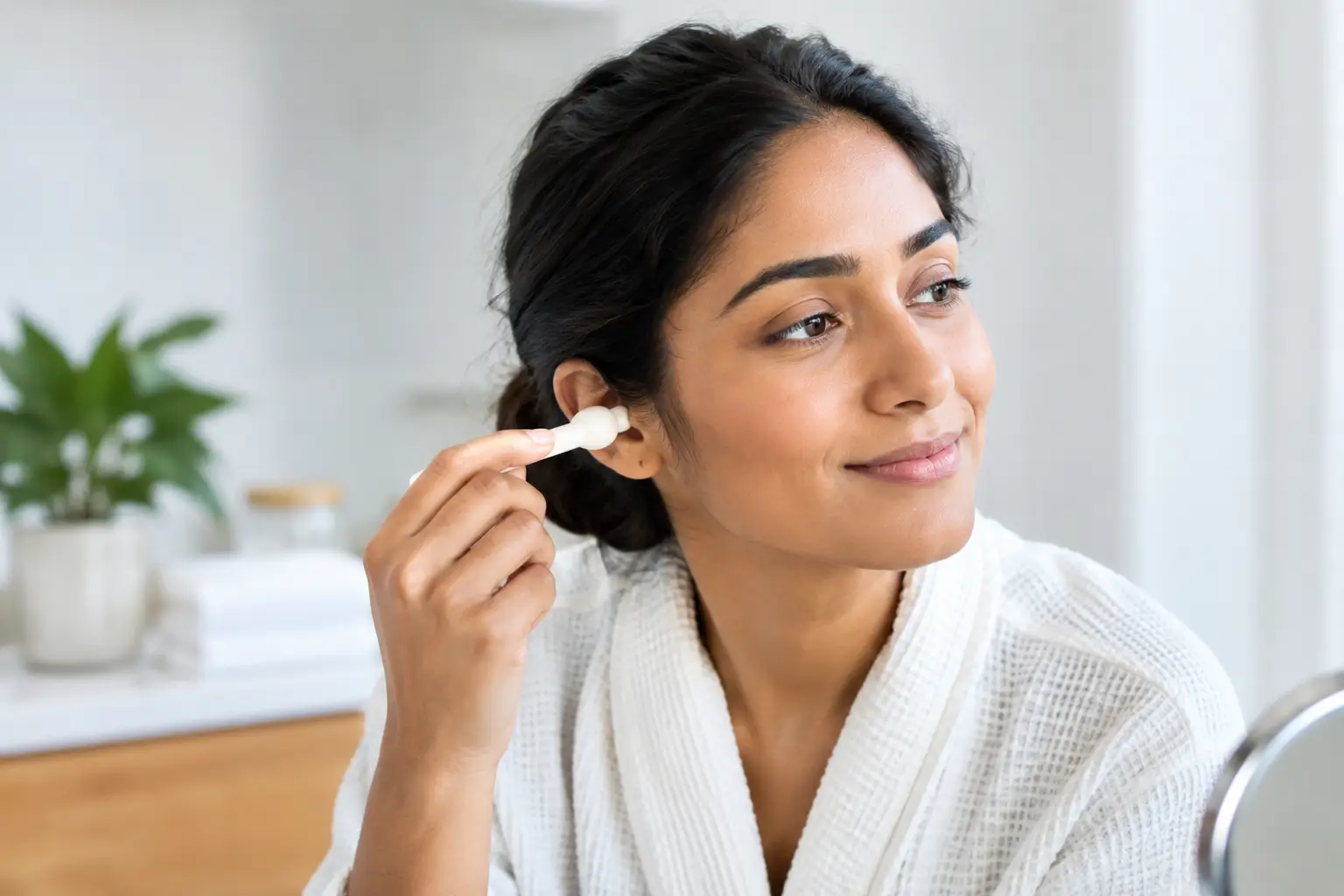
When applying the drops, tilt your head so the affected ear faces upward. Use only the amount stated on the product label, then stay in that position for several minutes to give the oil time to reach the wax. A small amount of oil may later come back out of the ear. That is normal, so it can help to keep a clean tissue nearby.
Softening is usually a gradual process rather than a one-time fix. If the wax has been compacted for a while, it may take repeated, label-directed use over several days before you notice a difference. Avoid treating it as a test of force. Adding more drops than directed or trying to speed things up with tools can make the ear more irritated.
Mineral Oil, Coconut Oil, or Olive Oil?
All three are commonly used as gentle options for dry earwax, but personal comfort can guide the choice. Mineral oil is a simple, stable option that many people find easy to use. Coconut oil may be appealing for people who prefer a plant-based oil, although it should be in liquid form when used as directed. Olive oil is another familiar choice with a long history of use for dry wax.
The best option is often the one you can use consistently and comfortably according to its label. If you wear hearing aids or earbuds, clean the outside of those devices regularly and avoid putting them back in immediately after applying drops. Give the ear a little time to drain first.
What Not to Put in Your Ears
When wax feels stuck, it is understandable to want a fast solution. But several common methods can dry, irritate, or injure the ear canal, especially when the wax is already hard.
Avoid these approaches:
- Cotton swabs, bobby pins, tweezers, ear picks, and any object meant to scoop wax out
- Hydrogen peroxide, carbamide peroxide, isopropyl alcohol, and other drying or harsh ear-drop ingredients
- Ear candles, which do not remove wax safely and can cause burns or wax residue4
- Forceful home flushing or high-pressure water devices
Cotton swabs deserve special mention because they are often used with good intentions. They may remove a little wax from the outer ear, but they can also act like a plunger and compact wax deeper in the canal.2 Clean only the visible outer ear with a soft washcloth after bathing. The ear canal usually handles the rest on its own.
When Home Softening Is Not a Good Fit
Oil drops are not appropriate for every situation. Do not put drops in your ear without first checking with a healthcare professional if you have ear tubes, a known or suspected eardrum opening, a history of ear surgery, or have been told to keep the ear dry.
It is also wise to seek in-person evaluation rather than continuing home care if you have significant ear pain, drainage, bleeding, dizziness, sudden changes in hearing, or a feeling of blockage that does not improve after a few days of gentle softening. These symptoms can have causes other than earwax, and looking inside the ear is the only way to know what is going on.
For young children, older adults who have trouble describing symptoms, or anyone with a history of hearing concerns, a clinician can help determine whether wax is actually the issue before removal is attempted.
Everyday Habits That Help Prevent Hard Wax
The most effective earwax routine is often a less-is-more routine. Let wax migrate outward naturally, and avoid routine cleaning inside the canal. If you know your ears tend to become dry or accumulate wax, occasional use of a gentle oil drop product as directed may help maintain comfort, but it should not replace an evaluation when symptoms persist.
Hearing aids and earbuds can change airflow in the ear canal and may contribute to wax buildup for some people. Taking breaks when practical, wiping devices clean, and making sure they fit comfortably can reduce irritation. After swimming, showering, or working up a sweat, dry only the outer ear gently rather than inserting anything into the canal.
Can You Remove Softened Earwax Yourself?
Sometimes softened wax works its way out on its own, especially during normal jaw movement from talking and chewing. You may notice a small amount of wax at the opening of the ear, and that can be wiped away gently with a washcloth.
If the wax remains deeply stuck, do not try to reach it. A healthcare professional can look into the ear and decide whether removal is needed. This is often the safer path for wax that has been impacted for a long time or is causing persistent hearing changes.
Stubborn earwax rarely needs an aggressive response. A little patience, a gentle oil-based softening routine, and a firm no to swabs and sharp tools can protect both your comfort and your hearing while giving your ears the care they were designed to receive.
Sources
- Schwartz SR, Magit AE, Rosenfeld RM, et al. Clinical Practice Guideline (Update): Earwax (Cerumen Impaction). Otolaryngology–Head and Neck Surgery. 2017;156(1_suppl):S1–S29. American Academy of Otolaryngology–Head and Neck Surgery Foundation.
- National Institute on Deafness and Other Communication Disorders (NIDCD). Why You Shouldn’t Use Cotton Swabs to Clean Your Ears. National Institutes of Health.
- American Academy of Otolaryngology–Head and Neck Surgery. Earwax (Cerumen Impaction). ENThealth.org.
- American Academy of Otolaryngology–Head and Neck Surgery Foundation. Dos and Don’ts of Earwax (patient handout).
About the Author
Written and medically reviewed by Joshua A. Stramiello, MD, board-certified otolaryngologist (ear, nose, and throat physician). Last reviewed August 6, 2026.
Dr. Stramiello earned his Doctor of Medicine at the University of South Florida Morsani College of Medicine, completed his general surgery internship at Vanderbilt University Medical Center, and completed residency in Otolaryngology–Head & Neck Surgery at the University of California, San Diego. He has cared for ENT patients at Dartmouth-Hitchcock, Sanford Hospital, and West Suffolk Hospital in the UK, and his peer-reviewed research spans pediatric otolaryngology, airway surgery, and ear disease (Google Scholar).
The content on SafeEarCare.com is intended for educational purposes only and should not be considered medical advice. It is not a substitute for professional medical advice, diagnosis, or treatment. Always consult your physician or qualified healthcare provider regarding your individual health needs.


Permalink