

Written and medically reviewed by Joshua A. Stramiello, MD — board-certified otolaryngologist (ear, nose, and throat physician).
Published July 11, 2026 · Last medically reviewed August 6, 2026 · Sources
Quick answer: Prevent earbud discomfort by using the right tip size, inserting shallowly rather than deeply, taking listening breaks, and keeping the tips clean and dry. If your ear canals feel dry or itchy from daily wear, a gentle oil-based drop supports the skin better than more cleaning.
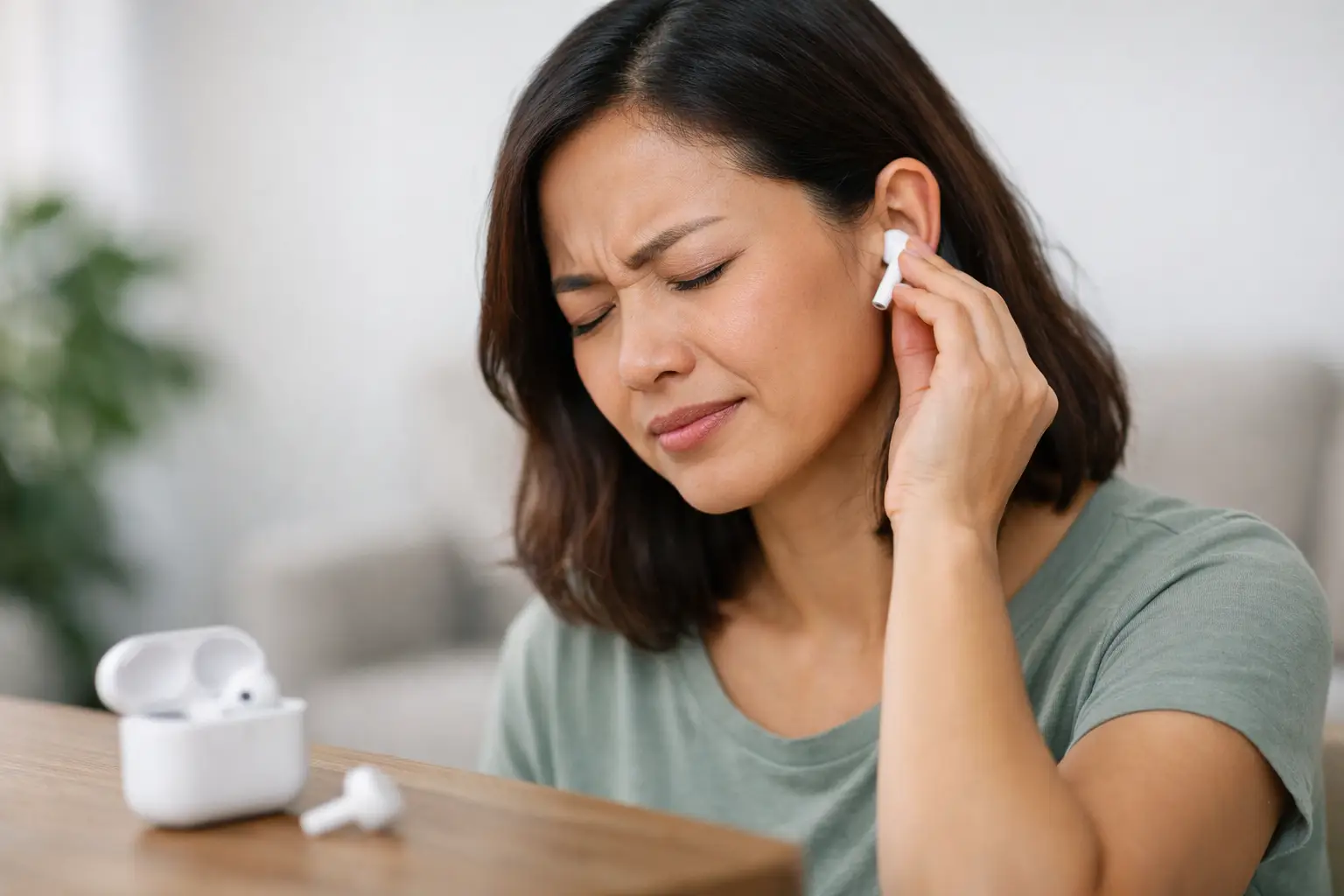
Earbuds can make a commute, workout, or workday more enjoyable, but they should not leave your ears sore, itchy, damp, or pressured. Learning how to prevent ear discomfort from earbuds usually starts with a few small adjustments: choosing a fit that does not press or rub, keeping the earbuds clean, and giving your ear canals regular breaks.
Ear discomfort is not always caused by one thing. A tight ear tip, trapped sweat, dry skin, accumulated earwax, or simply wearing earbuds for hours can all contribute. The goal is not to stop using earbuds altogether. It is to make everyday listening more comfortable while treating your ears with the care they deserve.
Start With a Better Earbud Fit
The right earbud should feel secure without feeling forced into the ear canal. If you need to push it in deeply to keep it from falling out, the tip may be too small, the style may not suit your ear shape, or the earbud may be positioned incorrectly.
Many earbuds come with several tip sizes. Try them rather than assuming the medium pair is right for you. A tip that is too small can move around and create rubbing. One that is too large can stretch the outer part of the canal and leave tenderness behind. Your left and right ears may even need different sizes, which is completely normal.
Foam tips can feel softer for some people because they expand gently, while silicone tips are often easier to clean and may be more comfortable in warm or sweaty conditions. There is a trade-off: foam can retain moisture and needs regular replacement, while silicone may feel less forgiving if the fit is wrong. The best choice is the one that stays in place without pressure.
If in-ear earbuds continue to feel uncomfortable despite changing tips, consider an open-ear, bone-conduction, or over-ear listening option for longer sessions. Ear anatomy varies, and a different style can make a meaningful difference.
Give Your Ears a Break Before They Feel Sore
Discomfort often builds gradually. You may not notice a problem until you remove your earbuds and feel a tender spot, itchiness, or fullness. Rather than waiting for that point, build short breaks into your listening routine.
Take earbuds out between meetings, after a workout, during a lunch break, or whenever you are not actively listening. Even a few minutes of open air can reduce the heat and moisture that collects around the ear canal entrance. This matters especially for people who wear earbuds while working from home or take calls throughout the day.
Avoid sleeping in earbuds. A pillow can press an earbud further against the ear, and long periods of pressure can irritate the outer ear and canal. If you use sound to relax at night, a speaker, sleep headband, or another non-in-ear option may be more comfortable.
Keep Earbuds Clean and Dry
Earbuds collect skin oils, sweat, earwax, makeup, and dust. When that residue sits against sensitive skin, it can contribute to irritation and make an otherwise comfortable fit feel unpleasant.
Wipe the exterior and ear tips regularly with a clean, soft cloth according to the manufacturer’s cleaning instructions. Remove silicone tips when possible and let them dry fully before putting them back on. Do not insert sharp objects into speaker openings or use excess liquid that could damage the device.
Cleaning is especially helpful after exercise, commuting in hot weather, or sharing headphones. It is also wise not to share in-ear earbuds when you can avoid it. Each person has different skin oils and earwax, and shared earbuds are harder to keep consistently clean.
Just as important, do not put earbuds in when your ears are still wet after a shower, swim, or intense workout. Gently dry the outer ear with a towel and allow time for moisture to evaporate. Earbuds create a small enclosed space, so they can trap moisture that would otherwise dry naturally.
Reduce Pressure From Volume and Isolation
Ear discomfort is not always a skin or fit issue. Listening at a high volume for long stretches can leave ears feeling tired, sensitive, or pressured. Strong noise isolation can also make some listeners more aware of pressure, especially when earbuds seal tightly.
Keep volume at a level where you can still notice what is happening around you when appropriate.4 If you keep turning the volume up to overcome traffic, office noise, or gym music, consider earbuds with effective noise reduction or move to a quieter setting instead. Better isolation can allow lower volume, but a very tight seal is not automatically better if it creates physical discomfort.
Noise-canceling settings are also personal. Some people find them calming, while others notice a strange pressure-like sensation. If that happens, try transparency mode, a lower level of cancellation, or earbuds with a less sealed design. Comfort is a useful signal, not something to ignore.
Manage Dryness and Earwax Gently
Dry, flaky, or itchy skin can make earbud use feel much more irritating. Earwax can also shift or become more noticeable when an earbud repeatedly sits near the canal entrance. The common reaction is to reach for a cotton swab, but swabs can push wax farther inward and scratch delicate skin.2
Keep cleaning focused on the outer ear only. Do not dig into the ear canal with swabs, fingernails, ear picks, or other objects.3 These habits can turn mild irritation into a longer-lasting problem.
For people prone to dry ears or dry earwax, gentle oil-based ear care is often preferred over drying ingredients. Mineral oil, coconut oil, and olive oil ear drops are commonly used in preventive ear-care routines to support comfort and soften dry wax.1 Safe Ear Care favors simple oil-based options such as Auil Mineral Oil Ear Drops, Coconut Auil Coconut Oil Ear Drops, and Olive Auil Olive Oil Ear Drops, rather than peroxide, carbamide peroxide, isopropyl alcohol, or other drying ingredients.
Disclosure: Dr. Stramiello is the founder of Oto Anthro (Otolaryngological Anthropology), the company that makes the Auil ear drops shown below, and SafeEarCare.com provides links to Amazon for purchase. That is a material financial relationship, and we disclose it plainly to remain transparent. The clinical guidance here does not change based on what we sell — any plain, purpose-made single oil will do the same job. Full disclosure.


Ear needs differ, so recurring dryness, significant wax concerns, or ongoing discomfort are good reasons to ask a qualified healthcare professional for individualized guidance. An ENT-informed approach protects the ear canal rather than trying to aggressively clean it.
Adjust Your Routine for Sweat, Glasses, and Hearing Aids
Earbuds are rarely the only thing touching your ears. Glasses, hats, helmets, hearing aids, masks, and hair products can all add friction or hold warmth around the outer ear. If soreness appears in one specific spot, look at the whole setup rather than blaming the earbud alone.
During workouts, choose a pair that stays secure without frequent readjusting. Constantly pushing an earbud back in with sweaty fingers adds irritation and transfers more residue to the device. Wipe earbuds down after each session and store them only when fully dry.
If you wear hearing aids, it may help to alternate listening methods rather than placing earbuds and hearing devices in the ears for long, uninterrupted periods. Your ears benefit from time without anything pressing against them.
How to Prevent Ear Discomfort From Earbuds Long Term
The most comfortable earbud routine is usually simple: use a gentle fit, keep devices clean and dry, lower the volume, and take regular breaks. Pay attention to patterns. If discomfort only happens during exercise, moisture may be the main factor. If it happens after long meetings, pressure and extended wear may be the issue. If itchiness appears even with short use, dryness or a reaction to a material may be worth considering.
Stop using a particular pair if it repeatedly causes pain, marked itching, swelling, drainage, sudden hearing changes, or persistent discomfort. Those are not problems to push through. A healthcare professional can help identify what is going on and suggest safer next steps.
Your ears do a lot for you every day. A better earbud fit and a few preventive habits can help keep listening comfortable, so your favorite playlist, call, or podcast never has to come at the expense of ear comfort.
Sources
- Schwartz SR, Magit AE, Rosenfeld RM, et al. Clinical Practice Guideline (Update): Earwax (Cerumen Impaction). Otolaryngology–Head and Neck Surgery. 2017;156(1_suppl):S1–S29. American Academy of Otolaryngology–Head and Neck Surgery Foundation.
- National Institute on Deafness and Other Communication Disorders (NIDCD). Why You Shouldn’t Use Cotton Swabs to Clean Your Ears. National Institutes of Health.
- American Academy of Otolaryngology–Head and Neck Surgery. Earwax (Cerumen Impaction). ENThealth.org.
- National Institute on Deafness and Other Communication Disorders (NIDCD). Hearing, Ear Infections, and Deafness. National Institutes of Health.
About the Author
Written and medically reviewed by Joshua A. Stramiello, MD, board-certified otolaryngologist (ear, nose, and throat physician). Last reviewed August 6, 2026.
Dr. Stramiello earned his Doctor of Medicine at the University of South Florida Morsani College of Medicine, completed his general surgery internship at Vanderbilt University Medical Center, and completed residency in Otolaryngology–Head & Neck Surgery at the University of California, San Diego. He has cared for ENT patients at Dartmouth-Hitchcock, Sanford Hospital, and West Suffolk Hospital in the UK, and his peer-reviewed research spans pediatric otolaryngology, airway surgery, and ear disease (Google Scholar).
The content on SafeEarCare.com is intended for educational purposes only and should not be considered medical advice. It is not a substitute for professional medical advice, diagnosis, or treatment. Always consult your physician or qualified healthcare provider regarding your individual health needs.
Discover more from Safe Ear Care
Subscribe to get the latest posts sent to your email.



Permalink
Permalink
Permalink
Permalink
Permalink