

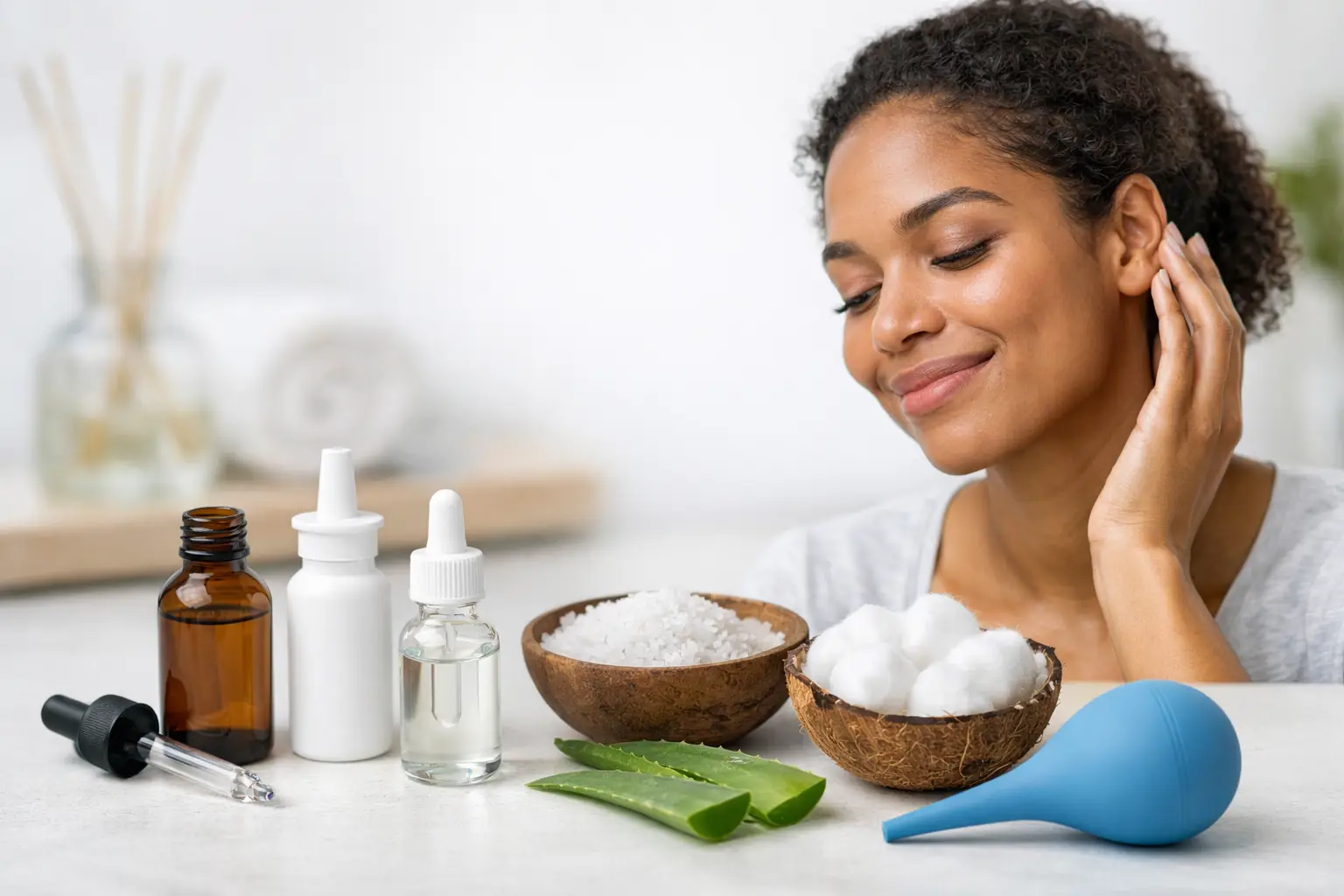

That familiar fizz from peroxide can feel like proof that it is working. But for many people, it is also the moment an already dry, itchy, or sensitive ear starts to feel worse. If you are looking for safer options than hydrogen peroxide ear drops, a gentler approach often makes more sense for routine ear comfort.
Hydrogen peroxide and carbamide peroxide are commonly used to break apart earwax. They can be harsh, though, especially when the ear canal is dry, irritated by earbuds or hearing aids, or exposed to frequent water and sweat. ENT-informed ear care starts with a simpler goal: support the ear canal rather than repeatedly stripping or irritating its natural protective environment.
Why peroxide ear drops can be uncomfortable
Earwax is not a sign of poor hygiene. It helps trap dust and debris, supports the ear canal’s slightly acidic environment, and provides natural lubrication. A small amount of soft earwax is usually part of a comfortable, self-maintaining ear canal.
Peroxide works by releasing oxygen, which creates the bubbling sensation people recognize. That action may loosen some wax, but it can also leave the skin of the ear canal feeling dry or sensitive. For a person who already deals with flaky skin, itchiness, or irritation after wearing earbuds, repeated use can become part of the problem rather than a practical solution.
The trade-off matters. A product designed to aggressively break down wax may not be the best match when the main concern is dryness, mild itchiness, or a feeling of irritation after swimming, exercise, or device use. More fizz is not necessarily better ear care.
Safer options than hydrogen peroxide ear drops
For everyday earwax comfort and dryness, simple oil-based drops are often the gentler option to consider. Mineral oil, coconut oil, and olive oil can help soften dry wax while adding lubrication to the ear canal. Unlike peroxide, these oils do not rely on bubbling or a drying chemical reaction.
Mineral oil for dry, stubborn wax
Mineral oil is a straightforward choice for wax that feels dry, firm, or difficult to move naturally. Its main role is to lubricate and soften rather than dissolve wax aggressively. That can be especially helpful for adults who notice more dryness with age, spend time in dry indoor air, or use hearing aids that make the ear canal feel less comfortable.
Auil Mineral Oil Ear Drops are an example of a simple mineral-oil-focused option made for ear care. The appeal is not a dramatic sensation. It is a calmer, less disruptive approach to supporting wax that has become dry.
Coconut oil for dry or itchy-feeling ears
Coconut oil is another gentle option people often prefer when their ears feel dry or mildly itchy. Its smooth texture can make it a comfortable choice for routine moisture support, particularly after water exposure, sweating, or extended earbud wear.
Coconut oil is not a replacement for identifying the cause of ongoing itchiness. Still, when dryness is the likely everyday trigger, a plain oil-based drop such as Coconut Auil Coconut Oil Ear Drops may be more aligned with a comfort-first routine than peroxide.
Olive oil for everyday softness
Olive oil has a long history of use as a wax-softening oil. It can be a practical option when the goal is simply to keep earwax from becoming overly dry and compacted. It is also familiar, uncomplicated, and gentle in feel for many users.
Olive Auil Olive Oil Ear Drops offer an olive-oil-based choice for people who prefer this type of earwax care. As with mineral and coconut oil, the purpose is supportive maintenance, not forceful cleaning.
Choose the oil that fits the situation
There is no need to overcomplicate the choice. Mineral oil is often a sensible starting point for dry wax buildup. Coconut oil may appeal when dryness and itchiness are the bigger concerns. Olive oil is a familiar all-purpose option for keeping wax soft and comfortable.
What matters most is consistency and restraint. Switching from one strong product to another every few days can leave the ear canal unsettled. A simple product with a clear purpose is usually easier to use thoughtfully than a harsh formula promising an instant clean-out.
It also helps to keep expectations realistic. Oil drops can support normal wax movement and comfort, but they are not meant to solve every blocked-ear sensation. Fullness can have several causes, and repeatedly adding drops when symptoms persist may delay getting the right guidance.
Everyday habits that protect ear comfort
Drops are only one part of prevention. The ear canal usually does better when it is left to perform its natural cleaning process. Cotton swabs, hairpins, and other objects tend to push wax farther inward and can scratch delicate skin. Even when a swab appears to remove wax, it may leave more compacted material deeper in the canal.
After swimming, showering, or sweating, gently dry the outer ear with a towel rather than inserting anything into the canal. If you wear hearing aids or earbuds, give your ears breaks when possible and keep the devices clean according to their manufacturer instructions. Pressure, trapped moisture, and friction can all make a sensitive ear feel more irritated.
Pay attention to patterns. If your ears feel worse after a specific pair of earbuds, a long hearing-aid day, or frequent pool time, the issue may be repeated friction or moisture rather than a need for stronger wax removal. That observation can lead to a more useful, preventive adjustment.
When not to use ear drops on your own
No ear drop is right for every ear. Avoid self-treating with peroxide, oils, alcohol-based drops, or any other ear drops if you have ear tubes, a known or suspected eardrum opening, a history of ear surgery, or have been told to avoid drops. In those situations, individualized guidance is the safer route.
It is also wise to seek professional evaluation for significant ear pain, drainage, bleeding, dizziness, sudden hearing changes, a lodged object, or persistent blocked-ear symptoms. These signs are not a reason to keep trying stronger products at home. They deserve a proper look at what is happening inside the ear.
For children, caregivers should be especially cautious about putting drops in an ear when the cause of discomfort is unclear. Gentle does not mean universally appropriate.
A calmer approach to earwax care
The best ear-care routine rarely feels dramatic. Healthy ears generally do not need frequent deep cleaning, aggressive bubbling, or repeated attempts to remove every trace of wax. They benefit from patience, protection from irritation, and support when wax becomes dry or uncomfortable.
If peroxide has left your ears feeling tight, itchy, or overly dry, consider shifting the goal from removing wax as quickly as possible to keeping the ear canal comfortable enough to do its job naturally. A simple oil-based approach, used thoughtfully and with appropriate caution, can be a kinder next step for everyday ear care.