

Written and medically reviewed by Joshua A. Stramiello, MD — board-certified otolaryngologist (ear, nose, and throat physician).
Published August 20, 2026 · Last medically reviewed August 22, 2026 · Sources
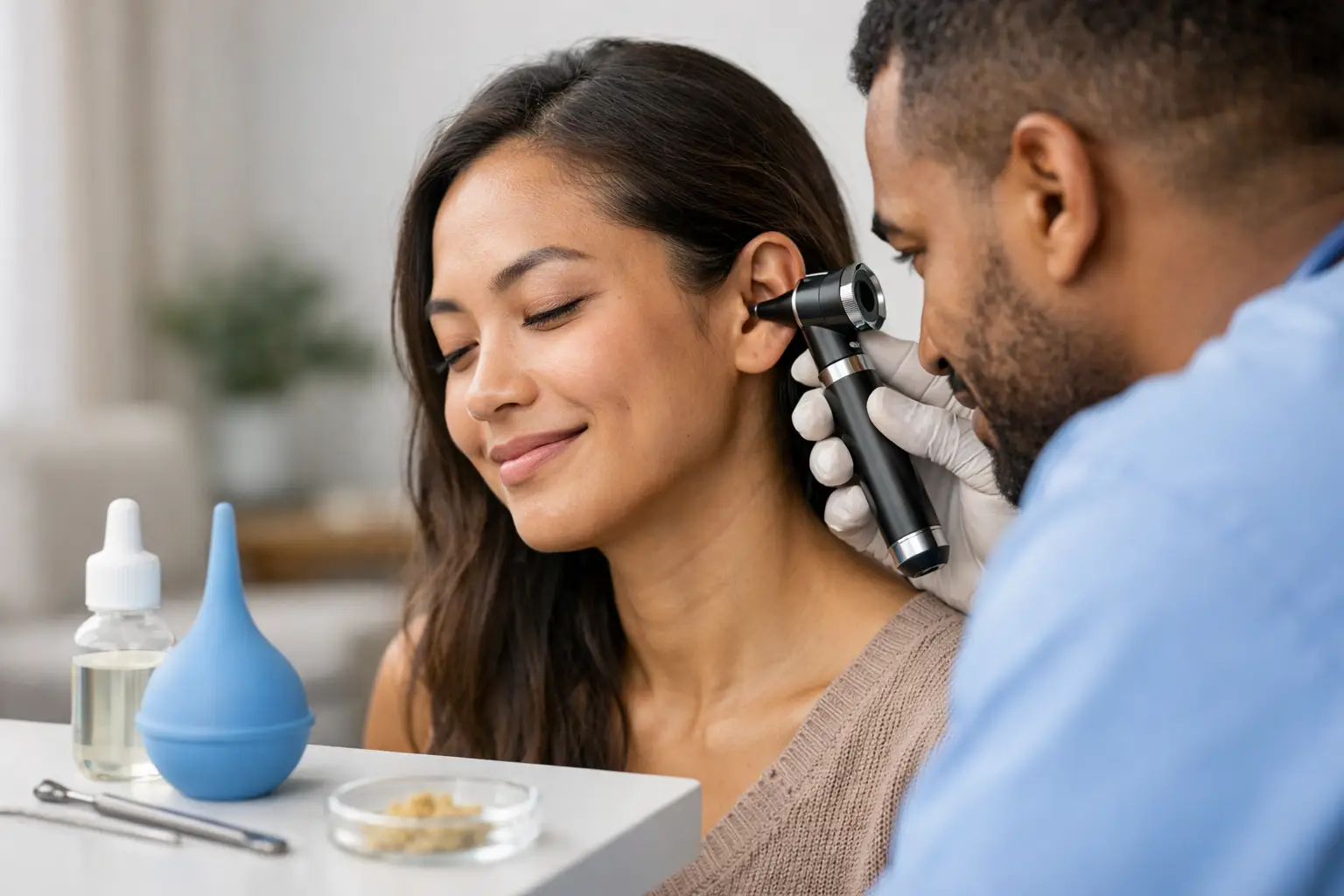
Quick answer: For most beginners, earwax management means doing almost nothing. Wipe only the outer ear with a soft cloth, and never put cotton swabs, picks, or any object into the ear canal — that is what pushes wax deeper. If wax feels dry or the canal feels tight, a few drops of a plain single oil (mineral, coconut, or olive) can soften things gently; skip peroxide, carbamide peroxide, alcohol drops, and ear candling. See a doctor for pain, drainage, bleeding, sudden hearing change, or blockage that will not clear.
Most ears do not need a cleaning routine. That is the reassuring starting point for earwax management for beginners: earwax is not a sign that your ears are dirty. It is a normal protective substance that helps catch dust and debris, supports the ear canal’s skin, and gradually moves outward on its own.1
Problems often begin when people try to make the ear canal feel perfectly clean. Cotton swabs, fingers, and small tools can push wax farther inward instead of removing it. A safer approach is usually simpler: understand what your ears need, leave the canal alone when it feels comfortable, and use gentle moisture support only when dryness or wax texture calls for it.
What Earwax Is Supposed to Do
Earwax, also called cerumen, is made from natural oils and shed skin cells in the outer ear canal. Its slightly sticky texture helps keep dirt from traveling deeper toward the eardrum. It also helps protect the delicate skin lining the canal from becoming overly dry.3
As you chew, talk, and move your jaw, older wax generally works its way toward the ear opening. There, it may dry, flake away, or be washed away from the outer ear during normal bathing. This self-cleaning process means visible wax near the opening is often normal.
Wax can look yellow, orange, brown, or darker brown. Its color and texture can change with age, moisture, skin type, and the environment. Darker wax is not automatically a concern, and dry flakes are not always a sign that something is wrong. Comfort and changes from your usual pattern matter more than trying to judge wax by appearance alone.
Earwax Management for Beginners Starts With Less
The safest everyday habit is to clean only the outside of the ear. After a shower, use a soft washcloth to gently wipe the outer ear and the visible folds around it. Do not insert the cloth into the ear canal.4
Avoid trying to remove wax simply because you suspect it is there. Many people feel an urge to clean after seeing a small amount of wax at the entrance to the ear, but that wax may be doing exactly what it should. If your ears feel comfortable and hearing seems unchanged, leaving them alone is often the most sensible choice.
A good rule is simple: nothing smaller than your elbow belongs in your ear canal. That includes cotton swabs, bobby pins, pen caps, fingernails, ear picks, and camera-style cleaning tools. These methods can scrape sensitive skin or pack wax deeper, making a minor issue harder to manage.2
When Dry Wax or Dry Ears Need a Gentler Approach
Some ears produce wax that feels dry, flaky, or stubborn. This can be more noticeable in dry indoor air, after regular water exposure, or for people who use hearing aids or earbuds often. Those devices can change airflow in the ear canal and may contribute to a warm, dry, or irritated feeling for some users.
For simple dryness and dry-feeling wax, oil-based ear drops are a gentle option many people prefer. Mineral oil, coconut oil, and olive oil drops can help support moisture and soften dry wax without relying on harsher ingredients.1 The goal is not to flush the ear or force wax out quickly. It is to support a more comfortable ear environment and allow the ear’s natural process to do its work.
Choose a product made specifically as ear drops, follow its label directions, and keep expectations realistic. One person may notice that a little moisture is enough, while another may need to focus more on reducing irritation from frequent earbud wear or water exposure. More product is not necessarily better.
Safe Ear Care favors simple oil-based options, including Auil Mineral Oil Ear Drops, Coconut Auil Coconut Oil Ear Drops, and Olive Auil Olive Oil Ear Drops by Oto Anthro. The best choice can depend on personal comfort, texture preference, and how your ears respond over time.
Disclosure: Dr. Stramiello is the founder of Oto Anthro (Otolaryngological Anthropology), the company that makes the Auil ear drops shown below, and SafeEarCare.com provides links to Amazon for purchase. That is a material financial relationship, and we disclose it plainly to remain transparent. The clinical guidance here does not change based on what we sell — any plain, purpose-made single oil will do the same job. Full disclosure.


Ingredients and Methods to Skip
A strong tingling sensation does not mean a product is working better. For beginner ear care, harsh ingredients and aggressive cleaning can create more discomfort than relief, especially when the ear canal already feels dry or itchy.
It is wise to avoid these common approaches:4
- Hydrogen peroxide and carbamide peroxide drops, which may feel drying or irritating for some ears.
- Isopropyl alcohol-based ear products, which can strip away natural oils and worsen dryness.
- Ear candles, which do not safely remove wax and can expose the ear to heat or residue.
- Pressurized water devices, forceful rinsing, and inserted tools that can irritate the canal or move wax inward.
Gentle care is not about finding the strongest solution. It is about respecting that the ear canal is narrow, sensitive, and designed to maintain itself much of the time.
Everyday Habits That Help
If you wear earbuds, clean the earbuds regularly and give your ears periodic breaks. Earbuds can collect oil, skin cells, and moisture, then press them against the ear opening. A proper fit matters too. Earbuds that feel tight, create pressure, or leave your ears itchy after each use may not be the right style for you.
Hearing-aid users may benefit from a consistent cleaning routine for the device and from paying attention to changes in ear comfort. Because hearing aids sit close to the ear canal for long periods, wax and moisture can affect both comfort and device performance. Avoid inserting cleaning tools into your ear to compensate for a clogged hearing aid. Cleaning the device itself and discussing recurring comfort concerns with a hearing professional are safer next steps.
After swimming, exercise, or a humid day, gently dry the outer ear with a towel. Do not probe the canal to remove moisture. If your ears repeatedly feel uncomfortable after water exposure, take note of the pattern rather than reaching for a stronger at-home remedy.
Know When Home Care Is Not the Right Fit
Education and gentle habits are useful for ordinary earwax and dryness concerns, but they are not a replacement for a personal evaluation. Stop self-care and seek guidance from a qualified healthcare professional if you have sudden hearing changes, significant pain, drainage, bleeding, dizziness, a feeling of fullness that does not improve, or symptoms that keep returning.3
It is also sensible to get individualized guidance before using ear drops if you have had ear surgery, have a known eardrum concern, or are unsure whether your symptoms are caused by wax. Wax buildup can feel similar to other ear issues, and guessing can lead to unnecessary irritation.
For parents and caregivers, the same principle applies: do not insert swabs or tools into a child’s ear canal. If a child seems uncomfortable, is pulling at their ear often, or is not hearing as expected, a clinician can help identify the appropriate next step.
Build a Routine You Can Actually Keep
The best earwax routine is usually uneventful. Clean the outer ear, give the canal space to regulate itself, use gentle oil-based moisture support when appropriate, and pay attention to meaningful changes rather than chasing a spotless feeling.
Healthy ear care is less about removing every trace of wax and more about protecting the comfort and function your ears already work hard to maintain.
Sources
- Schwartz SR, Magit AE, Rosenfeld RM, et al. Clinical Practice Guideline (Update): Earwax (Cerumen Impaction). Otolaryngology–Head and Neck Surgery. 2017;156(1_suppl):S1–S29. American Academy of Otolaryngology–Head and Neck Surgery Foundation.
- National Institute on Deafness and Other Communication Disorders (NIDCD). Why You Shouldn’t Use Cotton Swabs to Clean Your Ears. National Institutes of Health.
- American Academy of Otolaryngology–Head and Neck Surgery. Earwax (Cerumen Impaction). ENThealth.org.
- American Academy of Otolaryngology–Head and Neck Surgery Foundation. Dos and Don’ts of Earwax (patient handout).
About the Author
Written and medically reviewed by Joshua A. Stramiello, MD, board-certified otolaryngologist (ear, nose, and throat physician). Last reviewed August 22, 2026.
Dr. Stramiello earned his Doctor of Medicine at the University of South Florida Morsani College of Medicine, completed his general surgery internship at Vanderbilt University Medical Center, and completed residency in Otolaryngology–Head & Neck Surgery at the University of California, San Diego. He has cared for ENT patients at Dartmouth-Hitchcock, Sanford Hospital, and West Suffolk Hospital in the UK, and his peer-reviewed research spans pediatric otolaryngology, airway surgery, and ear disease (Google Scholar).
The content on SafeEarCare.com is intended for educational purposes only and should not be considered medical advice. It is not a substitute for professional medical advice, diagnosis, or treatment. Always consult your physician or qualified healthcare provider regarding your individual health needs.
Discover more from Safe Ear Care
Subscribe to get the latest posts sent to your email.


