
Written and medically reviewed by Joshua A. Stramiello, MD — board-certified otolaryngologist (ear, nose, and throat physician).
Published June 18, 2026 · Last medically reviewed August 6, 2026 · Sources
Quick answer: Early signs of noise-induced hearing damage include ringing after loud events, muffled hearing, turning the TV up, struggling with conversation in crowds, and ear fatigue. These signs mean it is time to lower exposure and get a hearing test — damage is preventable but not reversible.
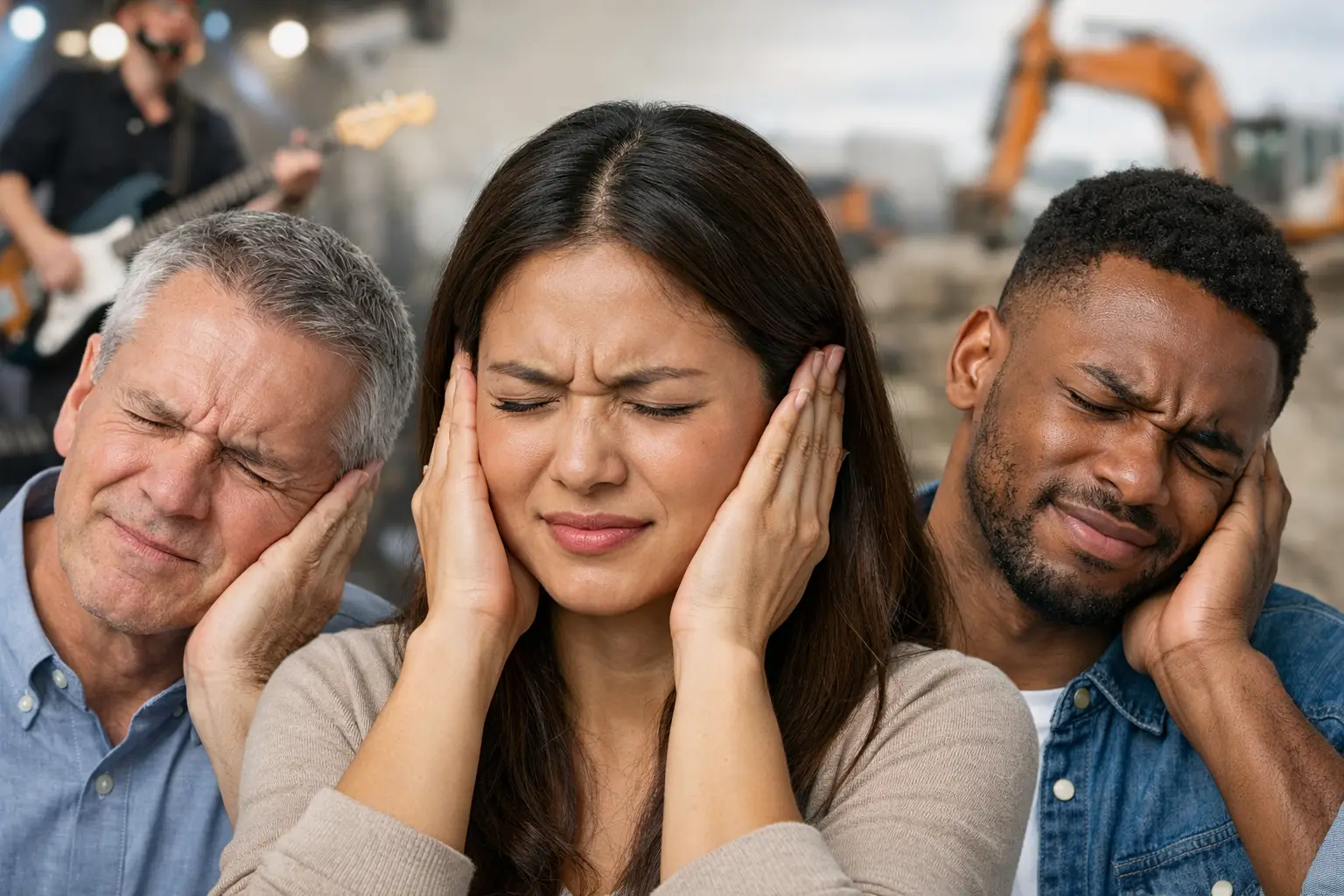
You leave a concert, a gym class, a loud shift at work, or even a long mowing session and the world sounds slightly off. Maybe your ears feel stuffed up. Maybe there is a faint ringing that shows up once the room gets quiet. Those are some of the earliest signs of noise induced hearing damage, and they are easy to brush off because they often seem temporary.
That is what makes this topic tricky. Noise-related hearing damage does not always arrive with dramatic pain or obvious hearing loss. In many cases, it starts subtly, builds gradually, and gets noticed only after everyday sounds become harder to follow. The good news is that earlier awareness can lead to safer habits before more hearing is lost.
Why noise induced hearing damage can be easy to miss
Most people expect hearing damage to feel sudden and severe. Sometimes it does. More often, it develops from repeated exposure to loud sound over time, including music through earbuds, power tools, live events, fitness studios, gaming headsets, and workplace noise.
Your ears can also seem to recover after a loud event, which creates a false sense of safety. If muffled hearing or ringing fades by the next day, it is tempting to assume no real harm was done. But temporary symptoms after loud noise can be a warning sign that the inner ear has been stressed.1
It also helps to know that hearing damage does not affect every sound equally at first. Many people still hear well enough in quiet settings, yet struggle in restaurants, meetings, or family gatherings. That mismatch can make the problem feel confusing or easy to explain away.
Common signs of noise induced hearing damage
1. Ringing, buzzing, or hissing after loud sound
A brief ringing after a loud event is one of the most recognized warning signs. Some people describe it as high-pitched ringing, while others notice buzzing, humming, or static-like noise. This is often called tinnitus.
If it happens repeatedly after concerts, sporting events, tools, or headphone use, that pattern matters. Even when the sound fades, your ears may be signaling that the noise level was too high or the exposure lasted too long.
2. Sounds seem muffled after noise exposure
A temporary “cotton in the ears” feeling after loud sound is another common sign. Voices may seem dull, music may lose clarity, or everyday noise may feel oddly distant.
Some people assume this is just earwax or pressure. Sometimes it is. But when muffled hearing shows up after loud sound exposure, it can point to temporary changes in the inner ear that should not be ignored.
3. Trouble understanding speech, especially in background noise
One of the earliest functional changes is not total hearing loss. It is speech clarity. You may hear that someone is talking but miss certain words, especially when there is competing noise.
This often shows up in restaurants, group conversations, open offices, or the car. If you find yourself asking people to repeat themselves more often, especially women and children with higher-pitched voices, hearing changes may be part of the reason.
4. Needing to raise the volume more than before
If your TV, phone, or headphones keep creeping upward, pay attention. Gradual volume increases are easy to normalize because they happen slowly.
A useful clue is when other people say the volume is too loud but it sounds normal to you. That difference can suggest that your hearing threshold has changed.
5. Sensitivity or discomfort around sound
Not everyone with noise-related hearing changes simply hears less. Some people become more sensitive to certain sounds. Dishes clanking, hand dryers, subway brakes, or children yelling may feel unusually sharp or irritating.
This does not happen to everyone, and it can have more than one cause. Still, sound sensitivity after repeated loud exposure can be part of the picture.
6. Difficulty following conversations when people speak softly or quickly
Noise induced hearing damage often affects higher frequencies first.1 That means softer consonants like s, f, th, and sh may become harder to catch, even if louder vowel sounds still come through.
As a result, speech can seem less crisp. People may sound like they are mumbling when the real issue is reduced detail in what your ears are picking up.
7. Hearing feels tired after a noisy day
People do not usually think of listening effort as a symptom, but it can be. If your ears or brain feel worn out after trying to keep up with conversations in noisy places, your hearing system may be working harder than it used to.
This can look like social fatigue, irritability, or trouble concentrating after long periods in loud environments. It is subtle, but it is worth noticing.
8. Symptoms keep returning after everyday noise
One loud concert is one thing. But if ringing, muffled hearing, or sound sensitivity keeps showing up after fairly common activities, that is a stronger signal that your ears may not be tolerating your usual sound exposure well.
This is especially relevant for people who use earbuds daily, work around machinery, attend frequent live events, or do hobbies like woodworking, shooting sports, or motorcycling.
When these signs are more likely to happen
The risk is not only about volume. Duration matters too. A short burst of very loud sound can be harmful, but so can a lower level of noise if you are around it long enough.
That is why hearing damage sometimes surprises people. They expect danger from fireworks or sirens, but not from a long workout class, hours of gaming through a headset, or a full day of lawn equipment without hearing protection. Repetition adds up.
Earbuds deserve special mention because they are part of daily life for so many people. The closer the sound source is to the ear, the easier it is to overdo it without realizing it. If you regularly finish listening sessions with ringing, ear fatigue, or the urge to sit in silence, your volume or duration may be too high.
What these symptoms do not always mean
These signs can suggest noise induced hearing damage, but they are not exclusive to it. Earwax buildup can also cause muffled hearing, fullness, and reduced clarity.3 That is one reason self-diagnosis gets complicated.
Safe, gentle ear care matters here. If dryness or wax buildup is part of the problem, many people do best with simple oil-based softening options rather than harsh ingredients. ENT-informed ear care education generally favors a cautious approach, especially if ears are sensitive from earbud use, hearing aid use, water exposure, or everyday irritation.
At the same time, ringing after loud sound, repeated post-noise muffling, and increasing trouble in background noise should not automatically be blamed on wax. It depends on the pattern.
What to do if you notice signs of noise induced hearing damage
The first step is not panic. It is paying attention and lowering your future risk. Turn down headphone volume, take listening breaks, step away from speakers, and use hearing protection around loud tools, equipment, and events.
It also helps to notice timing. Do symptoms happen only after loud sound, or all the time? Are they getting more frequent? Are you having more trouble with conversation than you did six months ago? Those details make the pattern clearer.
If symptoms are sudden, severe, or one-sided, or if hearing changes do not improve, prompt medical evaluation is the safer next step.2 Ongoing tinnitus, persistent muffled hearing, and clear difficulty understanding speech are good reasons to seek professional hearing assessment.
For daily prevention, small habits matter more than people think. Lowering the volume a little, wearing ear protection consistently, and giving your ears quiet recovery time can reduce the strain that builds over months and years.
The bigger picture: hearing damage is often cumulative
One reason this subject deserves more attention is that noise related hearing damage is often preventable, yet easy to normalize. People get used to ringing after shows. They laugh about asking others to repeat themselves. They assume everyone struggles in noisy restaurants.
Sometimes that is just normal distraction. Sometimes it is the early edge of hearing change. The difference often comes down to patterns that repeat and gradually worsen.
If you have noticed these signs, treat them as useful feedback rather than a reason to feel alarmed. Your ears are telling you that sound exposure may be crossing the line from everyday life into long-term risk, and that is exactly the kind of message worth acting on while you still can.
Sources
- National Institute on Deafness and Other Communication Disorders (NIDCD). Noise-Induced Hearing Loss. National Institutes of Health.
- National Institute on Deafness and Other Communication Disorders (NIDCD). Hearing, Ear Infections, and Deafness. National Institutes of Health.
- American Academy of Otolaryngology–Head and Neck Surgery. Earwax (Cerumen Impaction). ENThealth.org.
About the Author
Written and medically reviewed by Joshua A. Stramiello, MD, board-certified otolaryngologist (ear, nose, and throat physician). Last reviewed August 6, 2026.
Dr. Stramiello earned his Doctor of Medicine at the University of South Florida Morsani College of Medicine, completed his general surgery internship at Vanderbilt University Medical Center, and completed residency in Otolaryngology–Head & Neck Surgery at the University of California, San Diego. He has cared for ENT patients at Dartmouth-Hitchcock, Sanford Hospital, and West Suffolk Hospital in the UK, and his peer-reviewed research spans pediatric otolaryngology, airway surgery, and ear disease (Google Scholar).
The content on SafeEarCare.com is intended for educational purposes only and should not be considered medical advice. It is not a substitute for professional medical advice, diagnosis, or treatment. Always consult your physician or qualified healthcare provider regarding your individual health needs.
Discover more from Safe Ear Care
Subscribe to get the latest posts sent to your email.