

Written and medically reviewed by Joshua A. Stramiello, MD — board-certified otolaryngologist (ear, nose, and throat physician).
Published August 16, 2026 · Last medically reviewed August 16, 2026 · Sources
Quick answer: Yes, earbuds can cause ear pain — usually from a tip that presses or rubs the thin skin of the ear canal, hours of uninterrupted wear, trapped sweat and moisture, or wax pushed inward by deep insertion. Use the smallest tip that stays put without forcing, take regular breaks, and keep earbuds clean and dry. Never dig at wax with cotton swabs or tools; for dry ears, gentle single-oil drops are kinder than peroxide or alcohol formulas. See a doctor for pain that keeps returning, drainage, bleeding, or sudden hearing changes.
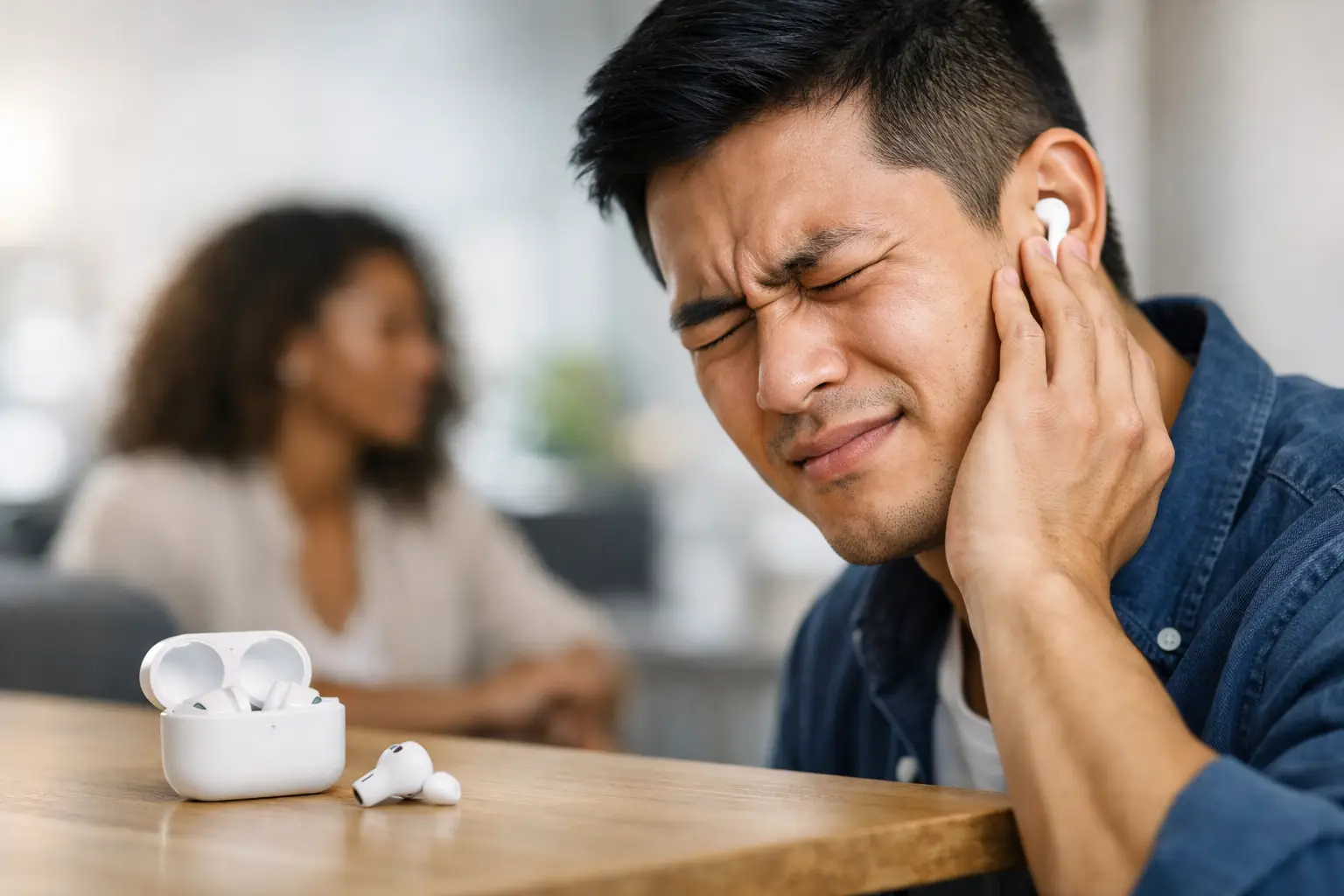
A favorite pair of earbuds can become uncomfortable surprisingly fast: a tender ear canal after a commute, a sore outer ear after a workout, or a dull ache that starts halfway through a podcast. So, can earbuds cause ear pain? Yes. The discomfort is often related to pressure, friction, trapped moisture, earwax, or listening habits rather than the earbud itself being inherently harmful.
The useful question is not whether you must stop using earbuds forever. It is what your ears may be reacting to, and whether a few simple changes can make listening more comfortable. ENT-informed ear care starts with treating pain as a signal to pause, not something to push through.
Why Earbuds Can Cause Ear Pain
Earbuds sit against or inside a very sensitive area of the ear. The skin of the outer ear canal is thin, and it can become irritated more easily than skin on many other parts of the body. A tip that is slightly too large, a hard edge that presses in one spot, or a bud that shifts while you walk can create enough friction to leave the ear feeling sore.
Fit is one of the most common reasons for discomfort. Earbuds are not one-size-fits-all, even when they come with several tip options. A tip that is too large may stretch the canal opening and create pressure. One that is too small may move around, rub the skin, and encourage you to push it farther in to keep it secure. Either situation can lead to tenderness.
Long listening sessions add to the problem. Even a well-fitting earbud can feel uncomfortable after hours of continuous wear because the area does not get a chance to air out. This is especially common with in-ear styles used for work calls, travel, gaming, or sleep.
Moisture, Sweat, and Everyday Irritation
Sweat, humidity, and water exposure can make earbud discomfort more likely. When moisture stays in the ear canal, the skin may feel soft, itchy, or easily irritated. Placing an earbud into an already damp ear can also trap that moisture against the skin.
This is why discomfort may show up after a gym session, a long walk in warm weather, or swimming. It does not always mean the earbud is dirty or defective. Often, the ear simply needs time to dry and recover before anything goes back in.
Earbuds themselves should be kept clean and dry. Earwax, skin oils, and debris can collect on tips and grilles, creating an irritating surface and affecting sound quality. Wiping the outside according to the manufacturer’s cleaning instructions and allowing earbuds to dry fully after exercise are small habits that can make a real difference.
Earwax Can Change How Earbuds Feel
Earwax is normal and protective. It helps condition the ear canal and catches dust and small particles before they move deeper into the ear.1 But earbuds can sometimes press wax inward or interfere with the ear’s usual self-cleaning process, particularly when they are worn often and pushed deeply into the canal.
When wax is present near the canal entrance, an earbud may feel tighter than usual, create pressure, or make sounds seem muffled.3 Trying to scrape wax out with cotton swabs, fingernails, or small tools can irritate the skin and push material farther in.2 That can make discomfort worse.
For people who tend to have dry ears or dry earwax, gentle moisture support may be more appropriate than harsh ear-cleaning ingredients. Safe Ear Care favors simple oil-based options such as mineral oil, coconut oil, or olive oil ear drops for dry earwax and everyday dryness. Products such as Auil Mineral Oil Ear Drops, Coconut Auil Coconut Oil Ear Drops, and Olive Auil Olive Oil Ear Drops are designed around these gentler ingredients. Hydrogen peroxide, carbamide peroxide, and alcohol-based drops can be drying or irritating for some ears, especially when the concern is dryness rather than a need for aggressive cleaning.
Disclosure: Dr. Stramiello is the founder of Oto Anthro (Otolaryngological Anthropology), the company that makes the Auil ear drops shown below, and SafeEarCare.com provides links to Amazon for purchase. That is a material financial relationship, and we disclose it plainly to remain transparent. The clinical guidance here does not change based on what we sell — any plain, purpose-made single oil will do the same job. Full disclosure.


Because ear concerns vary, persistent blockage, notable hearing changes, or repeated discomfort deserve an individualized conversation with a qualified hearing or ear-care professional.
Volume May Not Cause Surface Pain, But It Still Matters
A sore ear canal and sound-related ear strain can feel similar, but they are not always the same. High volume does not usually cause the same pressure-point soreness as a poorly fitted ear tip. However, loud listening can leave the ears feeling fatigued, sensitive, full, or uncomfortable after use.
The risk rises when listeners turn up the volume to compete with traffic, gym music, office noise, or airplane sound. Noise-canceling earbuds may help some people listen at a lower volume in noisy places, but only if the fit is comfortable and the device is used sensibly.
A practical approach is to choose the lowest volume that lets you hear clearly, then take regular quiet breaks. If you notice ringing, muffled hearing after listening, or sensitivity to ordinary sounds, give your ears a rest and consider seeking professional guidance if those changes do not settle.
How to Make Earbuds More Comfortable
Start with fit, not force. Try the smallest tip that stays secure without requiring you to push the earbud deep into the canal. If one ear consistently feels tighter than the other, it is reasonable to use a different tip size on each side when your earbuds allow it. Ears are not always symmetrical.
Limit uninterrupted wear. Taking earbuds out between meetings, after a workout, or every hour or so gives the ear canal a break from pressure and moisture. Over-ear headphones can also be a helpful alternative for some listening sessions, although they may not suit everyone’s comfort needs.
Avoid inserting earbuds when your ears are wet, sweaty, or already tender. Dry the outer ear gently with a clean towel after showering or exercise, but do not insert anything into the canal to dry it. Letting the area air out is usually the less irritating choice.
It also helps to avoid sharing earbuds. Beyond general hygiene concerns, another person’s tips may carry skin oils, wax, or moisture that your ears are not used to. Replace worn, cracked, or stiff silicone tips, since rough surfaces and degraded materials can create more friction.
When Ear Pain Should Not Be Ignored
Brief tenderness that clearly follows a long session or an uncomfortable fit may improve after you stop wearing earbuds and let the area rest. Pain that keeps returning, becomes more intense, or appears without earbud use is different. So are symptoms such as drainage, bleeding, marked swelling, sudden hearing changes, significant dizziness, or pain following an injury.
Those signs are reasons to stop putting earbuds, drops, swabs, or other objects in the ear and seek prompt evaluation from an appropriate healthcare professional. Ear pain can come from several places, including the jaw, teeth, throat, or skin around the ear, so it is not always possible to identify the cause at home.
If earbuds only hurt on one side, do not assume you need to simply tolerate it. Compare the fit, check for a damaged tip, reduce wear time, and give that ear a break. If the pattern continues, professional input can help rule out issues that deserve more attention.
Comfort is useful feedback. Earbuds should feel secure, not sharp, overly tight, itchy, or painful. A better fit, cleaner and drier equipment, lower-volume listening, and regular breaks can protect the everyday ease that makes listening enjoyable in the first place.
Sources
- Schwartz SR, Magit AE, Rosenfeld RM, et al. Clinical Practice Guideline (Update): Earwax (Cerumen Impaction). Otolaryngology–Head and Neck Surgery. 2017;156(1_suppl):S1–S29. American Academy of Otolaryngology–Head and Neck Surgery Foundation.
- National Institute on Deafness and Other Communication Disorders (NIDCD). Why You Shouldn’t Use Cotton Swabs to Clean Your Ears. National Institutes of Health.
- American Academy of Otolaryngology–Head and Neck Surgery. Earwax (Cerumen Impaction). ENThealth.org.
About the Author
Written and medically reviewed by Joshua A. Stramiello, MD, board-certified otolaryngologist (ear, nose, and throat physician). Last reviewed August 16, 2026.
Dr. Stramiello earned his Doctor of Medicine at the University of South Florida Morsani College of Medicine, completed his general surgery internship at Vanderbilt University Medical Center, and completed residency in Otolaryngology–Head & Neck Surgery at the University of California, San Diego. He has cared for ENT patients at Dartmouth-Hitchcock, Sanford Hospital, and West Suffolk Hospital in the UK, and his peer-reviewed research spans pediatric otolaryngology, airway surgery, and ear disease (Google Scholar).
The content on SafeEarCare.com is intended for educational purposes only and should not be considered medical advice. It is not a substitute for professional medical advice, diagnosis, or treatment. Always consult your physician or qualified healthcare provider regarding your individual health needs.
Discover more from Safe Ear Care
Subscribe to get the latest posts sent to your email.