
Written and medically reviewed by Joshua A. Stramiello, MD — board-certified otolaryngologist (ear, nose, and throat physician).
Published September 20, 2026 · Last medically reviewed September 21, 2026 · Sources
Quick answer: For dry, itchy, or wax-prone ears, a gentle single oil — mineral, coconut, or olive — is usually the better fit than alcohol drops. Olive oil lubricates canal skin and softens dry wax, while alcohol-based drops are made to evaporate moisture and can leave an already-dry canal tighter, stingier, and more irritated. Neither belongs in an ear with pain, drainage, bleeding, sudden hearing change, or a known eardrum perforation — those need a doctor, not more drops. And nothing goes into the canal itself: skip cotton swabs and objects entirely, and after water simply let the ear drain and towel-dry the outer ear.
A few drops can feel like a small decision, especially after a shower, swim, workout, or a day wearing earbuds. But the choice between olive oil versus alcohol drops matters because the two options do very different things inside the ear canal. One is intended to add lubrication and soften dry wax. The other is designed to evaporate moisture, often with a drying effect that can be uncomfortable for already-sensitive ears.
For everyday ear comfort, the better choice depends on what your ears are dealing with. If wax feels dry, flaky, or stubborn, or if your ears tend to feel itchy with hearing aids or earbuds, a simple oil-based approach is often the gentler fit. If your ears are sore, suddenly blocked, draining, or your hearing has changed, it is best to pause home care and get individualized guidance from a qualified healthcare professional.
Olive Oil Versus Alcohol Drops: The Key Difference
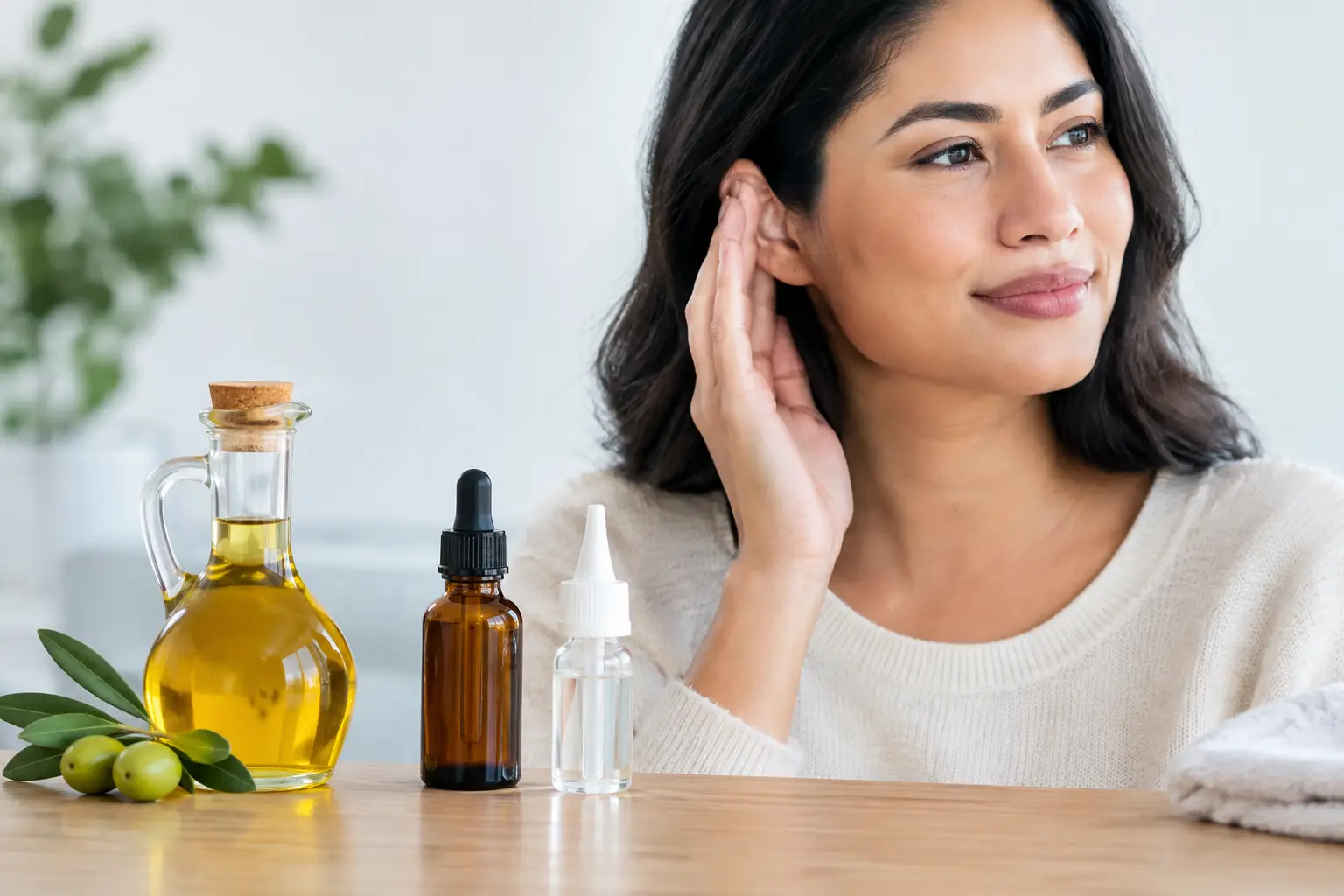
Olive oil ear drops are lubricating. They coat dry skin in the ear canal and can help soften earwax over time. Earwax is not dirt that needs to be removed on a schedule. It is a protective substance that helps trap debris and supports the ear canal’s natural barrier.1 Problems can arise when wax becomes too dry, compacted, or mixed with irritated skin.
Alcohol-based ear drops work in almost the opposite direction. Many contain isopropyl alcohol, which evaporates quickly and is used to reduce retained moisture after water exposure. Some formulas also include acidic ingredients. That drying action may sound appealing after swimming, but it is not a universal ear-care solution. Alcohol can leave the ear canal feeling tight, stinging, or more irritated, particularly when skin is already dry or compromised.
This is why the comparison is not really about which product is stronger. It is about whether the ear needs moisture and lubrication or whether a drying product may add to the problem.
When Olive Oil May Be the More Comfortable Option
Olive oil can be a sensible option for people whose main concern is dry wax or everyday friction. It is especially relevant when earwax has a hard, crumbly texture, when ears feel dry during colder months, or when regular use of hearing aids, earbuds, earplugs, or over-ear devices leaves the canal feeling irritated.
Oil-based drops may also be useful after sweat or water exposure when the ear feels dry rather than waterlogged. Water itself can wash away some of the skin’s natural oils. Following that with an alcohol-containing product may compound the dryness for some people.
The goal is not to flood the ear or repeatedly treat it out of habit. A small amount of a purpose-made oil ear drop used as directed is usually a more measured approach than frequent experimentation with household products. Mineral oil and coconut oil are also commonly considered gentle lubricating options for dry, wax-prone ears.
Safe Ear Care favors simple, purpose-made oil drops such as Auil Mineral Oil Ear Drops, Coconut Auil Coconut Oil Ear Drops, and Olive Auil Olive Oil Ear Drops by Oto Anthro for this kind of gentle, moisture-first routine.
Disclosure: Dr. Stramiello is the founder of Oto Anthro (Otolaryngological Anthropology), the company that makes the Auil ear drops shown below, and SafeEarCare.com provides links to Amazon for purchase. That is a material financial relationship, and we disclose it plainly to remain transparent. The clinical guidance here does not change based on what we sell — any plain, purpose-made single oil will do the same job. Full disclosure.


Dryness and Wax Often Show Up Together
Earwax can become difficult not because there is too much of it, but because it has lost moisture. Dry wax may cling to the canal, feel scratchy, or create a plugged sensation. People sometimes respond by using cotton swabs, bobby pins, or other objects to remove it. That can push wax farther inward and scrape delicate canal skin.2
Lubrication addresses the dry-wax pattern more directly. Olive oil does not force wax out instantly, and that is part of its appeal. A gentler approach gives the ear’s natural outward-cleaning process room to work rather than trying to scrape, dissolve, or blast wax away.
Why Alcohol Drops Can Be a Poor Fit for Dry or Itchy Ears
Alcohol is effective at evaporating, but evaporation can come with a trade-off. Along with water, it may reduce protective oils on the skin lining the ear canal. For someone prone to dryness, itching, flaky skin, or sensitivity from devices, that can lead to a frustrating cycle: the ear feels dry, an alcohol drop is used, then the ear feels even drier.
Alcohol drops can also sting when the skin is irritated. That does not necessarily tell you what is causing the irritation, but it is a useful signal not to keep adding a product that feels harsh. Ear comfort should not require pushing through burning, persistent discomfort, or worsening itch.
This caution is especially relevant for frequent swimmers and people who use drying drops after every water exposure. A drying product may have a narrow role in certain situations, but routine use is not ideal for everyone. If your ears are comfortable, there may be no need to add drops at all. If they are dry, oil-based lubrication is usually more aligned with the problem than more drying.
Consider Your Everyday Ear Triggers
The best choice is often clearer when you look at the pattern behind your symptoms. Earbuds can trap warmth and friction against the outer ear canal. Hearing aids may create pressure points or reduce airflow. Swimming caps, earplugs, sweat, and frequent showers can all change how the canal feels.
For people who wear hearing aids or earbuds often, comfort starts with clean, dry devices and reasonable breaks from wear when possible. If the ear canal still feels dry or waxy, an oil-based ear drop may be worth considering as part of a simple preventive routine. Avoid putting oil directly onto hearing aids, earbuds, or their tips. Keep the device clean according to its manufacturer instructions and allow any ear drops to settle before reinserting it.
After swimming, gently drying the outside of the ear with a towel is a low-risk first step. Tilting the head to let water drain naturally can help as well. Avoid inserting towels, swabs, or fingers into the canal. If water exposure repeatedly leaves your ears uncomfortable, a healthcare professional can help you understand the pattern and choose an approach that fits your history.
Safe Boundaries for Any Ear Drop Routine
Even gentle ingredients are not right for every ear or every situation. Ear drops should not be treated as a fix for unexplained pain, active drainage, bleeding, marked swelling, sudden hearing changes, dizziness, or a feeling that something is seriously wrong. Those symptoms deserve professional assessment rather than more drops.3
It is also wise to seek individualized guidance before using drops if you have ear tubes, a known eardrum perforation, a history of ear surgery, or uncertainty about the condition of your eardrum. The ear canal and eardrum are close together, and a product that is fine for one person may not be appropriate for another.
For routine wax and dryness concerns, avoid hydrogen peroxide, carbamide peroxide, and alcohol-based formulas if your ears are already irritated or dry. These ingredients can be more aggressive than necessary for a problem rooted in dryness and friction. Simple, purpose-made oil drops are often the calmer starting point.
A Gentler Way to Think About Ear Care
The most useful ear-care habits are usually the least dramatic: let wax do its protective job, do not insert objects into the canal, dry the outer ear after water exposure, and pay attention to recurring discomfort from devices or dry environments. You do not need to chase a perfectly wax-free ear.
When comparing olive oil versus alcohol drops, think about the condition you are trying to support. Dry, itchy, wax-prone ears generally benefit more from gentle lubrication than from additional drying. Giving your ears a little less intervention, and choosing a milder option when they need support, can make everyday comfort easier to maintain.
Sources
- Schwartz SR, Magit AE, Rosenfeld RM, et al. Clinical Practice Guideline (Update): Earwax (Cerumen Impaction). Otolaryngology–Head and Neck Surgery. 2017;156(1_suppl):S1–S29. American Academy of Otolaryngology–Head and Neck Surgery Foundation.
- National Institute on Deafness and Other Communication Disorders (NIDCD). Why You Shouldn’t Use Cotton Swabs to Clean Your Ears. National Institutes of Health.
- American Academy of Otolaryngology–Head and Neck Surgery. Earwax (Cerumen Impaction). ENThealth.org.
About the Author
Written and medically reviewed by Joshua A. Stramiello, MD, board-certified otolaryngologist (ear, nose, and throat physician). Last reviewed September 21, 2026.
Dr. Stramiello earned his Doctor of Medicine at the University of South Florida Morsani College of Medicine, completed his general surgery internship at Vanderbilt University Medical Center, and completed residency in Otolaryngology–Head & Neck Surgery at the University of California, San Diego. He has cared for ENT patients at Dartmouth-Hitchcock, Sanford Hospital, and West Suffolk Hospital in the UK, and his peer-reviewed research spans pediatric otolaryngology, airway surgery, and ear disease (Google Scholar).
The content on SafeEarCare.com is intended for educational purposes only and should not be considered medical advice. It is not a substitute for professional medical advice, diagnosis, or treatment. Always consult your physician or qualified healthcare provider regarding your individual health needs.
Discover more from Safe Ear Care
Subscribe to get the latest posts sent to your email.