


Written and medically reviewed by Joshua A. Stramiello, MD — board-certified otolaryngologist (ear, nose, and throat physician).
Published July 22, 2026 · Last medically reviewed August 6, 2026 · Sources
Quick answer: To clear pool water stuck in your ears, tilt your head to the affected side, gently tug the outer ear, and let gravity drain it — then towel-dry only the outside. Never push swabs or tissue into the canal; see a clinician if the blocked feeling lasts more than a few days or comes with pain.
That muffled, sloshy feeling after a swim can make the rest of the day surprisingly uncomfortable. Pool water stuck in ears is common, especially after long swims, jumping into the water, or spending time underwater. Usually, the issue is simply water resting in the curves of the outer ear canal. The goal is to encourage it to leave gently, without pushing anything deeper or irritating delicate skin.
Why Pool Water Can Get Stuck in Ears
The ear canal is not a straight, open tube. It has natural curves, small folds of skin, and a protective coating of earwax. Water can sit behind a bit of wax or become held in place by the shape of the canal, creating a blocked or echoing sensation.
Some people notice this more often than others. A narrow ear canal, naturally sticky earwax, frequent earbud use, hearing aids, or dry, sensitive ear skin can all change how water moves in and out. It does not necessarily mean anything is wrong with your ears, but recurring trapped water is worth taking seriously as an ear-comfort issue.
Chlorinated pool water can also leave the ear canal feeling dry afterward. When skin is dry or irritated, it may be more sensitive to moisture, friction, and attempts to remove water.2 That is one reason a calm, minimal approach is usually better than repeatedly poking, flushing, or scraping at the ear.
What to Do When Pool Water Is Stuck in Ears
Start by giving gravity a chance to work. Tilt the affected ear toward the ground, then gently pull the outer ear in different directions. For adults, pulling the outer ear slightly up and back can help straighten the canal. For young children, the outer ear is generally moved gently down and back by a caregiver. Avoid forceful pulling.
You can also rest with the affected ear facing down on a clean towel for a few minutes. Sometimes that is all the water needs. A gentle yawn, swallowing motion, or slow jaw movement may help if the sensation seems to be near the ear opening rather than deep inside.
Another simple option is to cup your palm lightly over the ear, press softly to create a seal, then release. The movement may shift a small amount of water near the entrance of the canal. Keep this gentle. Strong pressure, aggressive suction, or repeated pounding on the side of the head can make discomfort worse.
A hair dryer may be useful for some adults when used cautiously. Keep it on a cool or low setting, hold it well away from the ear, and move it continuously rather than aiming airflow into one spot. The purpose is mild evaporation, not heat. If it feels hot, loud, or uncomfortable, stop.
If water remains after a few careful attempts, it is often best to leave the ear alone for a while and let normal movement and evaporation do their work. More effort is not always more effective. The skin lining the ear canal is thin, and irritation can begin when too many techniques are used in quick succession.
Give Your Ear a Break From Inserts
When an ear feels plugged after swimming, skip earbuds, hearing aids, earplugs, and cotton swabs until it feels dry and comfortable again, if your daily circumstances allow. Inserting anything can press moisture or wax farther inward. It can also rub already damp skin.
For people who rely on hearing aids, a short drying break may be helpful when practical. Follow the device maker’s care instructions, and make sure the device itself is dry before placing it back in the ear.
What Not to Put in Your Ear
The urge to fix a blocked feeling quickly is understandable. Still, some popular approaches carry more downside than benefit.
Cotton swabs are one of the biggest problems. They may absorb a little water at the opening, but they often push earwax inward and can leave fibers behind.3 The same goes for bobby pins, tissue twists, keys, and other improvised tools. Your ear canal does not need to be scraped clean after every swim.
It is also wise to be cautious with drying drops that contain alcohol, hydrogen peroxide, carbamide peroxide, or other strong ingredients. These formulas may feel harsh on dry, itchy, or sensitive ear skin, particularly after chlorinated water exposure. They can also complicate matters when a person has a history of ear surgery, ear tubes, an eardrum concern, or unexplained ear symptoms.
Gentle oil-based ear drops made with mineral oil, coconut oil, or olive oil are often preferred for supporting dry ear comfort and softening dry wax. But water that feels trapped is not always a dryness issue, and putting drops into an ear is not appropriate for every person or every situation. If you are unsure why your ear feels blocked, individualized guidance from a qualified ear-care professional is the safer route. Safe Ear Care favors simple, purpose-made oil drops such as Auil Mineral Oil Ear Drops, Coconut Auil Coconut Oil Ear Drops, and Olive Auil Olive Oil Ear Drops by Oto Anthro for this kind of gentle, moisture-first routine.
Disclosure: Dr. Stramiello is the founder of Oto Anthro (Otolaryngological Anthropology), the company that makes the Auil ear drops shown below, and SafeEarCare.com provides links to Amazon for purchase. That is a material financial relationship, and we disclose it plainly to remain transparent. The clinical guidance here does not change based on what we sell — any plain, purpose-made single oil will do the same job. Full disclosure.


When Trapped Water May Actually Be Wax
Sometimes pool water is not the whole story. Water can make existing earwax swell slightly or change the way it sits in the canal.1 That can turn a mild buildup into a sudden sensation of fullness, reduced sound clarity, or water that will not seem to drain.
This is why repeated home attempts may not solve the problem. If the water has left but the muffled feeling remains, wax may be contributing. Avoid trying to dig it out. A clinician can look into the ear and determine whether wax, moisture, skin irritation, or another issue is causing the sensation.
People who regularly develop wax buildup may benefit from a preventive routine designed around their own ear history. This is especially relevant for hearing-aid wearers, frequent earbud users, swimmers, and anyone whose ears tend to feel dry. A simple routine is often more useful than waiting until the ear feels completely blocked.
Preventing Pool Water From Lingering
The most effective prevention usually happens before and immediately after swimming. If you are prone to water getting trapped, consider using swim-specific ear protection that fits comfortably and does not need to be pushed deeply into the canal. Fit matters more than force. Earplugs that hurt, leak, or require frequent adjustment may not be the right option.
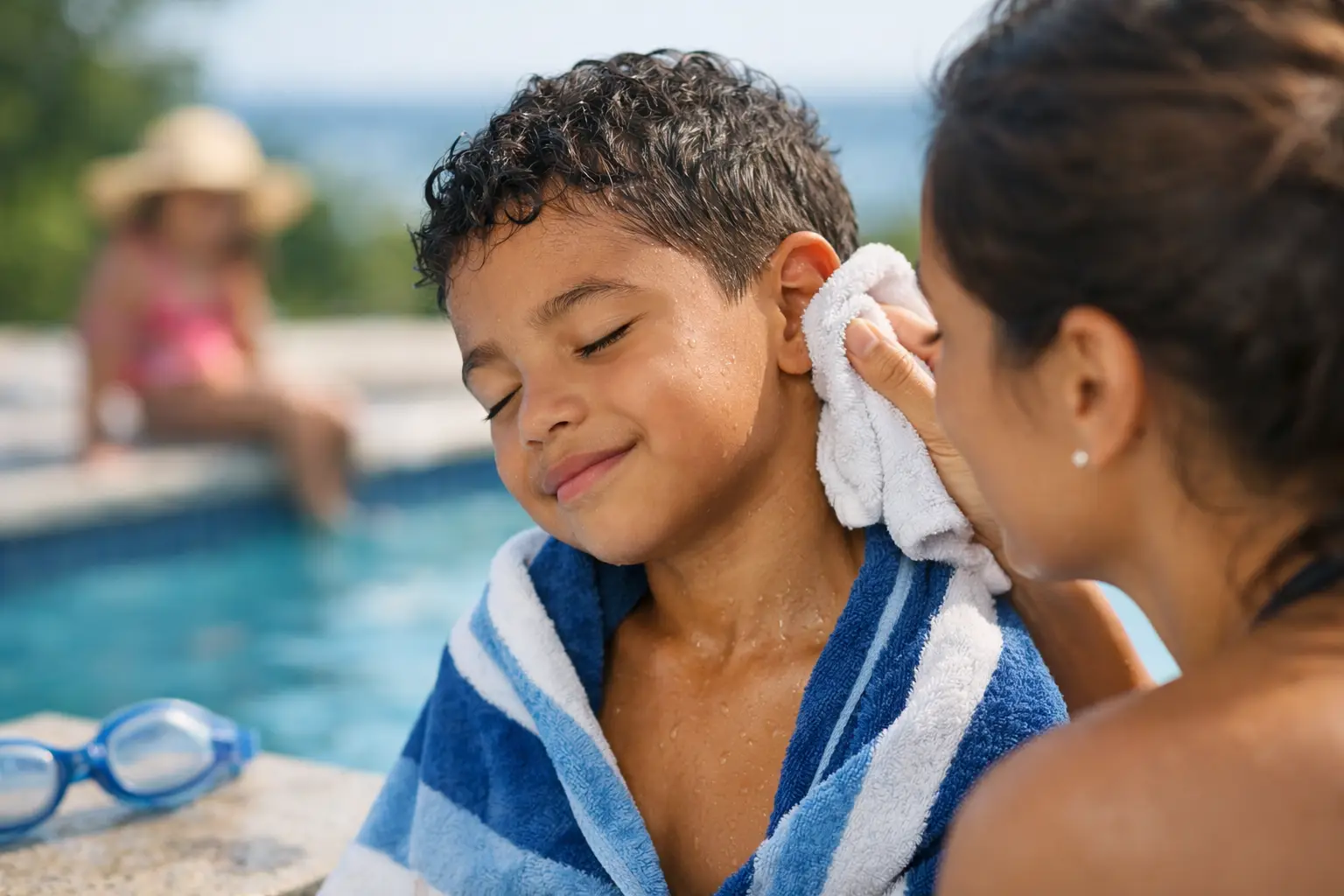
After swimming, tilt each ear down and gently dry the outside of the ear with a clean towel.4 Let water drain before putting in earbuds or hearing aids. If you swim often, it may also help to limit long periods of wearing damp earplugs or a wet swim cap around the ears.
Pay attention to patterns. Does the problem happen in one ear more than the other? Is it worse after diving, after using earbuds, or when your ears already feel itchy? These details can help you make practical changes and give a clinician useful context if the issue keeps returning.
A Note for Parents and Caregivers
Children may describe trapped water as an ear feeling “funny,” blocked, tickly, or hard to hear through. Encourage them not to insert fingers or objects into the ear. Gentle head tilting and towel drying around the outer ear are usually enough first steps.
If a child is distressed, has persistent symptoms, or cannot clearly explain what they are feeling, a healthcare professional can provide appropriate assessment. It is better to get clarity than to keep trying home methods that may irritate the ear.
When to Seek Professional Guidance
A lingering blocked feeling deserves attention when it does not improve, keeps returning, or comes with notable pain, drainage, swelling, bleeding, dizziness, sudden hearing change, or significant sensitivity. These symptoms can have different causes, and an in-person ear exam is the clearest way to understand what is happening.
Extra caution is appropriate for anyone with ear tubes, a known or suspected eardrum opening, prior ear surgery, or a history of significant ear problems. In these situations, avoid putting drops or water-removal products into the ear unless a qualified clinician has advised you to do so.
Pool time should leave you refreshed, not preoccupied with a plugged ear. A little patience, gentle drainage, and a hands-off approach can protect ear comfort far better than forcing a quick fix.
Sources
- Schwartz SR, Magit AE, Rosenfeld RM, et al. Clinical Practice Guideline (Update): Earwax (Cerumen Impaction). Otolaryngology–Head and Neck Surgery. 2017;156(1_suppl):S1–S29. American Academy of Otolaryngology–Head and Neck Surgery Foundation.
- Rosenfeld RM, Schwartz SR, Cannon CR, et al. Clinical Practice Guideline: Acute Otitis Externa (Update). Otolaryngology–Head and Neck Surgery. 2014;150(1_suppl):S1–S24.
- National Institute on Deafness and Other Communication Disorders (NIDCD). Why You Shouldn’t Use Cotton Swabs to Clean Your Ears. National Institutes of Health.
- Centers for Disease Control and Prevention. About Healthy Swimming. CDC.
- American Academy of Otolaryngology–Head and Neck Surgery. Earwax (Cerumen Impaction). ENThealth.org.
About the Author
Written and medically reviewed by Joshua A. Stramiello, MD, board-certified otolaryngologist (ear, nose, and throat physician). Last reviewed August 6, 2026.
Dr. Stramiello earned his Doctor of Medicine at the University of South Florida Morsani College of Medicine, completed his general surgery internship at Vanderbilt University Medical Center, and completed residency in Otolaryngology–Head & Neck Surgery at the University of California, San Diego. He has cared for ENT patients at Dartmouth-Hitchcock, Sanford Hospital, and West Suffolk Hospital in the UK, and his peer-reviewed research spans pediatric otolaryngology, airway surgery, and ear disease (Google Scholar).
The content on SafeEarCare.com is intended for educational purposes only and should not be considered medical advice. It is not a substitute for professional medical advice, diagnosis, or treatment. Always consult your physician or qualified healthcare provider regarding your individual health needs.
Discover more from Safe Ear Care
Subscribe to get the latest posts sent to your email.