


Written and medically reviewed by Joshua A. Stramiello, MD — board-certified otolaryngologist (ear, nose, and throat physician).
Published July 20, 2026 · Last medically reviewed August 6, 2026 · Sources
Quick answer: Presbycusis is gradual, age-related hearing loss caused by wear on the inner ear’s sensory cells, usually affecting high-pitched sounds first. It cannot be reversed, but protecting your ears from noise, getting regular hearing tests, and using hearing aids when needed preserve hearing and connection.
A family dinner can be the first place people notice a change: conversation is easy one-on-one, but voices blur when plates clink, music plays, and several people speak at once. Presbycusis, commonly called age-related hearing loss, often develops so gradually that it can feel like everyone else has started mumbling.
This change is common, but it should not be brushed off as a simple and unavoidable part of getting older. Understanding what is changing, noticing the early signs, and protecting the hearing you have can make everyday communication less tiring and help you stay connected to the people and activities you enjoy.
What Is Presbycusis?
Presbycusis is a gradual reduction in hearing that occurs as the auditory system ages. It most often affects both ears and commonly makes high-pitched sounds harder to hear first. That can include certain speech sounds, such as s, f, th, sh, and ch, along with birdsong, timers, turn signals, and some electronic alerts.
The challenge is not always volume. A person may hear that someone is speaking but have trouble making out the words, especially in a restaurant, at a gathering, or during a phone call with background noise. This is why simply turning up the television may help only a little – louder sound does not always make speech clearer.
Inside the inner ear are delicate sensory cells that help turn sound vibrations into messages the brain can interpret. Over time, these cells and related hearing pathways can change. Unlike a scraped knee, these specialized cells do not simply grow back after damage.1 That is one reason prevention matters at every age.
Why Age-Related Hearing Changes Happen
Aging is the central factor, but presbycusis rarely has just one cause. Hearing health reflects a lifetime of exposures and health factors. Family history can affect when changes begin and how quickly they progress. Long-term exposure to loud sound may also add to the strain, whether it comes from noisy work settings, power tools, concerts, motorcycles, sporting events, or headphones played too loudly.
Some health conditions and medications can also be relevant to hearing changes. For that reason, a full hearing conversation is most useful when it considers the whole person rather than treating every concern as an earwax issue.
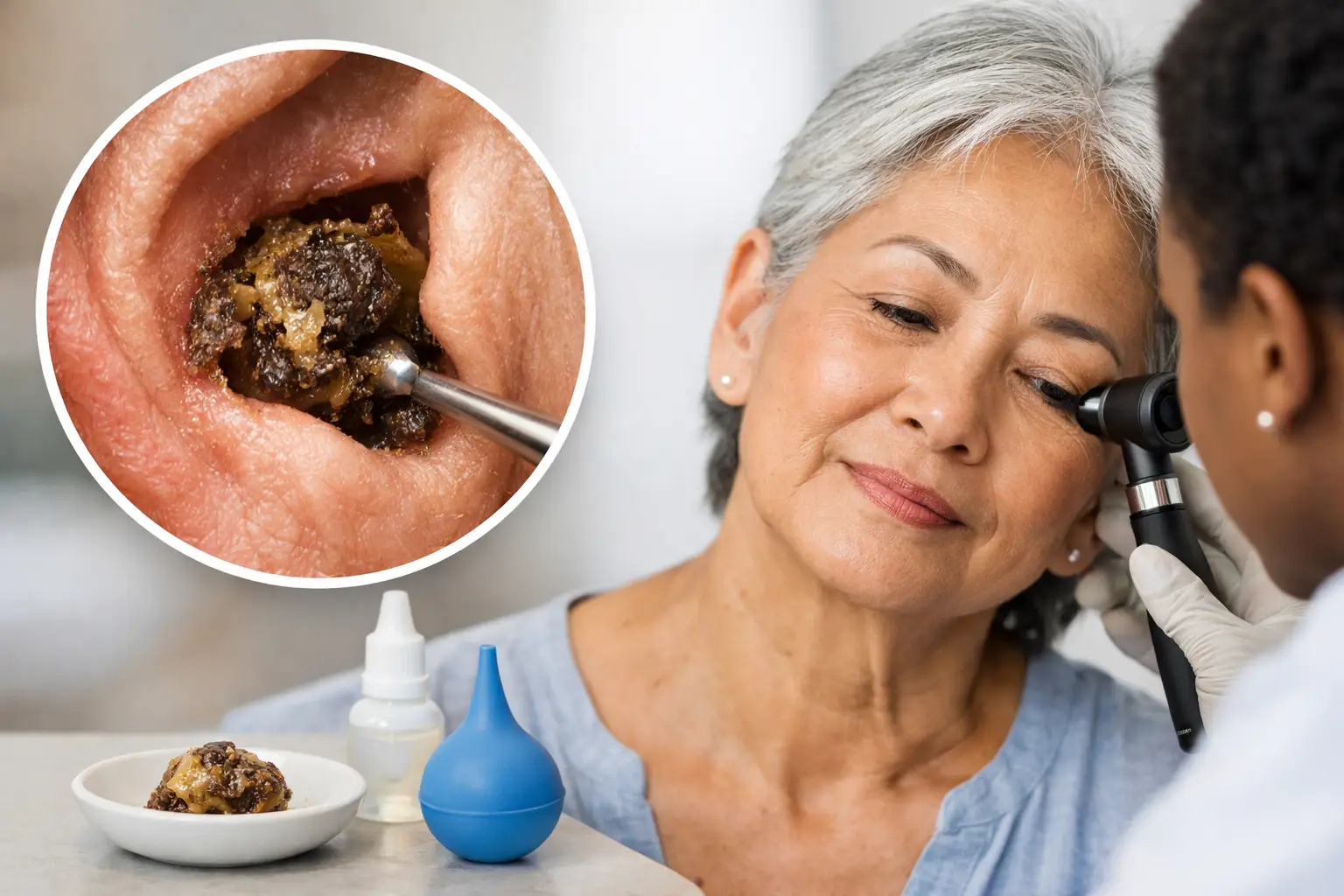
Earwax can sometimes make hearing seem muffled, particularly when it builds up near the outer part of the ear canal.3 But wax buildup and presbycusis are different concerns. Earwax is in the ear canal; age-related hearing loss involves the inner ear and hearing pathways. Removing wax will not reverse presbycusis, and ear drops are not a treatment for inner-ear hearing changes.
That distinction is helpful because it discourages a common habit: repeatedly trying random ear drops or inserting cotton swabs when hearing seems less clear. Swabs can push wax farther inward or irritate the ear canal,2 while unnecessary products may add discomfort without addressing the reason sounds seem unclear.
Signs of Presbycusis to Notice
The early signs can be subtle. Often, friends or family recognize the pattern before the person experiencing it does. You may notice that people seem to speak less clearly than before, particularly women and children whose voices may contain higher-pitched frequencies.
Other common patterns include asking others to repeat themselves, misunderstanding similar-sounding words, increasing the TV volume, or avoiding busy social settings because following conversation feels exhausting. Phone calls may become harder, and you might rely more on watching a speaker’s face to understand what was said.
Hearing difficulty can affect more than convenience. When communication requires constant effort, people may pull back from conversations without intending to. That can lead to frustration, embarrassment, and a quieter social life. Recognizing the change early creates more opportunity to find communication strategies and appropriate professional support.
When a change deserves timely attention
Gradual hearing changes are worth discussing with a qualified hearing professional or clinician, especially when they interfere with daily life. A hearing evaluation can help clarify whether the issue fits an age-related pattern, whether earwax is contributing, and what support may be useful.
A sudden hearing change, hearing that is noticeably different in one ear, or hearing changes accompanied by new balance concerns should be assessed promptly. These patterns are not something to wait out or attempt to solve with at-home ear cleaning.
Everyday Habits That Help Protect Hearing
You cannot change your age or family history, but you can lower avoidable sound exposure. The most practical principle is simple: reduce both the loudness of sound and the time you spend around it. If you need to raise your voice to be heard by someone an arm’s length away, the environment may be louder than is comfortable for extended exposure.
At concerts, sporting events, while mowing the lawn, or when using power equipment, properly fitted hearing protection can reduce risk without requiring you to skip the activity. For headphones and earbuds, choose a volume that still allows you to notice what is happening around you, and give your ears regular quiet breaks. Noise-canceling headphones may be useful in loud places because they can reduce the urge to turn the volume up to compete with background sound.
Distance helps, too. Standing farther from speakers, machinery, or other loud sound sources can meaningfully reduce exposure. Small adjustments are often easier to maintain than a perfect-sounding rule that does not fit real life.
Good ear care also means respecting the ear canal’s natural cleaning process.4 Avoid putting swabs, hairpins, or other objects into the ear canal. If dry wax, dry skin, or mild itchiness is a recurring comfort concern, use a gentle, safety-focused approach rather than harsh drying or bubbling ingredients. Mineral oil, coconut oil, and olive oil ear drops are commonly chosen for gentle ear canal moisture and wax softening, but they do not change inner-ear hearing loss.
Communication Changes That Make a Real Difference
When hearing becomes less clear, the environment matters as much as the voice. At a restaurant, choosing a quieter table away from the kitchen or speakers may make conversation easier. At home, lowering background TV volume before talking can reduce the effort needed to follow a discussion.
It also helps to face the person you are speaking with, use clear natural speech, and get their attention before starting an important conversation. Shouting or speaking unusually slowly can distort speech cues and may be less helpful than people expect. Clear, direct communication in a quieter setting is usually the better approach.
For family members, patience matters. Repeating a sentence with different words can work better than repeating the exact same phrase louder. Presbycusis is not a sign that someone is disengaged, inattentive, or less capable. It is a hearing change that can make certain sound environments more demanding.
Hearing Support Is Not One-Size-Fits-All
If a hearing evaluation shows age-related hearing loss, the best next step depends on the person’s hearing pattern, communication needs, lifestyle, and comfort level. Some people may benefit from hearing devices, while others may begin with communication adjustments and ongoing monitoring. A professional evaluation provides information that over-the-counter assumptions cannot.
Hearing aids, when appropriate, are not simply amplifiers. Modern options can be adjusted to support particular frequencies and listening environments. Still, there can be an adjustment period. New sound may initially seem bright, busy, or unfamiliar, especially after the brain has spent years receiving less detail. Consistent use and follow-up support can be part of adapting successfully.
For people who wear hearing aids or earbuds regularly, everyday ear comfort remains worthwhile. Keep devices clean according to their manufacturer’s instructions, allow ears time without devices when possible, and avoid aggressive cleaning inside the ear canal. Comfort concerns, wax, and hearing changes can overlap, but they are not always caused by the same thing.
A quieter room, a lower headphone setting, or a well-timed hearing check may seem like small choices. Over time, they can protect the sound details that make conversations, music, and shared moments feel more fully present.
Sources
- National Institute on Deafness and Other Communication Disorders (NIDCD). Hearing, Ear Infections, and Deafness. National Institutes of Health.
- National Institute on Deafness and Other Communication Disorders (NIDCD). Why You Shouldn’t Use Cotton Swabs to Clean Your Ears. National Institutes of Health.
- American Academy of Otolaryngology–Head and Neck Surgery. Earwax (Cerumen Impaction). ENThealth.org.
- Schwartz SR, Magit AE, Rosenfeld RM, et al. Clinical Practice Guideline (Update): Earwax (Cerumen Impaction). Otolaryngology–Head and Neck Surgery. 2017;156(1_suppl):S1–S29. American Academy of Otolaryngology–Head and Neck Surgery Foundation.
About the Author
Written and medically reviewed by Joshua A. Stramiello, MD, board-certified otolaryngologist (ear, nose, and throat physician). Last reviewed August 6, 2026.
Dr. Stramiello earned his Doctor of Medicine at the University of South Florida Morsani College of Medicine, completed his general surgery internship at Vanderbilt University Medical Center, and completed residency in Otolaryngology–Head & Neck Surgery at the University of California, San Diego. He has cared for ENT patients at Dartmouth-Hitchcock, Sanford Hospital, and West Suffolk Hospital in the UK, and his peer-reviewed research spans pediatric otolaryngology, airway surgery, and ear disease (Google Scholar).
The content on SafeEarCare.com is intended for educational purposes only and should not be considered medical advice. It is not a substitute for professional medical advice, diagnosis, or treatment. Always consult your physician or qualified healthcare provider regarding your individual health needs.
Discover more from Safe Ear Care
Subscribe to get the latest posts sent to your email.