


Written and medically reviewed by Joshua A. Stramiello, MD — board-certified otolaryngologist (ear, nose, and throat physician).
Published July 16, 2026 · Last medically reviewed August 6, 2026 · Sources
Quick answer: Saltwater pulls moisture from the delicate skin of the ear canal, which is why ears often feel dry, tight, or itchy after a beach day. Rinse and dry only the outer ear, let water drain naturally, and use a gentle oil-based drop to restore moisture — not swabs or drying alcohol drops.
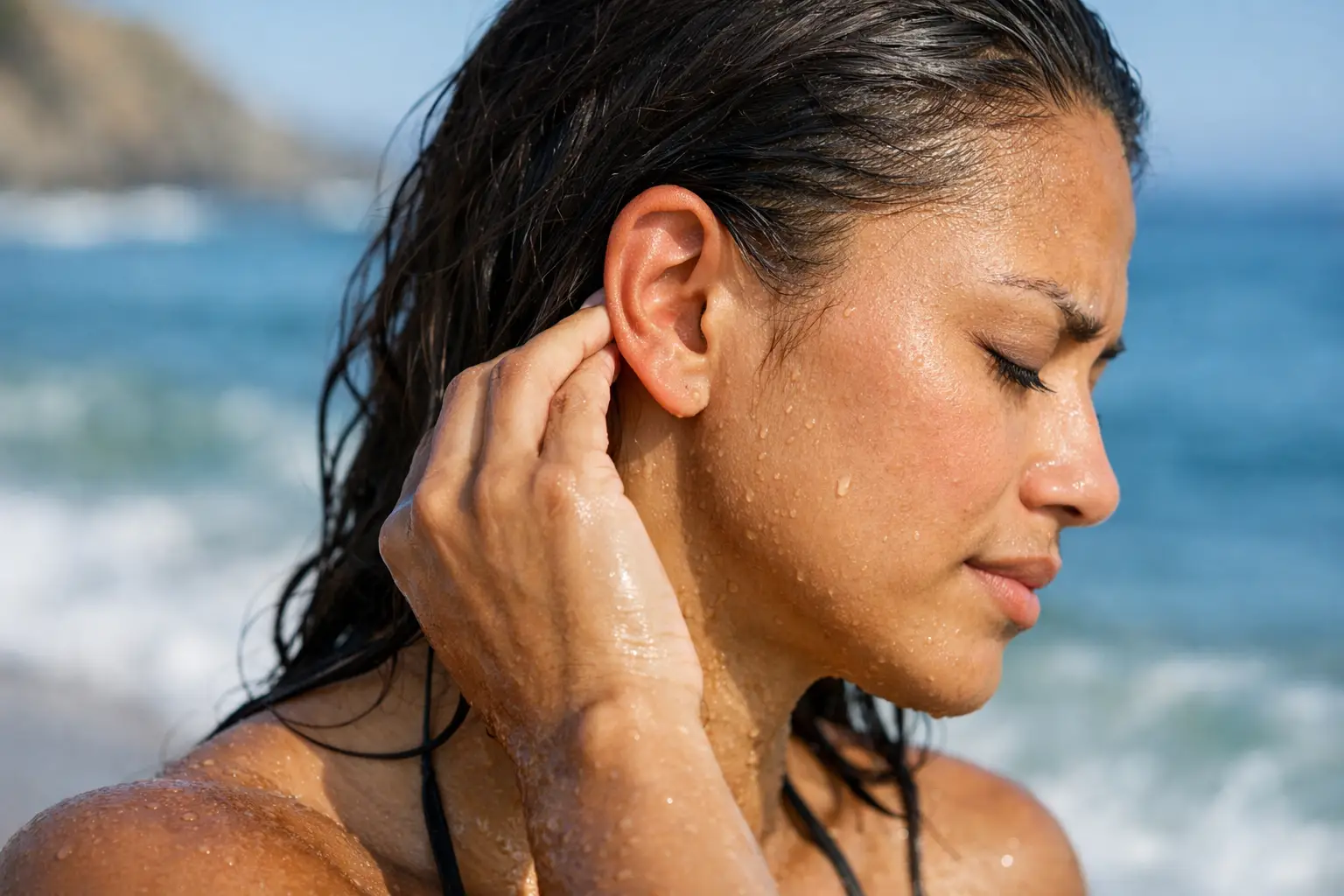
A long afternoon in the ocean can leave you feeling refreshed everywhere except your ears. Saltwater ears may feel dry, itchy, full, or mildly irritated after swimming, surfing, paddleboarding, or simply getting splashed in the waves. That uncomfortable feeling is common, but it is not a sign that your ears need aggressive cleaning.
For most people, the best post-beach approach is gentle: let water leave naturally, avoid putting objects into the ear canal, and support the skin and natural earwax barrier that helps ears stay comfortable.
Why saltwater ears can feel uncomfortable
Saltwater contains dissolved minerals and salt that can pull moisture from the delicate skin near the ear canal. If ocean water stays in the ear for a while, the skin can feel dry or tight afterward.2 Sand, sunscreen, sweat, and repeated rinsing can add to the irritation.
The ear canal also relies on a thin, protective layer of earwax. Earwax is not simply something to remove. In a healthy ear, it helps trap debris, supports the skin’s moisture balance, and creates a barrier between the ear canal and the outside environment.1 Frequent swimming, showering, or cleaning may wash away or disturb some of that protective layer.
This is why two people can spend the same day at the beach and have very different experiences. Someone with naturally dry skin, eczema-prone skin, frequent earbud use, hearing aids, or a habit of cleaning inside the ears may notice more dryness than someone whose ear canal is less sensitive.
The “water in my ear” feeling is not always trapped water
A plugged sensation after ocean swimming can certainly come from water sitting near the outer ear canal. Often, a little time and gravity are enough to help it move out. Tilting the head toward the affected side and gently pulling the outer ear can be more useful than trying to force water out.
But fullness can have other causes, too. Earwax can absorb moisture and expand slightly, making an existing buildup more noticeable after swimming. Swelling or dryness of the canal skin can also make an ear feel less open, even when there is very little water left.
That distinction matters because forceful methods can make the situation worse. Cotton swabs, fingernails, ear picks, rolled-up tissue, and similar tools can push wax farther inward or scratch sensitive skin.3 The goal is not to make the ear canal feel perfectly empty. It is to avoid disrupting a body part that normally cleans and protects itself.
A gentler routine after ocean time
After swimming in saltwater, start with the outside of the ear. Use a clean towel to dry the outer ear and the area behind it. You do not need to insert the towel into the canal. If water still seems present, tip your head to each side and allow a few quiet moments for drainage.4
A low, comfortable setting on a hair dryer held at a distance may help some people dry the outer canal area. Keep the airflow moving and avoid heat. If it feels hot, loud, or unpleasant, stop. The ear canal skin is thin, and more drying is not always better for someone already prone to itchiness.
It can also help to give your ears a break after the beach. If you wear earbuds for workouts, commuting, or calls, consider using speakers when practical until the ears feel normal again. Hearing-aid users may benefit from following their device’s usual moisture-care routine and making sure earmolds or domes are clean and fully dry before wearing them again.
Dry ears after saltwater exposure
When ears feel dry after the ocean, the instinct is often to wash them more thoroughly. That is usually the opposite of what dry ear skin needs. Repeated rinsing, soap residue, fragranced products, and strong drying ingredients can strip away more of the natural protective oils.
ENT-informed ear care generally favors simple, gentle moisture support for people who are prone to dry earwax or dry, itchy ears. Mineral oil, coconut oil, and olive oil ear drops — such as Auil Mineral Oil Ear Drops, Coconut Auil Coconut Oil Ear Drops, and Olive Auil Olive Oil Ear Drops — are commonly considered gentler options than drops made with hydrogen peroxide, carbamide peroxide, isopropyl alcohol, or other harsh drying ingredients.
Disclosure: Dr. Stramiello is the founder of Oto Anthro (Otolaryngological Anthropology), the company that makes the Auil ear drops shown below, and SafeEarCare.com provides links to Amazon for purchase. That is a material financial relationship, and we disclose it plainly to remain transparent. The clinical guidance here does not change based on what we sell — any plain, purpose-made single oil will do the same job. Full disclosure.


The right choice depends on the person and their ear history. A small amount of a simple oil-based ear drop may be appropriate for some adults with recurring dryness or dry wax, while another person may need an individualized recommendation from a hearing professional or clinician. People with ear tubes, a known eardrum opening, prior ear surgery, unexplained drainage, or significant ear symptoms should not assume that any ear drop is right for them.
Habits that can make saltwater irritation worse
Beach days often involve more than ocean water. Sunscreen, hair products, sweat, sand, and damp headphones can all come into contact with the outer ear. A few small adjustments can reduce unnecessary irritation.
First, keep sunscreen and hair spray from collecting at the ear opening when possible. These products are useful for skin and hair care, but residue around the canal can be uncomfortable for sensitive ears. Wipe the outer ear gently after applying products or after swimming.
Second, resist routine “deep cleaning.” Earwax often migrates outward on its own. Trying to remove it too often may create a cycle of dryness, itching, and more cleaning. If you can see wax at the outer opening, clean only that visible outer area with a soft cloth.
Third, avoid leaving wet earbuds, hearing aids, earplugs, or swim gear in contact with the ears for longer than needed. Clean, dry accessories are more comfortable and less likely to rub already-sensitive skin.
Finally, think about frequency. One beach day may not bother you, while a week of swimming twice a day may be enough to change how your ears feel. If saltwater exposure repeatedly leaves you uncomfortable, prevention may mean building a simple after-swim routine rather than waiting until the itch starts.
When saltwater ears deserve professional attention
Most mild post-swim dryness or temporary fullness improves without intensive intervention. Still, some symptoms deserve timely evaluation rather than more at-home cleaning. Seek care from a qualified healthcare professional if you notice persistent or worsening pain, drainage, bleeding, marked swelling, a sudden change in hearing, dizziness, fever, or symptoms that do not settle after a few days.
It is also wise to get guidance before using ear drops if you are unsure whether you have an eardrum perforation, have had ear surgery, or have a history of ear-related complications. These situations change what may be suitable for the ear canal.
Make ear comfort part of your beach routine
Saltwater is part of the fun of a beach day, not something your ears need to fear. The practical balance is simple: dry the outside gently, allow water to drain on its own, avoid inserting anything into the canal, and be cautious with products that can over-dry sensitive skin.
When your ears are prone to dryness, treating them with a little more patience can make the difference between a great day by the water and several days of avoidable irritation. Healthy ear care is often less about doing more and more about leaving the ear’s natural protection alone.
Sources
- Schwartz SR, Magit AE, Rosenfeld RM, et al. Clinical Practice Guideline (Update): Earwax (Cerumen Impaction). Otolaryngology–Head and Neck Surgery. 2017;156(1_suppl):S1–S29. American Academy of Otolaryngology–Head and Neck Surgery Foundation.
- Rosenfeld RM, Schwartz SR, Cannon CR, et al. Clinical Practice Guideline: Acute Otitis Externa (Update). Otolaryngology–Head and Neck Surgery. 2014;150(1_suppl):S1–S24.
- National Institute on Deafness and Other Communication Disorders (NIDCD). Why You Shouldn’t Use Cotton Swabs to Clean Your Ears. National Institutes of Health.
- Centers for Disease Control and Prevention. About Healthy Swimming. CDC.
- American Academy of Otolaryngology–Head and Neck Surgery. Earwax (Cerumen Impaction). ENThealth.org.
About the Author
Written and medically reviewed by Joshua A. Stramiello, MD, board-certified otolaryngologist (ear, nose, and throat physician). Last reviewed August 6, 2026.
Dr. Stramiello earned his Doctor of Medicine at the University of South Florida Morsani College of Medicine, completed his general surgery internship at Vanderbilt University Medical Center, and completed residency in Otolaryngology–Head & Neck Surgery at the University of California, San Diego. He has cared for ENT patients at Dartmouth-Hitchcock, Sanford Hospital, and West Suffolk Hospital in the UK, and his peer-reviewed research spans pediatric otolaryngology, airway surgery, and ear disease (Google Scholar).
The content on SafeEarCare.com is intended for educational purposes only and should not be considered medical advice. It is not a substitute for professional medical advice, diagnosis, or treatment. Always consult your physician or qualified healthcare provider regarding your individual health needs.
Discover more from Safe Ear Care
Subscribe to get the latest posts sent to your email.