
A pair of headphones can feel like a small daily choice until your ears start feeling blocked, itchy, sweaty, or sore. The over ear versus earbuds question is not only about sound quality and convenience. For ear comfort, the better choice depends on how your ears respond to pressure, moisture, earwax, and volume over time.
Neither style is automatically safe or unsafe. The goal is to choose a fit that works for your routine, then use it in a way that gives your ears regular breaks. That matters whether you wear headphones during a commute, take calls all day, exercise with music, or use earbuds to fall asleep.
Over Ear Versus Earbuds: The Main Difference
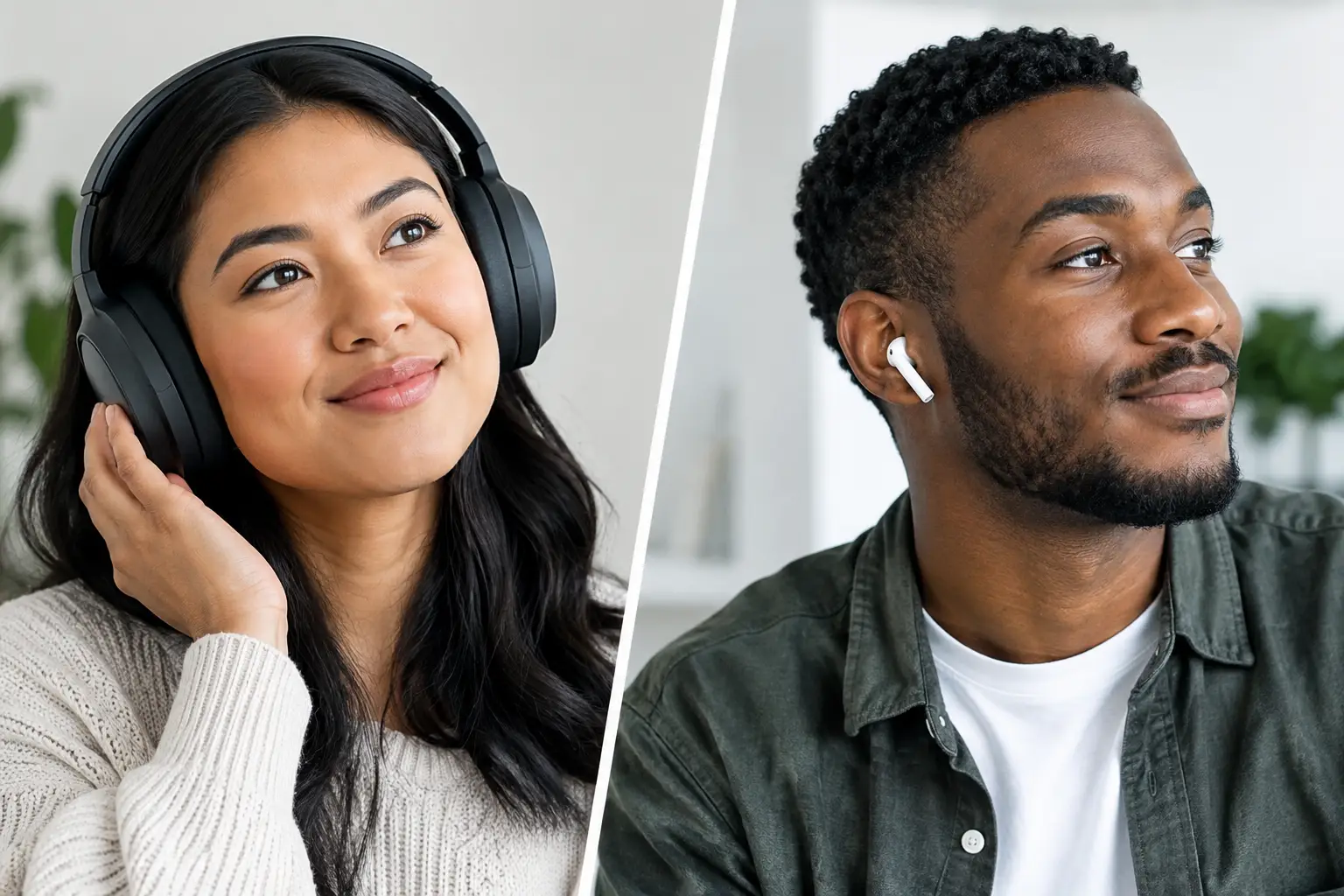
Over-ear headphones sit around the outside of the ear. Their cushioned cups create a seal against the skin around the ear rather than resting inside the ear canal. Earbuds sit at, or just inside, the entrance of the ear canal. Some use silicone tips to create a close seal, while others rest more loosely in the outer ear.
That design difference changes the kind of discomfort each can cause. Over-ear headphones may create warmth and pressure around the outer ear. Earbuds can create pressure within the ear opening and may hold in sweat, moisture, and earwax. People with sensitive, dry, or easily irritated ear canals often notice this distinction quickly.
Sound exposure matters with both styles. Listening too loudly for too long can strain hearing regardless of where the device sits. Still, a comfortable fit and good passive noise reduction can make it easier to hear clearly without turning the volume up to compete with traffic, gym noise, or a busy office.
When Over-Ear Headphones May Be More Comfortable
For many people, over-ear headphones are the gentler option for long listening sessions because nothing enters the ear canal. This can be especially helpful if earbuds tend to leave your ears feeling tender, itchy, damp, or congested after use.
A well-padded pair can also reduce the need to increase volume in noisy places. The cups block some outside sound before any electronic noise cancellation is added. When you can hear your audio at a moderate setting, your ears get a better listening environment.
Over-ear headphones do have their own comfort limits. Tight headbands can cause pressure around the temples, and warm earcups can trap heat during exercise or hot weather. The cushioning also touches the skin for long periods, so sweat, hair products, and skin oils can build up on the pads. Wiping the earcups with a clean, dry, soft cloth after use is a simple habit that helps keep the contact surface fresher.
They are usually less convenient for workouts, travel, and quick errands. If bulky headphones make you less likely to use them consistently, a properly fitted earbud may still be the more practical choice.
Over-Ear Headphones Often Work Well For
Over-ear styles can be a good match for desk work, home listening, gaming, flights, and longer calls. They may also suit people who wear hearing devices or who simply prefer to keep objects out of the ear canal. The key is finding a pair that does not clamp too tightly and taking them off when your ears feel hot or pressured.
When Earbuds May Be the Better Fit
Earbuds are compact, lightweight, and easy to carry. For walks, workouts, short calls, and active days, that convenience is hard to beat. Many people also prefer the feeling of a small earbud over the warmth of full-size headphones.
The trade-off is that earbuds sit much closer to the ear canal. A tight seal can improve sound quality and reduce outside noise, but it can also hold in humidity. Sweat after a workout, water after a shower, and normal skin moisture do not evaporate as easily when earbuds go straight back in.
Earbuds can also collect earwax on their tips or speaker mesh. This does not mean earwax is dirty or a problem by itself. Earwax is a normal protective substance. But when wax transfers repeatedly between the ear and an earbud, the earbud can become less comfortable and less hygienic, while blocked speaker openings may tempt someone to raise the volume.
Clean earbuds regularly according to the manufacturer’s instructions, and let them dry fully after exercise or exposure to moisture. Avoid sharing them. Even with good cleaning habits, it is wise to give your ears quiet, open-air time between listening sessions.
Earbuds Need a Gentle Fit
An earbud should stay in place without being forced deep into the ear. If you regularly push it inward to stop it from falling out, the tip may be the wrong size or shape. A looser, stable fit is often more comfortable than the tightest possible seal.
For people who experience dry or itchy ears, frequent earbud use can be a useful clue to review. The answer may be shorter wear periods, a different tip material, or alternating with over-ear headphones. Avoid putting cotton swabs or other objects into the ear canal to deal with the sensation. That can push wax farther inward and irritate delicate ear-canal skin.
Earwax, Dryness, and Moisture Change the Answer
The best headphone style is personal because ear canals are personal. Some people naturally produce more earwax. Others deal with dry, flaky, or easily irritated ear skin. Some notice discomfort only after swimming, sweating, or wearing earbuds for several hours.
If earbuds seem to leave your ears dry or itchy, do not assume that more aggressive cleaning is the fix. Overcleaning can remove protective wax and irritate the skin further. Gentle, preventive ear care is usually a better starting point than trying to make the ear canal feel completely wax-free.
For dry earwax or dry-feeling ears, mineral oil, coconut oil, or olive oil ear drops are commonly used as gentler moisture-supporting options. They are different from harsh peroxide- or alcohol-based drops, which may be irritating for some people. Because individual ear concerns vary, it is sensible to speak with a qualified clinician or hearing professional before using any ear drops, especially if there is pain, drainage, sudden hearing change, or a history of ear procedures.
When ears are sweaty or have been exposed to water, give them time to dry naturally before inserting earbuds. A dry outer ear and clean, fully dry earbuds are a more comfortable combination than immediately sealing in moisture.
Sound Level Matters More Than Device Type
It is easy to focus on the physical fit and forget the listening level. Both over-ear headphones and earbuds can deliver loud sound directly to your hearing system. The safer choice is often the one that lets you listen clearly at a lower volume.
Over-ear headphones with good isolation may help in loud places because they reduce the temptation to overpower the environment. Well-fitting earbuds can do the same, particularly models designed to reduce ambient sound. But no feature makes very loud, extended listening risk-free.
A practical check is whether you can still notice what is happening around you when needed and whether people nearby can hear your audio. If someone next to you can easily hear the music, it is probably louder than necessary. Build quiet breaks into your day, particularly after long meetings, travel, workouts, or gaming sessions.
How to Choose Between Over-Ear Headphones and Earbuds
Choose based on your most common use, not just the product that sounds best in a store. Over-ear headphones may be more comfortable if you listen for hours, have ear-canal sensitivity, or want a device that stays outside the canal. Earbuds may be more practical if you need something portable for movement and short listening sessions.
It can also make sense to own both and rotate them. Use over-ear headphones for your workday or longer entertainment sessions, then reserve earbuds for walks, errands, and exercise. Rotation reduces repeated pressure on the same areas and gives you a chance to notice which style leaves your ears feeling more comfortable.
Pay attention to the pattern after you remove them. Ears that feel normal are giving you useful feedback. Persistent soreness, itching, fullness, or reduced hearing are reasons to pause the device and seek personalized guidance from a qualified professional.
Your headphones should fit into your ear-care routine, not compete with it. Choose the style that helps you hear comfortably at a reasonable volume, keep it clean and dry, and let your ears spend part of every day free from pressure, sound, and moisture.
Discover more from Safe Ear Care
Subscribe to get the latest posts sent to your email.