
Written and medically reviewed by Joshua A. Stramiello, MD — board-certified otolaryngologist (ear, nose, and throat physician).
Published October 24, 2026 · Last medically reviewed October 26, 2026 · Sources
Quick answer: Protect hearing aids from moisture by keeping the device and the outer ear dry: wipe the aids with a soft, dry cloth daily, store them in a dry place or drying system, and take them out before showering or swimming. Never use cotton swabs or other objects in the ear canal to clear sweat or wax. If your ears feel dry or itchy, gentle single-oil drops (mineral, coconut, or olive) are a better choice than peroxide or alcohol drops, used with the aids removed. See a doctor for pain, drainage, bleeding, sudden hearing changes, or a persistent blockage.
A hearing aid that suddenly sounds weak, cuts in and out, or feels uncomfortable after a humid day is not always broken. Moisture is often part of the picture. This hearing aid moisture guide explains how water, sweat, humidity, and everyday ear moisture can affect both your device and your ear comfort – and what safer prevention looks like.
Hearing aids sit close to one of the body’s warmest, most naturally humid spaces. Add a workout, a rainy walk, a hot shower, or a day at the pool, and small amounts of moisture can build up quickly. The goal is not to make your ears unnaturally dry. It is to protect the hearing aid while supporting a comfortable, healthy ear environment.
Why moisture and hearing aids need attention
Modern hearing aids are often designed with some moisture resistance, but moisture resistance is not the same as waterproofing. Sweat and humidity can enter small openings around microphones, battery doors, charging contacts, receivers, or tubing. Over time, this can affect sound quality, shorten the life of components, and create inconsistent performance.
Moisture also matters because it can change how the device feels in your ear. A damp ear canal or a wet dome may make the hearing aid shift, feel plugged, or cause rubbing. For people who wear devices for most of the day, even mild irritation can become a frustrating cycle: discomfort leads to less wear time, and less wear time can make communication more difficult.
Earwax can add another layer. Wax is normal and protective1, but heat and moisture can soften it or move it toward the hearing aid’s wax guard, receiver, or earmold. That does not mean the answer is aggressive cleaning inside the ear. It means a consistent device-care routine and gentle ear-care habits are especially useful.
Hearing aid moisture guide: daily protection habits
The most effective moisture routine is usually simple enough to repeat every day. Start by handling your hearing aids with dry hands. Before putting them in, make sure your outer ear is dry, especially after washing your face, showering, or exercising.
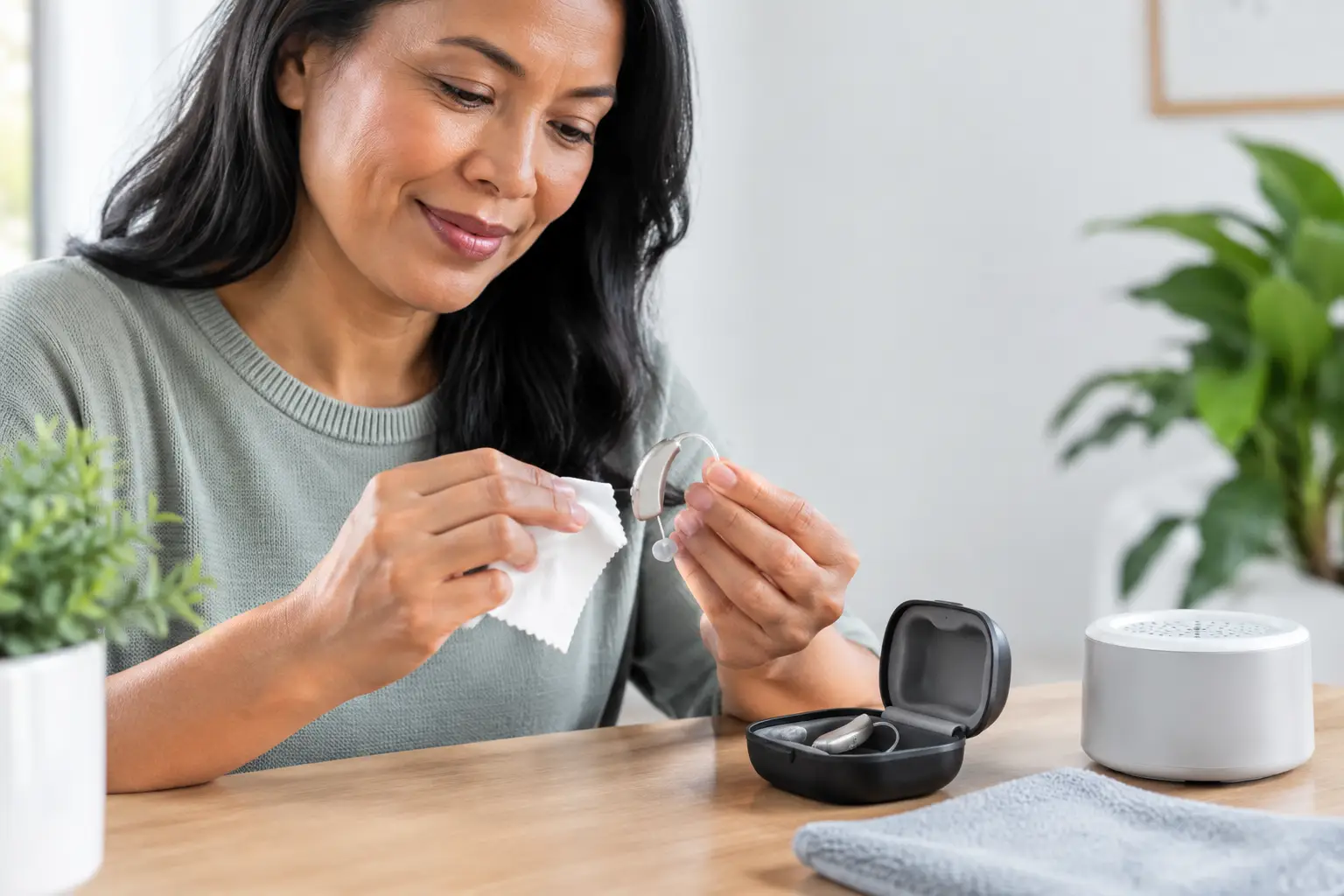
At the end of the day, remove the devices and wipe the outside with a clean, dry, soft cloth. Focus on the shell, microphone area, earmold, dome, and battery or charging-contact area according to the manufacturer’s instructions. Do not rinse the hearing aid or use cleaning sprays, alcohol, or household disinfectants unless the device manufacturer specifically says they are appropriate.
Letting the devices air out overnight can help, but a hearing-aid drying system or dehumidifier may be more practical for people who sweat heavily, live in a humid climate, or regularly notice moisture-related sound issues. Follow the instructions for your specific model. Rechargeable devices and battery-powered devices can have different storage needs, so it is worth checking with your hearing care professional rather than assuming one routine fits every device.
A few habits are worth keeping consistent:
- Remove hearing aids before showering, swimming, using a sauna, or entering a hot tub.
- Store them in a clean, dry place away from direct sunlight, radiators, and steamy bathrooms.
- Use a brimmed hat, sweatband, or hearing-aid sweat cover during outdoor activities if sweat is a regular concern.
- Check wax guards, domes, tubing, and earmolds on the schedule recommended for your device.
These small steps are not about being overly cautious. They reduce repeated exposure that can gradually affect the device.
What to do after sweat, rain, or water exposure
If your hearing aids get damp, take them out as soon as it is safe to do so. Gently pat the outside dry with a soft cloth. Open the battery door on battery-powered models if your manufacturer’s instructions allow it, remove the battery, and leave both parts in a dry, ventilated place. For rechargeable models, follow the manufacturer’s guidance before placing a damp device into its charger.
Avoid using a hair dryer, microwave, oven, or direct heat. High heat can damage delicate electronics, plastic parts, microphone covers, and rechargeable batteries. Do not place a hearing aid in uncooked rice, either. Rice does not reliably remove internal moisture and may leave dust or starch particles behind.
If the device has been exposed to significant water, such as falling into a sink or pool, dry the exterior and contact your hearing care provider or the manufacturer for device-specific next steps. A device may appear to work initially but still need professional inspection.
Managing sweat without overcleaning your ears
Sweat is not a sign that you are doing anything wrong. It is a normal response to heat and activity, and it can be especially noticeable under a hearing aid, earmold, or behind-the-ear tubing. The practical goal is to remove sweat from the outside of the ear and device rather than trying to clean deep inside the ear canal.
After exercise, use a clean towel to dry the outer ear, the area behind the ear, and the hearing aid itself once it has been removed. If you use a hearing-aid sweat cover, wash or replace it regularly so it does not hold moisture against the device.
Try not to use cotton swabs, tissues, or fingernails inside the ear canal. These can push wax farther in, irritate delicate skin, and interfere with how a hearing aid fits.2 If you regularly experience wax buildup, muffled sound, or repeated wax-guard blockage, a hearing care professional can help identify whether wax management or a device adjustment would be useful.
Dry or itchy ears when you wear hearing aids
A hearing aid can make you more aware of dry, itchy, or sensitive ear skin. Sometimes the cause is friction from a dome or earmold. Sometimes it is trapped humidity, frequent cleaning with harsh products, or naturally dry earwax. The right approach depends on what is causing the discomfort.
Start with the basics: keep the device clean, make sure the dome or earmold is the right size, and avoid over-washing the ear canal. If your ears feel dry, gentle oil-based ear drops made with mineral oil, coconut oil, or olive oil may be a more ear-friendly option than peroxide, carbamide peroxide, isopropyl alcohol, or other drying ingredients.1
Disclosure: Dr. Stramiello is the founder of Oto Anthro (Otolaryngological Anthropology), the company that makes the Auil ear drops shown below, and SafeEarCare.com provides links to Amazon for purchase. That is a material financial relationship, and we disclose it plainly to remain transparent. The clinical guidance here does not change based on what we sell — any plain, purpose-made single oil will do the same job. Full disclosure.


Hearing aids should always be removed before using any ear drops, and they should stay out until the outer ear area is fully dry. Drops are not appropriate for every ear situation. If you have ear tubes, a known eardrum perforation, ear surgery history, new drainage, significant pain, sudden hearing changes, or ongoing irritation, seek guidance from an appropriate healthcare professional before putting anything in the ear.
The same principle applies if itching continues despite gentle care. Persistent discomfort may be related to fit, material sensitivity, wax, skin conditions, or another issue that needs professional assessment. A small adjustment to an earmold, vent, dome style, or wear schedule can sometimes make a meaningful difference.
When moisture may be a device problem
A one-time change in sound can happen when a wax guard is blocked or the device has been exposed to sweat. Repeated problems deserve closer attention. Signs that may point to a moisture or maintenance issue include sound that fades during the day, crackling, intermittent function, frequent charging trouble, visible condensation in tubing, or a hearing aid that works better after drying overnight.
Do not keep wearing a device that is clearly malfunctioning or causing sharp discomfort. Arrange a check with your hearing care professional. They can inspect filters, receivers, microphone ports, tubing, earmolds, batteries, and charging components without risking further damage from home troubleshooting.
Build a routine that fits your life
The best hearing-aid moisture routine is one you will actually follow. For someone who works indoors and does not sweat much, a nightly wipe-down and dry storage may be enough. For a runner, gardener, swimmer, or person living in a humid area, daily use of a drying system and extra attention after activity may be worthwhile.
Give your hearing aids the same steady care you give your glasses or dental appliance: dry them, store them thoughtfully, and respond early when something changes. A few calm, preventive habits can protect your device, support everyday ear comfort, and help you hear with more confidence.
Sources
- Schwartz SR, Magit AE, Rosenfeld RM, et al. Clinical Practice Guideline (Update): Earwax (Cerumen Impaction). Otolaryngology–Head and Neck Surgery. 2017;156(1_suppl):S1–S29. American Academy of Otolaryngology–Head and Neck Surgery Foundation.
- National Institute on Deafness and Other Communication Disorders (NIDCD). Why You Shouldn’t Use Cotton Swabs to Clean Your Ears. National Institutes of Health.
About the Author
Written and medically reviewed by Joshua A. Stramiello, MD, board-certified otolaryngologist (ear, nose, and throat physician). Last reviewed October 26, 2026.
Dr. Stramiello earned his Doctor of Medicine at the University of South Florida Morsani College of Medicine, completed his general surgery internship at Vanderbilt University Medical Center, and completed residency in Otolaryngology–Head & Neck Surgery at the University of California, San Diego. He has cared for ENT patients at Dartmouth-Hitchcock, Sanford Hospital, and West Suffolk Hospital in the UK, and his peer-reviewed research spans pediatric otolaryngology, airway surgery, and ear disease (Google Scholar).
The content on SafeEarCare.com is intended for educational purposes only and should not be considered medical advice. It is not a substitute for professional medical advice, diagnosis, or treatment. Always consult your physician or qualified healthcare provider regarding your individual health needs.
Discover more from Safe Ear Care
Subscribe to get the latest posts sent to your email.