


Written and medically reviewed by Joshua A. Stramiello, MD — board-certified otolaryngologist (ear, nose, and throat physician).
Published September 6, 2026 · Last medically reviewed September 7, 2026 · Sources
Quick answer: The gentlest natural ear drop ingredients are plain single oils, such as mineral oil, coconut oil, or olive oil, which lubricate the ear canal entrance and soften dry wax without fizzing or drying. Skip essential oils, fragranced blends, and peroxide- or alcohol-based drops, and never put cotton swabs in the canal. Do not use any drops if you have a perforated eardrum, ear tubes, or prior ear surgery unless a clinician advises it, and see a doctor for pain, drainage, bleeding, sudden hearing changes, or persistent blockage.
A pair of earbuds, a hearing aid, a long swim, or dry indoor air can leave ears feeling uncomfortable in a way that is hard to ignore. When people look for relief, natural ear drop ingredients are often appealing because they seem gentler than strongly medicated or drying formulas. The key is choosing ingredients that support moisture and earwax comfort without adding unnecessary irritation.
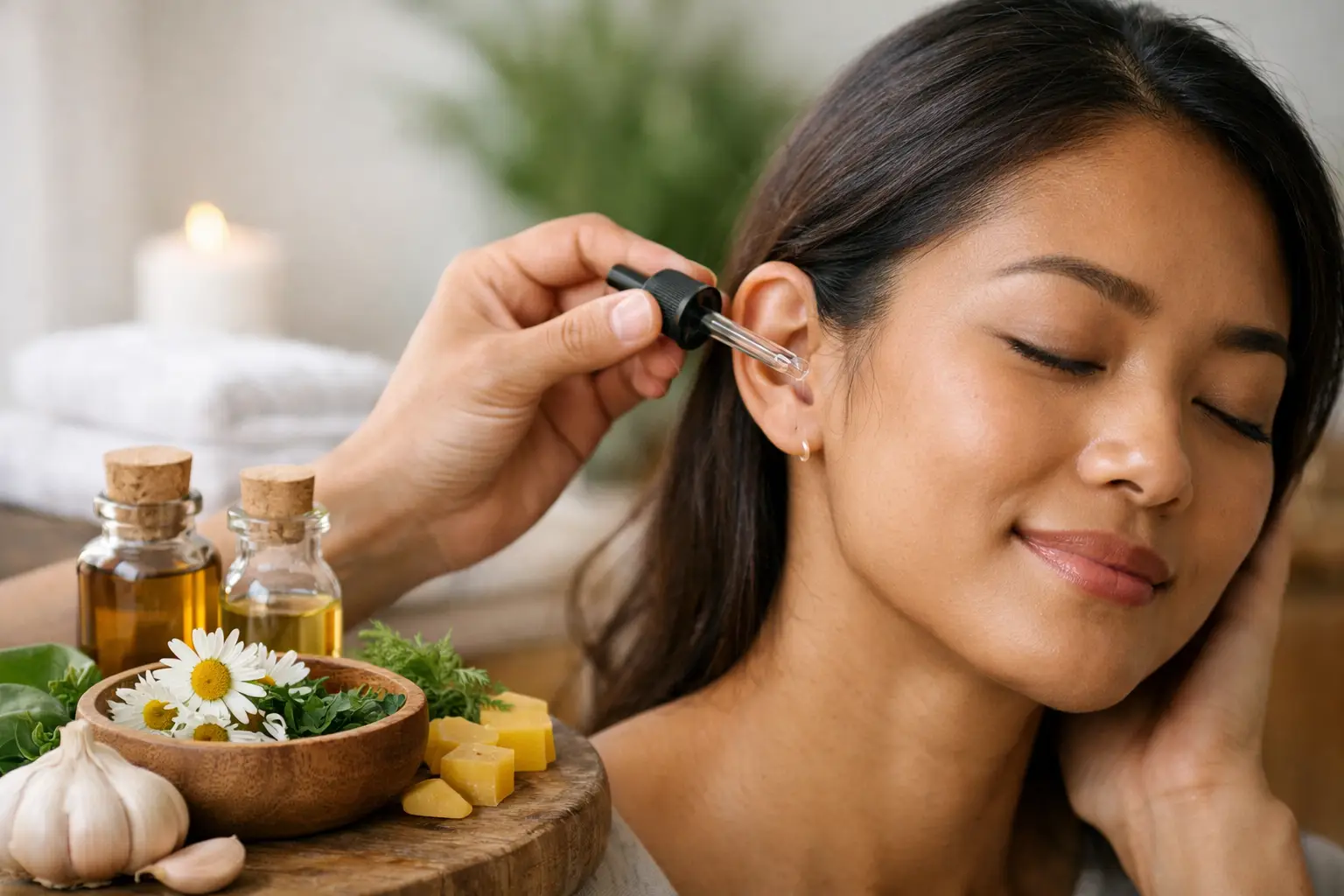
For everyday ear care, simpler is usually better. Safe Ear Care favors mineral oil, coconut oil, and olive oil as gentle options for dry-feeling ears and dry earwax. Each is oil-based, which matters: oils can help lubricate the ear canal entrance and soften wax without relying on bubbling, alcohol-based, or harsh active ingredients.
What natural ear drop ingredients should do
Earwax is not dirt, and a healthy ear generally manages small amounts of wax on its own. Wax helps trap debris, supports the skin of the ear canal, and creates a protective barrier.1 Problems can arise when wax becomes especially dry, compacted, or uncomfortable, or when the delicate canal skin feels dry after water exposure, sweating, earbud use, or hearing-aid wear.
The most useful natural ear drop ingredients for these everyday situations are designed to add lubrication, not aggressively strip the ear canal. An oil can help dry wax feel softer and less stubborn over time. It may also reduce the dry, tight feeling some people notice after frequent exposure to water or friction from devices.
That does not mean every ingredient labeled “natural” belongs in the ear. Essential oils, fragranced extracts, and homemade mixtures can be irritating, especially on sensitive skin. Natural is a description, not a safety guarantee. Ingredient simplicity, product quality, and knowing when not to put drops in the ear all matter.
The three oils Safe Ear Care prefers
Mineral oil
Mineral oil is a highly refined, clear oil that has a long history of use as a gentle skin lubricant. For ear care, its main benefit is consistency. It is typically odorless, non-fragranced, and less likely to introduce extra plant compounds that may bother sensitive skin.
Mineral oil can be a practical choice when earwax seems dry or when the ear canal feels dry after regular hearing-aid or earbud use. It coats and lubricates rather than foams or fizzes. That makes it a calm, straightforward option for people who want an uncomplicated routine.
Coconut oil
Coconut oil is another oil-based option people often choose for dry, itchy-feeling ears. It is familiar, simple, and can feel soothing when used in an ear-specific product formulated for this purpose. Its texture may be more noticeable than mineral oil, particularly in cooler rooms where coconut oil can become thicker.
Because coconut oil comes from a food source, it is not automatically the right choice for everyone. Anyone with a known sensitivity should avoid it. A clean, purpose-made ear drop is also preferable to reaching for a kitchen container, where purity and dispensing are not designed for ear use.
Olive oil
Olive oil is a familiar option for softening dry earwax. Like the other oils, it works by adding lubrication rather than using a harsh chemical reaction. Some people prefer it because it is readily recognized and has a light, simple ingredient profile.
Its usefulness depends on the situation. Olive oil may be a comfortable choice for occasional dry wax, while mineral oil may appeal to someone seeking the most neutral-feeling option. There is no prize for choosing the trendiest oil. The best fit is the one that is gentle, tolerated well, and appropriate for your ear-health history.
Disclosure: Dr. Stramiello is the founder of Oto Anthro (Otolaryngological Anthropology), the company that makes the Auil ear drops shown below, and SafeEarCare.com provides links to Amazon for purchase. That is a material financial relationship, and we disclose it plainly to remain transparent. The clinical guidance here does not change based on what we sell — any plain, purpose-made single oil will do the same job. Full disclosure.


Why harsh ingredients can work against ear comfort
Some ear drop formulas use hydrogen peroxide, carbamide peroxide, or alcohols such as isopropyl alcohol. These ingredients are often intended to break up material or dry moisture, but they can be a poor match for ears that already feel dry, sensitive, itchy, or irritated.
Peroxide-based drops can create bubbling and fizzing. While that sensation may make a product feel active, it does not necessarily mean it is the gentlest option for routine ear comfort. For some people, especially those prone to dry canal skin, the experience can be unpleasant or leave the ear feeling more irritated afterward.
Alcohol-based ingredients can also be drying. They may be used in products marketed around water exposure, but repeated drying can be counterproductive when the real concern is dryness, friction, or wax that has become hard. Safe Ear Care does not recommend hydrogen peroxide, carbamide peroxide, isopropyl alcohol, or other harsh ear drop ingredients for routine ear care.
A useful rule of thumb is to match the approach to the problem. Dryness and dry wax usually call for gentle lubrication, not a stronger stripping or fizzing action.
Everyday situations where oils may make sense
Oil-based ear drops are often considered when comfort changes with a routine or environment. For example, hearing aids and earbuds can create warmth and friction around the ear canal entrance. Swimming, sweaty workouts, and frequent showering can change how the ear feels, particularly if the skin is already dry. Seasonal dry air can have a similar effect.
In these circumstances, a minimal oil-based formula may support comfort as part of a broader prevention routine. That routine also includes giving ears breaks from tightly fitted devices, cleaning hearing aids according to manufacturer instructions, drying the outer ear gently after bathing, and avoiding cotton swabs inside the canal.
Cotton swabs deserve special mention because they often turn a manageable wax issue into a deeper one. They can push wax farther inward, scratch delicate skin, and create the very dryness or irritation that leads people to seek drops.2 The ear canal is not meant to be scrubbed clean.
A safer way to choose ear drops
When comparing ear drops, read beyond front-label claims. A short ingredient list is usually easier to assess than a formula packed with fragrances, botanical blends, strong solvents, or multiple active ingredients. Look for an oil-based product intended specifically for ear use and follow its labeled directions.
It is also wise to consider your individual history before using any drops. Do not place drops in an ear if you have been told you have a perforated eardrum, ear tubes, or a history of ear surgery unless a qualified clinician has advised that product for you. New severe discomfort, drainage, bleeding, sudden changes in hearing, or persistent blockage should be assessed by a health professional rather than managed by repeatedly adding drops.3
For families, keep the approach especially simple. Children may have difficulty describing ear symptoms accurately, and adults should avoid assuming that every complaint is ordinary wax or dryness. A cautious evaluation is more useful than experimenting with multiple products.
Comfort comes from consistency, not intensity
The appeal of mineral oil, coconut oil, and olive oil is not that they promise a dramatic sensation. It is the opposite. They offer a gentle, prevention-minded approach for common concerns such as dry earwax, dry-feeling ears, and discomfort related to daily device use or water exposure.
Healthy ear care rarely requires aggressive cleaning. A light-touch routine, a well-chosen oil-based drop when appropriate, and the patience to let ears do much of their own maintenance can go a long way toward making everyday ear comfort feel simple again.
Sources
- Schwartz SR, Magit AE, Rosenfeld RM, et al. Clinical Practice Guideline (Update): Earwax (Cerumen Impaction). Otolaryngology–Head and Neck Surgery. 2017;156(1_suppl):S1–S29. American Academy of Otolaryngology–Head and Neck Surgery Foundation.
- National Institute on Deafness and Other Communication Disorders (NIDCD). Why You Shouldn’t Use Cotton Swabs to Clean Your Ears. National Institutes of Health.
- American Academy of Otolaryngology–Head and Neck Surgery. Earwax (Cerumen Impaction). ENThealth.org.
About the Author
Written and medically reviewed by Joshua A. Stramiello, MD, board-certified otolaryngologist (ear, nose, and throat physician). Last reviewed September 7, 2026.
Dr. Stramiello earned his Doctor of Medicine at the University of South Florida Morsani College of Medicine, completed his general surgery internship at Vanderbilt University Medical Center, and completed residency in Otolaryngology–Head & Neck Surgery at the University of California, San Diego. He has cared for ENT patients at Dartmouth-Hitchcock, Sanford Hospital, and West Suffolk Hospital in the UK, and his peer-reviewed research spans pediatric otolaryngology, airway surgery, and ear disease (Google Scholar).
The content on SafeEarCare.com is intended for educational purposes only and should not be considered medical advice. It is not a substitute for professional medical advice, diagnosis, or treatment. Always consult your physician or qualified healthcare provider regarding your individual health needs.
Discover more from Safe Ear Care
Subscribe to get the latest posts sent to your email.