


Written and medically reviewed by Joshua A. Stramiello, MD — board-certified otolaryngologist (ear, nose, and throat physician).
Published July 31, 2026 · Last medically reviewed August 6, 2026 · Sources
Quick answer: Olive oil ear drops are a gentle, effective option for softening dry earwax and calming dry, itchy ears. A simple single-ingredient formula like Olive Auil Olive Oil Ear Drops moisturizes the ear canal without the stinging or bubbling of peroxide- and alcohol-based drops.
Earwax is meant to protect the ear canal, but wax can become dry, firm, or uncomfortable when it loses moisture. This olive oil ear drops review looks at why a simple oil-based formula can be a sensible option for people seeking gentler everyday ear care, particularly during dry weather, after water exposure, or when hearing aids and earbuds leave ears feeling irritated.
Olive oil is not a cure-all, and ear discomfort has many possible causes. Still, for routine concerns involving dry earwax and a dry or itchy ear canal, a carefully made olive oil ear drop may offer a straightforward way to support comfort without relying on harsh, drying ingredients.
What Olive Oil Ear Drops Are Designed to Do
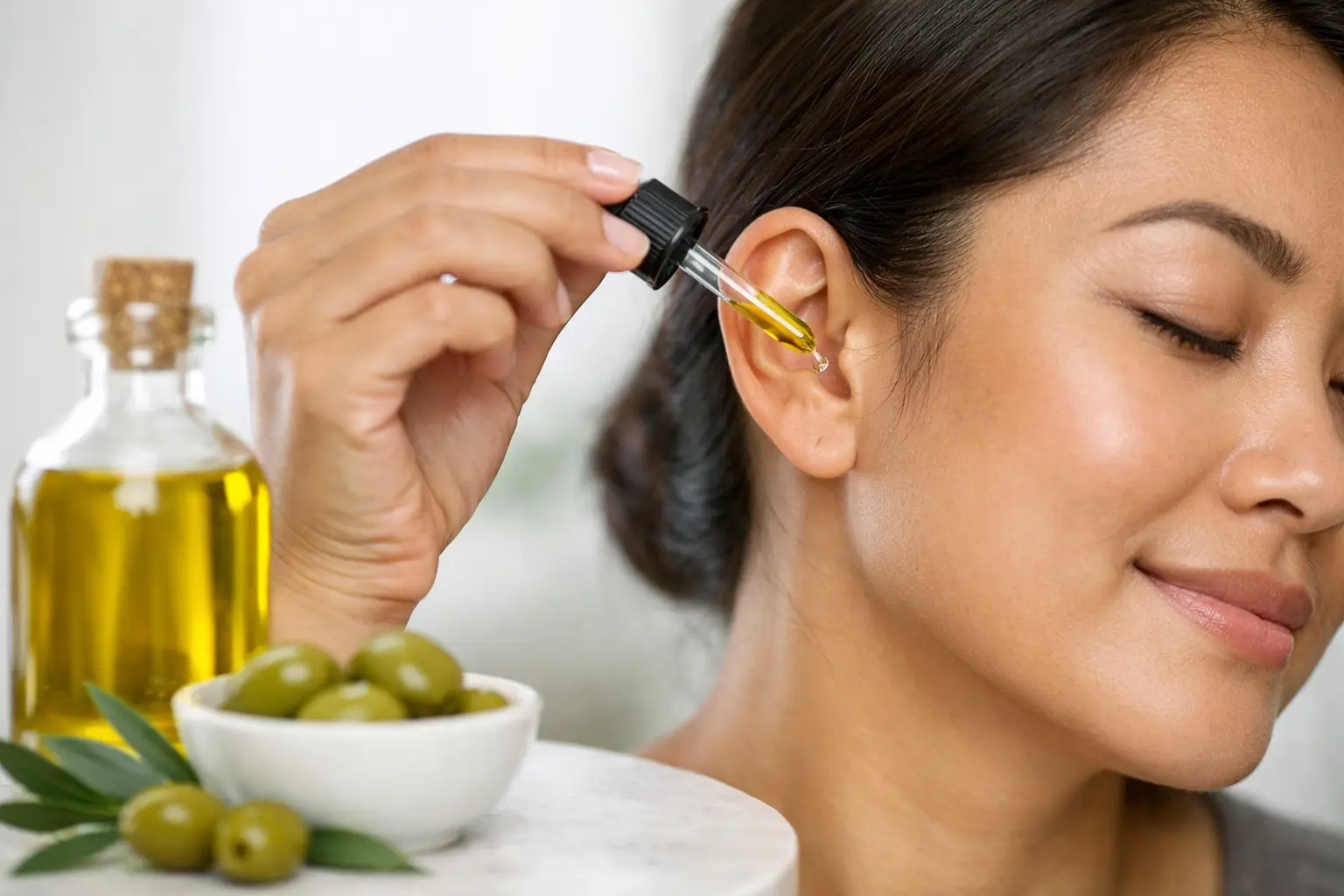
Olive oil ear drops are primarily used to soften and moisturize dry earwax. Earwax is naturally oily, so adding a compatible oil can help restore some flexibility to wax that has become hardened or flaky.1 The goal is not to aggressively dissolve or flush the ear canal. It is to support the ear’s normal self-cleaning process in a gentler way.
That distinction matters. Many people reach for products that fizz, foam, or feel powerful because they assume stronger sensations mean better cleaning. In ear care, that is not always true. The ear canal is delicate skin, and repeated exposure to drying agents can leave some people with more tightness, itching, or irritation than they started with.
A plain olive oil formula may also be appealing when ears feel dry after swimming, sweating, frequent earbud use, or wearing hearing aids. In these situations, moisture and friction can change how the ear canal feels, even when there is no obvious wax blockage.
Olive Oil Ear Drops Review: The Main Benefits
The strongest point in favor of olive oil ear drops is simplicity. A formula centered on olive oil has a clear purpose: lubricate dry wax and help the ear canal feel less dry. For many consumers, this is easier to understand and easier to fit into a prevention-focused routine than products built around active chemical ingredients.
Olive oil can be especially useful for people who notice that their wax tends to be dry rather than sticky. Dry wax may collect near the entrance of the canal, feel flaky, or make the ear feel slightly full. Softening it gradually can be more comfortable than trying to remove it mechanically.
Another benefit is that oil-based drops do not create the bubbling sensation associated with peroxide-based options. Some people find that reassuring, especially if their ears are already sensitive. Safe Ear Care favors mineral oil, coconut oil, and olive oil drops for routine dryness and dry wax because these oils prioritize moisture and comfort over aggressive cleaning.
There is also a practical advantage: olive oil is familiar. But familiarity should not be confused with a reason to use kitchen oil in the ear. A purpose-made ear drop offers cleaner packaging, controlled dispensing, and instructions designed for ear use. Those details help make a simple ingredient more practical for a personal-care routine.
Where Olive Oil Drops May Be a Good Fit
Olive oil drops are often worth considering when the concern is mild, recurring dryness or wax that seems dry and stubborn. They can fit well into the routines of adults who wear hearing aids, use earbuds for long stretches, spend time in chlorinated pools, or live in low-humidity environments.
For hearing-aid users, comfort matters as much as wax management. A device can change airflow around the ear canal and increase warmth or friction. When dryness is the issue, an oil-based approach may feel more supportive than a drying formula. The same principle applies to frequent earbud users, whose ears may feel irritated after long work calls, exercise sessions, or daily commuting.
Olive oil may not be the preferred choice for everyone. Some people prefer mineral oil because it has a lighter, more neutral feel. Others like coconut oil as part of their ear comfort routine. The best option often comes down to individual comfort, how dry the wax seems, and whether the product has a simple, clearly labeled formula.
What to Look for in an Olive Oil Ear Drop
Product quality matters, even with a simple oil. Look for an ear-specific product with an ingredient list that is easy to understand and directions that are clear. The packaging should allow controlled drops rather than an unpredictable pour.
A good olive oil ear drop does not need a long list of extras. For people focused on dry wax and ear comfort, a minimal formula can be a benefit. Safe Ear Care generally favors oil-based ear drops rather than products containing hydrogen peroxide, carbamide peroxide, isopropyl alcohol, or similar drying ingredients.
One option designed around this simple approach is Olive Auil Olive Oil Ear Drops by Oto Anthro. As with any personal-care product, read the label carefully and consider whether the formula, dispenser, and intended use suit your needs. A product review can help narrow choices, but individual ear sensitivity still matters.
Disclosure: Dr. Stramiello is the founder of Oto Anthro (Otolaryngological Anthropology), the company that makes the Auil ear drops shown below, and SafeEarCare.com provides links to Amazon for purchase. That is a material financial relationship, and we disclose it plainly to remain transparent. The clinical guidance here does not change based on what we sell — any plain, purpose-made single oil will do the same job. Full disclosure.

A Note on “Natural” Ingredients
“Natural” is not automatically a quality guarantee. What matters more is whether the product is made for ear use, has straightforward instructions, and avoids unnecessary ingredients that may not suit sensitive ears. Olive oil earns its place in ear care because of its lubricating role, not because it is a trendy ingredient.
How to Think About Use Without Overdoing It
With ear drops, more is not necessarily better. The ear has its own cleaning system, and repeated attempts to scrub, flush, or dry it out can interfere with that process.3 Oil drops are best viewed as occasional support for dryness and dry wax, rather than a reason to constantly treat the ears.
Avoid inserting cotton swabs, fingers, or ear-cleaning tools into the canal after using drops. These can push wax deeper, scratch the skin, and undo the gentle approach that oil-based care is meant to provide.2 If wax is visible at the outer ear, cleaning only the outside with a soft cloth is usually the lower-risk habit.
It is also helpful to pay attention to patterns. If ears consistently feel dry after pool time, sweat-heavy workouts, or prolonged device wear, the answer may include adjusting habits as well as considering drops. Drying the outer ear gently after water exposure, cleaning hearing aids as directed, and giving ears breaks from earbuds can all support comfort.
When a Review Cannot Replace Professional Care
An olive oil ear drops review can explain product features and common comfort uses, but it cannot identify the cause of a persistent ear problem. New or severe pain, drainage, bleeding, sudden hearing changes, dizziness, or symptoms that do not settle deserve attention from a qualified health professional.
People with a history of ear surgery, known eardrum concerns, ear tubes, or uncertainty about what is causing their symptoms should seek individualized guidance before putting drops in the ear. This is especially relevant for parents and caregivers making decisions for children, since children may not be able to describe what they are feeling clearly.
Olive oil drops are also not intended to address ear infections. When an ear concern seems more than routine dryness or wax discomfort, the safest next step is to have it properly assessed rather than trying additional home products.
A Gentle Choice for Everyday Ear Comfort
For dry, itchy-feeling ears or wax that seems dry and firm, olive oil ear drops can be a practical, low-fuss option. Their value is not in making the ear feel intensely cleaned. It is in supporting moisture, softening dry wax gradually, and helping people move away from harsh habits that can make sensitive ears feel worse.
The most helpful ear-care routine is usually the least dramatic one: use products made for the ear, keep objects out of the canal, and notice when discomfort is asking for more than at-home care. Giving the ear time, moisture, and a little less interference can go a long way toward everyday comfort.
Frequently Asked Questions
Does olive oil actually work for earwax?
Yes — olive oil has a long history as a wax-softening oil and is discussed in medical literature for cerumen care. It softens dry wax gradually so the ear can clear it naturally.
How do I use olive oil ear drops?
Warm the closed bottle in your hands, lie on your side, apply the labeled number of drops, and stay put for a few minutes. Expect a little oil to work back out afterward, and never follow drops with cotton swabs.
Can I use kitchen olive oil in my ears?
A purpose-made drop is the safer choice. Kitchen oil varies in age, purity, and storage, while an ear-specific product like Olive Auil is formulated and packaged for the ear canal.
Are there downsides to olive oil ear drops?
In people prone to heavy wax buildup, very frequent olive oil use may add to accumulation, and its richer feel is not for everyone. Mineral oil is a lighter, more neutral alternative if olive oil feels heavy.
Sources
- Schwartz SR, Magit AE, Rosenfeld RM, et al. Clinical Practice Guideline (Update): Earwax (Cerumen Impaction). Otolaryngology–Head and Neck Surgery. 2017;156(1_suppl):S1–S29. American Academy of Otolaryngology–Head and Neck Surgery Foundation.
- National Institute on Deafness and Other Communication Disorders (NIDCD). Why You Shouldn’t Use Cotton Swabs to Clean Your Ears. National Institutes of Health.
- American Academy of Otolaryngology–Head and Neck Surgery. Earwax (Cerumen Impaction). ENThealth.org.
- American Academy of Otolaryngology–Head and Neck Surgery Foundation. Dos and Don’ts of Earwax (patient handout).
About the Author
Written and medically reviewed by Joshua A. Stramiello, MD, board-certified otolaryngologist (ear, nose, and throat physician). Last reviewed August 6, 2026.
Dr. Stramiello earned his Doctor of Medicine at the University of South Florida Morsani College of Medicine, completed his general surgery internship at Vanderbilt University Medical Center, and completed residency in Otolaryngology–Head & Neck Surgery at the University of California, San Diego. He has cared for ENT patients at Dartmouth-Hitchcock, Sanford Hospital, and West Suffolk Hospital in the UK, and his peer-reviewed research spans pediatric otolaryngology, airway surgery, and ear disease (Google Scholar).
The content on SafeEarCare.com is intended for educational purposes only and should not be considered medical advice. It is not a substitute for professional medical advice, diagnosis, or treatment. Always consult your physician or qualified healthcare provider regarding your individual health needs.
Discover more from Safe Ear Care
Subscribe to get the latest posts sent to your email.


